




REDWAY BATTERY / KNOWLEDGE
What Does 100Ah Mean On A Battery?
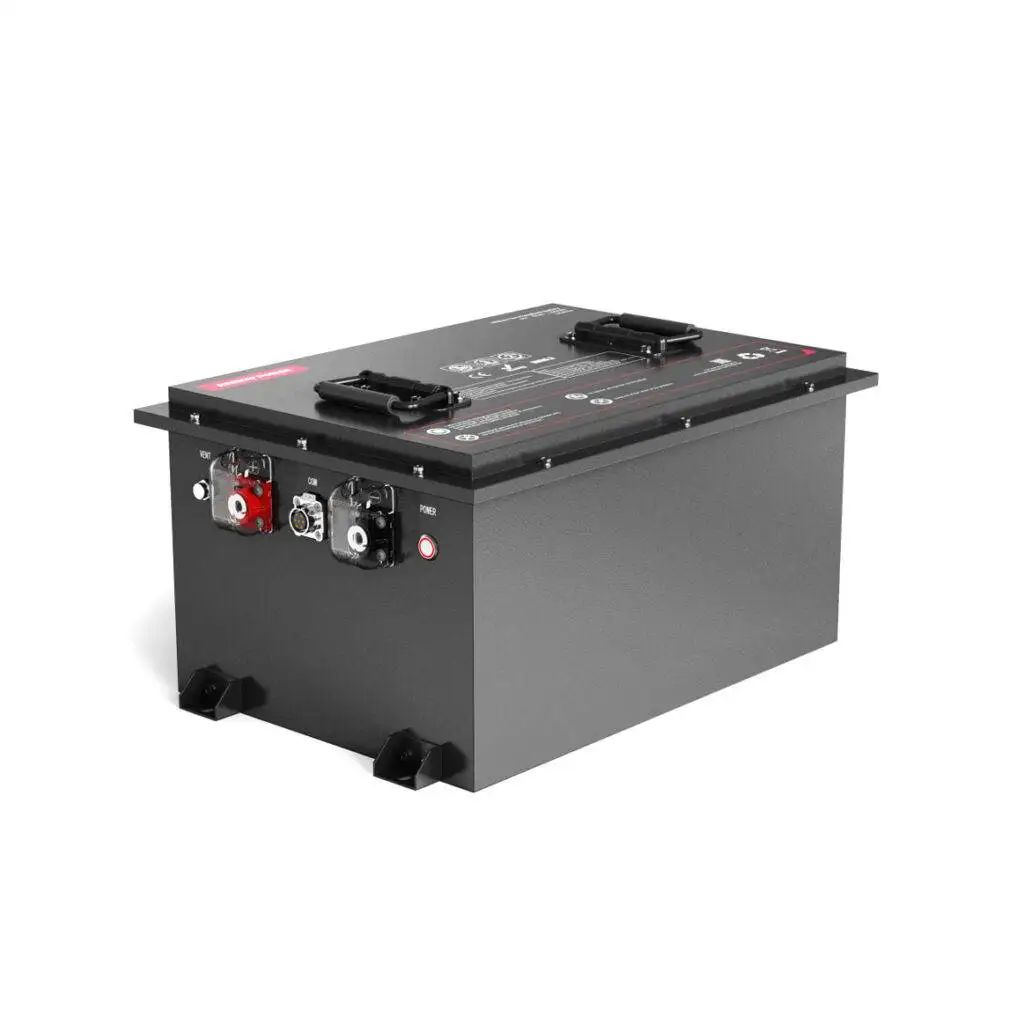
100Ah (ampere-hour) denotes a battery’s storage capacity, indicating it can deliver 100 amps for 1 hour or 5A over 20 hours under a 20-hour discharge rate. Commonly used in solar storage, RVs, and marine systems, a 12V 100Ah battery holds ~1.2kWh. Actual runtime depends on discharge rates and efficiency losses like the Peukert effect.
What Makes the Duralast Marine and RV Deep Cycle Battery a Top Choice?
How is 100Ah calculated?
Ah measures capacity via current × time. A 100Ah rating uses a 20-hour discharge (C20): 100Ah ÷ 20h = 5A. At higher loads (e.g., 50A), Peukert’s Law reduces effective capacity. Pro Tip: For trolling motors drawing 30A, expect ~3 hours runtime (30A × 3h = 90Ah).
Battery capacity isn’t linear. Discharge a 100Ah lead-acid battery at 25A, and usable capacity drops to ~80Ah due to Peukert losses. Lithium-ion handles higher currents better, retaining ~95Ah. For example, a 100Ah LiFePO4 pack can power a 1,200W inverter for 45 mins vs. 30 mins for lead-acid. Transitioning to real-world use, always derate capacities by 15–20% for lead-acid to account for inefficiencies. But why does this matter? Overestimating runtime can leave you stranded mid-trip. Pro Tip: Use lithium for high-drain devices like inverters.
How does voltage affect 100Ah batteries?
Voltage determines total energy (Wh = V × Ah). A 12V 100Ah holds 1.2kWh, while 24V doubles to 2.4kWh. Higher voltages reduce current for the same power, minimizing wire losses. Pro Tip: Match voltage to your system—24V is better for solar setups over 1,500W.
Consider a 12V 100Ah battery running a 600W load: 600W ÷ 12V = 50A, giving ~1.8h runtime (after derating). The same load on 24V draws 25A, extending runtime to ~3.5h. What’s the catch? Higher voltage systems cost more upfront. Transitioning to practicality, golf carts use 48V 100Ah packs for torque and range, delivering ~4.8kWh. Here’s a comparison:
| Voltage | Energy (kWh) | Typical Use |
|---|---|---|
| 12V | 1.2 | RV appliances |
| 24V | 2.4 | Solar arrays |
| 48V | 4.8 | Golf carts |
What factors reduce 100Ah battery performance?
Temperature, discharge rate, and age degrade capacity. At -10°C, lead-acid loses 30% capacity. Lithium-ion performs better but still drops ~15% in freezing temps. Pro Tip: Insulate batteries in cold climates.
High discharge rates trigger the Peukert effect—doubling current can halve usable capacity in lead-acid. For instance, a 100Ah AGM battery discharged at 50A (0.5C) delivers only ~70Ah. Transitioning to maintenance, sulfation in lead-acid permanently reduces capacity if left uncharged. Lithium-ion avoids this but degrades 2–3% annually. How to maximize lifespan? Store lead-acid at full charge; lithium at 50–60%. Here’s a degradation comparison:
| Chemistry | Cycle Life | Capacity Loss/Year |
|---|---|---|
| Lead-Acid | 300–500 | 10–15% |
| LiFePO4 | 2,000–5,000 | 2–3% |
Redway Battery Expert Insight
What Are the Best Golf Cart Battery Options at Menards?
FAQs
Yes, in parallel for same voltage. Use identical age/chemistry to avoid imbalance. For series, 24V 100Ah results—ensure BMS compatibility.
Is 100Ah enough for a fridge?
A 12V 100Ah runs a 50W fridge ~24 hours (50W ÷ 12V = 4.16A; 100Ah ÷ 4.16A = 24h). Derate to 20h for inefficiencies.
For connected guidance and the next practical steps, use the Golf Cart Battery: Operation and Practical Guidance — Part 2.
