




REDWAY BATTERY / KNOWLEDGE
What Are Forklift Battery Rentals?
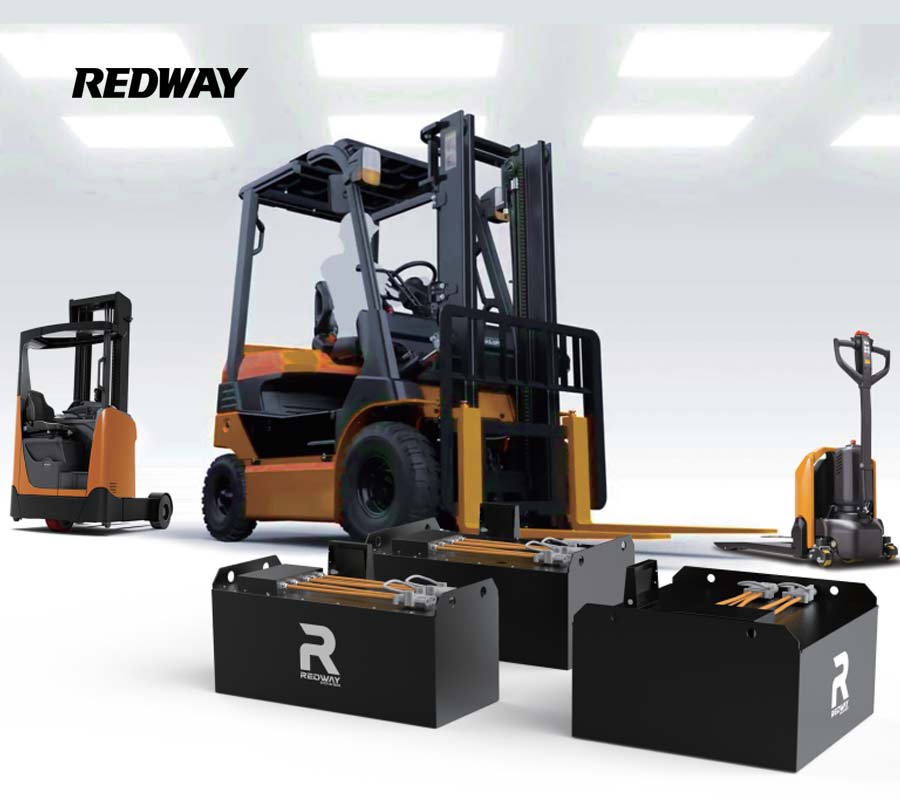
Forklift battery rentals are short- or long-term agreements where businesses lease industrial-grade lithium-ion or lead-acid batteries instead of purchasing them outright. These programs eliminate upfront capital costs (typically $3,000–$15,000 per battery) while providing maintenance support, charging infrastructure, and battery swaps to ensure uninterrupted warehouse operations. Rental terms range from 6-month contracts to pay-per-cycle models for seasonal demand.
How do forklift battery rental programs operate?
Rentals function through customized contracts where providers deliver pre-configured batteries matching forklift voltage (24V–80V) and capacity (200–1,000Ah). The supplier handles installation, routine voltage checks, and State of Health (SoH) monitoring, replacing units when capacity drops below 80%. Payments follow monthly/annual fees or kWh-usage models.
Beyond basic lease terms, advanced rental programs integrate telematics for real-time tracking of charge cycles, temperature, and discharge patterns. For instance, a third-party logistics company might pay $200/month per 48V 600Ah LiFePO4 battery, avoiding $8,000 upfront costs and gaining same-day replacements if capacity degrades. Pro Tip: Negotiate service-level agreements (SLAs) specifying response times for battery swaps—aim for ≤4 hours to prevent downtime. Forklift fleets with two-shift operations particularly benefit, as rented batteries can be hot-swapped during breaks without idling equipment.
| Rental Model | Cost Range | Best For |
|---|---|---|
| Monthly Fixed | $150–$400/battery | Stable 24/7 operations |
| Pay-Per-Cycle | $0.15–$0.30/kWh | Seasonal/peak demand |
Rental vs. Purchase: Which is more cost-effective?
Renting becomes economical when annual usage exceeds 1,500 hours or for businesses with variable material handling needs. Purchasing suits operations with consistent single-shift schedules and existing maintenance teams.
To break it down: A 48V 800Ah lithium-ion battery costs ~$12,000 to buy, with a 10-year lifespan. Renting it for $300/month totals $36,000 over a decade—triple the purchase price. However, this doesn’t account for hidden ownership costs like battery watering systems ($1,200+), replacement chargers ($3,000–$5,000), or labor for maintenance. Renting transfers these expenses to the provider. For multi-shift warehouses, the math shifts—rentals prevent productivity loss during battery swaps, which can save $500+/hour in halted operations. Think of it like leasing vs. buying a truck: ownership works for predictable routes, but rentals adapt to changing cargo volumes.
| Factor | Rental | Purchase |
|---|---|---|
| Upfront Cost | $0 | $3K–$15K |
| Maintenance | Included | $2K+/year |
What factors determine forklift battery rental pricing?
Key variables include battery chemistry (lithium vs. lead-acid), capacity utilization, and service add-ons. Lithium-ion typically costs 25–40% more monthly but offers longer cycle life for high-throughput facilities.
Rental providers factor in depth of discharge (DoD) rates and recharge frequency when pricing contracts. A warehouse using 48V 600Ah LiFePO4 batteries at 80% DoD twice daily would pay ~$280/month, whereas lead-acid batteries under similar conditions might be $200 but require mid-shift swaps. Additional fees apply for rapid replacement guarantees (e.g., ≤2 hours) or onsite maintenance staff. Ever wonder why urban fulfillment centers prefer lithium rentals? Their 3,000+ cycle lifespans handle constant fast charging without sulfation issues common in lead-acid batteries.
Redway Battery Expert Insight
FAQs
Most providers require 6–12 month commitments, though some offer short-term rentals (1–3 months) at 30–50% higher rates.
Are battery chargers included in rentals?
Only 60% of suppliers bundle chargers—always confirm. Excluded chargers add $50–$150/month per unit.
Can I scale battery capacity during my rental term?
Yes, reputable providers allow upsizing/downsizing with 30 days’ notice, adjusting payments proportionally.
For the surrounding sizing, selection, installation and maintenance decisions, continue with the Forklift Battery: Operation and Practical Guidance — Part 4.
