




REDWAY BATTERY / KNOWLEDGE
Should You Buy A New Or Used Forklift Battery?
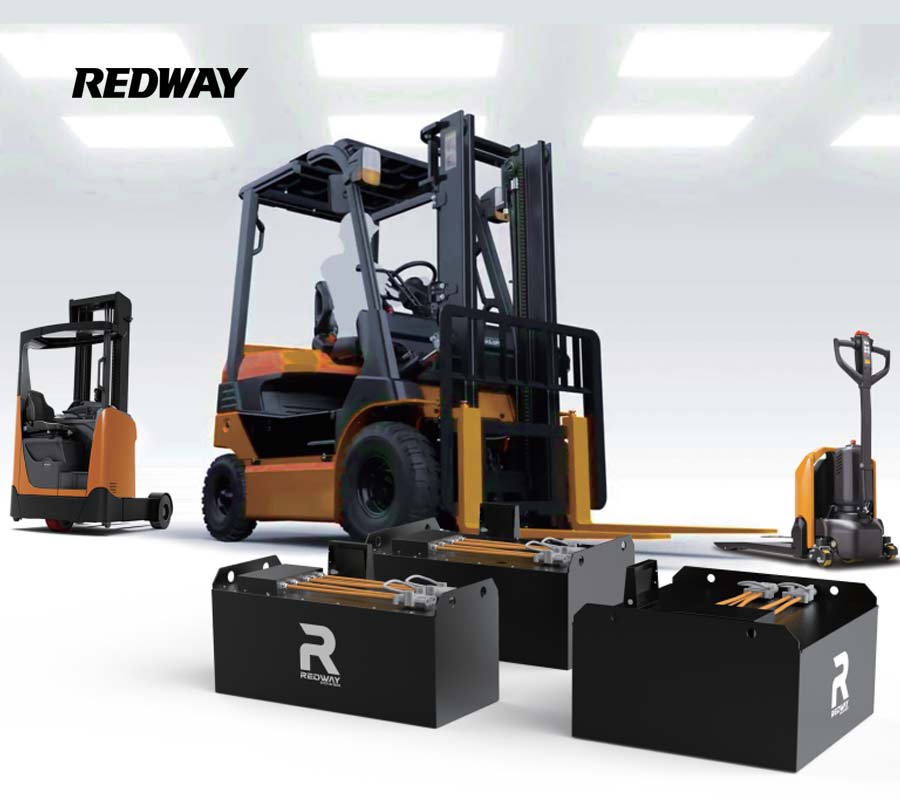
Choosing between a new or used forklift battery depends on budget, usage intensity, and risk tolerance. New batteries offer full lifespan (1,500–2,000 cycles for lithium-ion), warranties (2–5 years), and reliability but cost 30–50% more. Refurbished/used units (50–70% cheaper) suit light-duty or backup roles but may have degraded capacity (≤80% of original) and higher failure risks. Assess cycle count, maintenance records, and BMS health before opting for used.
How to Restore a Forklift Battery: Costs, Methods, and Safety Tips
What factors determine whether to buy new or used?
Key considerations include application criticality, total cost of ownership, and battery chemistry. High-throughput warehouses running 24/7 benefit from new lithium-ion’s 10-year lifespan, while seasonal operations might prioritize used lead-acid at $2,000–$4,000 savings. Pro Tip: Always request used batteries’ cycle history—anything beyond 1,200 cycles for Li-ion risks rapid capacity fade.
Beyond budget, consider how downtime impacts operations. A new 48V 600Ah lithium battery delivers ~28.8 kWh, powering 8-hour shifts for 5+ years. Used lead-acid units might only provide 4–5 hours before needing recharge, increasing labor costs. For example, a food distribution center using 3-shift workflows would lose $1,800/day if a used battery fails mid-operation. But what if your facility only runs 5-hour daily shifts? Transitional savings could justify refurbished.
| Metric | New | Used |
|---|---|---|
| Upfront Cost | $12K–$20K | $5K–$9K |
| Cycle Life Remaining | 100% | 40–70% |
| Warranty | Full | 0–6 mo |
How do performance specs differ between new and used?
Capacity degradation is the primary divergence. A new lead-acid battery provides 1,200–1,500 cycles to 80% depth of discharge (DoD), while used units may only achieve 300–800 cycles. Lithium-ion degrades slower—losing 2–3% capacity annually—but used cells with damaged SEI layers exhibit voltage sag under 150A+ loads. Pro Tip: Test used batteries at 1C rate discharge; voltage drops >15% indicate aging.
Practically speaking, a 36V 750Ah used battery with 70% health effectively becomes 525Ah. That could shorten a forklift’s runtime from 8 to 5.6 hours. For companies with tight scheduling, that 31% loss requires buying extra batteries. Ever seen a forklift stranded mid-aisle? Voltage instability in used packs causes exactly that. Transitional solutions like leasing new batteries or hybrid fleets (80% new, 20% used) balance cost and reliability.
How Much Does a Forklift Battery Really Cost?
What hidden costs accompany used forklift batteries?
Maintenance labor, reduced efficiency, and replacement parts add up. Used lead-acid requires weekly water checks and equalization charges (8–10 hours monthly), costing $600+/year in labor. Lithium-ion’s BMS may need reprogramming ($200–$500) to reset cycle counters. Pro Tip: Factor in charger compatibility—older chargers may lack lithium profiles, demanding $1K–$3K upgrades.
Imagine purchasing a $7,000 used battery that needs $2,500 in new cells within 12 months. Suddenly, your “bargain” costs 80% of a new unit’s price. Transitional expenses also include downtime for repairs—forklift service calls average $150/hour. However, facilities with in-house technicians and backup fleets can mitigate these risks. Does your operation have those safeguards? If not, new batteries’ predictability often justifies higher initial investment.
| Cost Factor | New | Used |
|---|---|---|
| Annual Maintenance | $200 | $800+ |
| Energy Efficiency | 95% | 82–88% |
| Replacement Parts (5yr) | $0 | $3K–$7K |
Redway Battery Expert Insight
FAQs
Potentially—degraded cells with <5% SOC risk dendrite growth. Only buy used Li-ion with intact BMS and ≥70% original capacity.
Can warranties transfer on used batteries?
Rarely—most OEMs void warranties upon resale. Redway’s recertified units include 6–12 month limited warranties.
How to verify used battery health?
Demand a 3rd-party test report measuring internal resistance (<50mΩ for Li-ion), capacity (via discharge test), and cell voltage variance (<0.1V).
This topic belongs to the wider Forklift Battery: Choosing, Cost and Comparison — Part 3, which brings the related decisions and practical checks together.
