




REDWAY BATTERY / KNOWLEDGE
How Does Forklift Battery Charging Work?
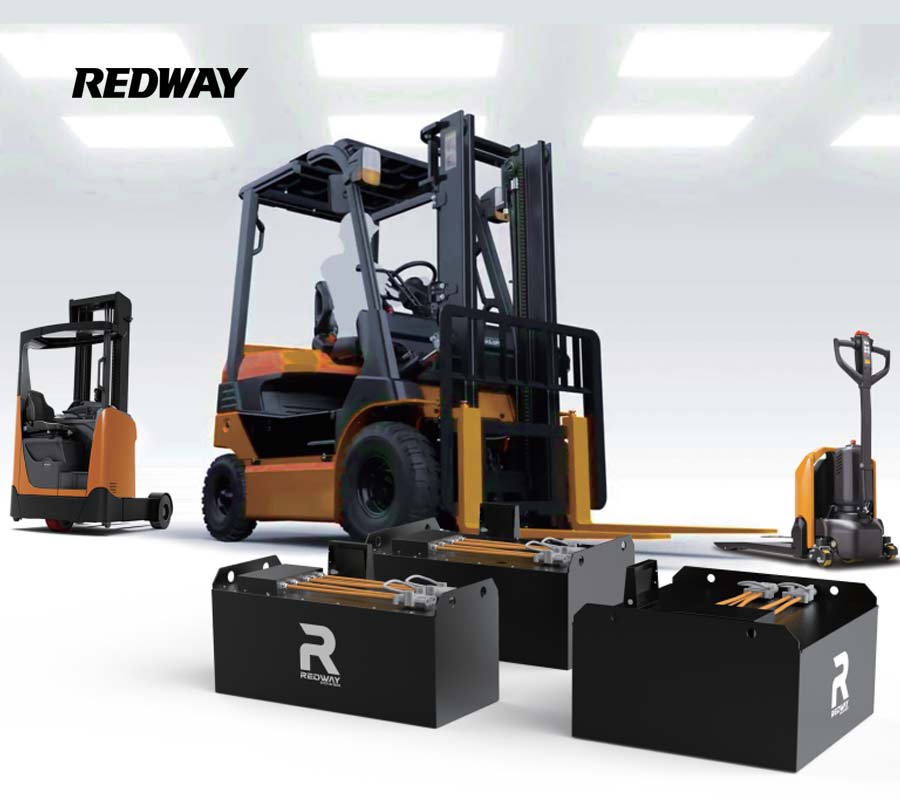
Forklift battery charging converts AC power to DC to replenish lead-acid or lithium-ion cells through controlled voltage/current phases. Lead-acid types use bulk (high-current), absorption (constant voltage), and float stages, while lithium-ion employs CC-CV protocols. Proper charging prevents sulfation (lead-acid) and cell imbalance (Li-ion), extending lifespan. Thermal sensors and BMS modules regulate temperature/voltage thresholds for safety.
How Much Does a Forklift Battery Really Cost?
What are the key stages in lead-acid forklift battery charging?
Lead-acid charging involves three stages: bulk (80% capacity at max current), absorption (voltage-held topping), and float (maintenance charging). Temperatures above 25°C demand voltage reduction—0.03V/°C for flooded cells. Pro Tip: Equalize monthly by overcharging to 16V (48V systems) for 2–4 hours, preventing stratified electrolytes.
Bulk charging pushes 15–25% of battery capacity (e.g., 300A for 1200Ah) until voltage hits 2.4V/cell. Absorption then maintains 2.35–2.45V/cell until current drops to 3% of capacity. Float mode sustains 2.25V/cell indefinitely. But what happens if you skip equalization? Electrolyte stratification corrodes plates, slashing capacity by 20% in 6 months. For example, a 48V 800Ah battery needs 40–60A chargers for 8–10 hour shifts. Transitionally, lithium-ion skips absorption, charging faster without sulfation risks.
How do lithium-ion forklift batteries differ in charging?
Lithium-ion forklift batteries charge via CC-CV (constant current/voltage) without staged equalization. Chargers deliver 0.5–1C current (e.g., 400A for 400Ah packs) until cells reach 3.6V (LiFePO4), then hold voltage until current tapers. Built-in BMS prevents overcharge/over-discharge, enabling opportunity charging during breaks.
Unlike lead-acid, Li-ion tolerates partial charging—no memory effect. Chargers adjust rates based on cell temps; sub-0°C requires heating pads to avoid lithium plating. A 48V 200Ah LiFePO4 pack charges from 20–100% in 2 hours vs. 8+ hours for lead-acid. Practically speaking, warehouses gain uptime but must upgrade to CAN-enabled chargers. Why risk mismatched gear? Non-certified chargers may bypass BMS comms, risking thermal runaway. For instance, Redway’s 80V Li-ion systems pair with 18A smart chargers balancing cells within 15mV.
| Parameter | Lead-Acid | Lithium-ion |
|---|---|---|
| Charge Time | 8–10 hrs | 1–3 hrs |
| Cycle Life | 1,500 | 3,000+ |
| Opportunity Charging | No | Yes |
What safety protocols govern forklift battery charging?
OSHA mandates ventilation for lead-acid charging areas to disperse hydrogen gas, which explodes at 4% concentration. Chargers must have ground-fault interrupters (GFCI), and batteries require thermal runaway sensors (Li-ion). Workers need PPE—goggles and acid-resistant gloves—during watering (lead-acid).
Hydrogen emissions peak at 75–90% SoC, requiring hourly air changes in enclosed spaces. Li-ion rooms need Class D fire extinguishers for metallic fires. Pro Tip: Mount smoke detectors 18″ below ceilings—hydrogen rises, smoke sinks. A real-world fail: A 2021 Texas warehouse fire started from a corroded lead cable on a DIY-modified charger. Transitionally, automated watering systems cut acid exposure risks by 60% versus manual methods.
How does opportunity charging benefit lithium-ion forklifts?
Opportunity charging leverages breaks to partially recharge Li-ion batteries, extending daily uptime. Unlike lead-acid, which needs full cycles, Li-ion thrives on 20–80% micro-cycles, reducing energy costs by 30%.
For example, a 600Ah lithium pack used in 3-shift operations can receive 15-minute charges during 30-minute breaks, maintaining 50–70% SoC. This approach cuts infrastructure costs—fewer spare batteries needed. But how to manage heat? Integrated coolant loops in premium packs (e.g., Redway’s HYDRA Series) stabilize temps during rapid 1C charges. Transitionally, telematics track SoC trends, alerting managers to schedule top-ups during natural downtime.
| Factor | Opportunity Charging | Full Cycling |
|---|---|---|
| Daily Uptime | 22 hrs | 16 hrs |
| Battery Lifespan | 3,500 cycles | 2,000 cycles |
| Energy Cost | $0.14/kWh | $0.18/kWh |
What maintenance ensures forklift battery longevity?
Watering lead-acid batteries weekly prevents plate exposure—use deionized water post-charging. Clean terminals with baking soda to prevent voltage drops from corrosion. Lithium-ion needs monthly BMS diagnostics and storage at 50% SoC if idle.
Hydrometers check lead-acid electrolyte density (1.265 SG = full charge). For lithium, Bluetooth-enabled BMS apps (e.g., Redway Connect) monitor cell balance—>50mV imbalance triggers alerts. A real-world success: A Coca-Cola DC extended battery life 40% by training staff to log water levels digitally. Transitionally, always disconnect chargers before unplugging batteries—arcing damages connectors.
Redway Battery Expert Insight
FAQs
No—automotive chargers lack voltage/current profiles for deep-cycle forklift batteries. Mismatched charging causes undercharge (sulfation) or thermal runaway (Li-ion).
How often should I replace charging cables?
Inspect cables monthly for fraying/overheating. Replace every 2–3 years—high-amperage charging degrades connectors 3× faster than 12V systems.
For the surrounding sizing, selection, installation and maintenance decisions, continue with the Forklift Battery Charging: Methods, Timing and the Charging Area.
How to Troubleshoot a Propane Forklift Fuel System – Step-by-Step Guide
