




REDWAY BATTERY / KNOWLEDGE
What Are Specs Of 75 21 Cell Industrial Forklift Battery?
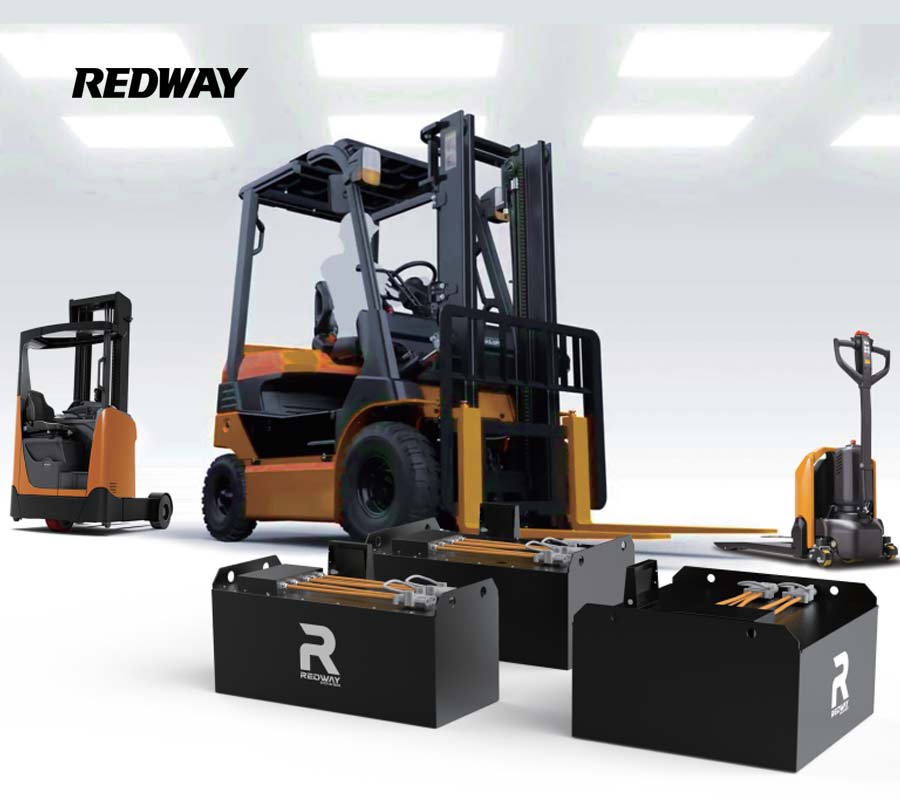
Industrial forklift batteries with 21-cell 75Ah configurations typically employ lithium-ion technology for high energy density and durability. The 21-cell setup delivers a nominal voltage of 21V, while capacities like 75Ah support extended runtime for material-handling equipment. These batteries often use LiFePO4 cells for thermal stability and integrate BMS protection against overcharge/discharge.
How to Troubleshoot a Propane Forklift Fuel System
What voltage range defines a 21-cell forklift battery?
A 21-cell lithium battery operates at 21.6V nominal (3.6V/cell) with a 25.2V charging cutoff. Industrial variants maintain ±2% voltage tolerance under load for equipment stability.
Deep Dive: The 21-cell configuration uses series-connected LiFePO4 or NMC cells, achieving 70.5V fully charged (3.35V/cell). For instance, a 75Ah unit powers Class II/III forklifts for 6–8 hours. Pro Tip: Always verify voltage compatibility with motor controllers—mismatches risk torque loss. Unlike lead-acid’s 20% voltage sag, lithium maintains 21V±0.5V under 500A loads. Practical example: A Jungheinrich EJE 120 forklift upgraded to 21-cell lithium reduces charge cycles by 60% versus 24V lead-acid. But how does cell count affect thermal management? Fewer cells (vs 48V systems) simplify cooling but require higher individual cell capacity.
| Parameter | 21-Cell Lithium | 24V Lead-Acid |
|---|---|---|
| Peak Voltage | 25.2V | 28.8V |
| Energy Density | 140–160Wh/kg | 30–40Wh/kg |
| Cycle Life | 3,000+ | 500–800 |
How does capacity (75Ah) impact forklift performance?
75Ah capacity enables 5–7 hours runtime for 1.5–3 ton forklifts. Higher Ah extends operating shifts but increases battery weight by 18–22% per 10Ah increment.
Deep Dive: A 75Ah lithium battery stores 1.575kWh (21V×75Ah), sufficient for 350–400 lifts/day with 1,500kg loads. Pro Tip: Balance Ah with charge infrastructure—75Ah requires 8A chargers for 10-hour replenishment vs 15A fast-chargers. Consider this: Toyota’s 7HBW23 model gains 22% productivity when upgraded from 60Ah to 75Ah. But what about cold environments? Lithium retains 85% capacity at -20°C versus lead-acid’s 45% drop. However, frequent fast-charging above 0.5C rate accelerates capacity fade—monitor cell balancing monthly.
What safety features do industrial lithium forklift batteries require?
Mandatory protections include IP67 enclosures, thermal runaway prevention, and CAN-BUS communication for real-time diagnostics. UL2580 certification validates crash/puncture resistance.
Deep Dive: Premium systems embed three-layer safeguards: 1) Module-level fusing (500A breaking capacity) 2) Cell-level voltage/temperature sensors (±1mV accuracy) 3) Emergency venting at 150kPa pressure. For example, Redway’s 21-cell batteries use ceramic-separators that withstand 300°C before failure. Practically speaking, warehouses with concrete floors should prioritize batteries with MIL-STD-810G vibration resistance. Did you know? Lithium batteries require 40% less maintenance but 70% tighter moisture control than lead-acid—BMS boards fail at >85% humidity.
| Safety Feature | Lithium | Lead-Acid |
|---|---|---|
| Thermal Cutoff | 85°C | N/A |
| Overpressure Relief | Yes | No |
| Spill Protection | Sealed | Vented |
What charging protocols suit 75Ah 21V forklift batteries?
CC-CV charging at 0.2–0.5C rates using CAN-enabled smart chargers is optimal. Temperature-compensated algorithms prevent plating at low temps.
Deep Dive: A 75Ah battery requires 15–37.5A charging current. Advanced systems like Delta-Q’s IC650 optimize charge curves using forklift telemetry—reducing energy costs 18%. Pro Tip: Always ground charger ports—floating voltages above 25V risk MOSFET damage. Imagine charging like elevator speed: CC phase lifts voltage rapidly (0–80% SOC in 2.5 hours), then CV phase gently tops cells. But why avoid trickle charging? Lithium suffers <0.05V/cell imbalance when held at 100% SOC—program chargers to stop at 95% for storage.
How do 21-cell batteries compare to traditional 24V systems?
21-cell lithium offers 9% weight reduction versus 24V lead-acid while matching power output. Voltage compatibility allows retrofitting without controller modifications.
Deep Dive: With 21 cells vs 12 lead-acid units, lithium eliminates 220kg ballast in Hyster H2.5XT trucks. Real-world data: Amazon FCs report 14% faster lift speeds due to lithium’s stable voltage. However, battery compartments require 20mm clearance for cooling fins. Did you consider cycle economics? At 1.5 cycles/day, lithium achieves ROI in 2.3 years through reduced downtime and energy costs.
Redway Battery Expert Insight
How to Become a Forklift Technician: Career Paths
FAQs
Yes, with a DC-DC converter. Direct replacement works only if motor controllers accept 18–28V input ranges—verify OEM specs first.
What’s the lifespan of a 75Ah lithium forklift battery?
8–10 years or 3,000 cycles at 80% DoD. Storage above 30°C halves lifespan—maintain 15–25°C for optimal longevity.
For the surrounding sizing, selection, installation and maintenance decisions, continue with the Forklift Battery Cell Configuration: Sizes, Counts and Replacement.
