




REDWAY BATTERY / KNOWLEDGE
What Is Included In H2.0-3.5FT Technical Guide?
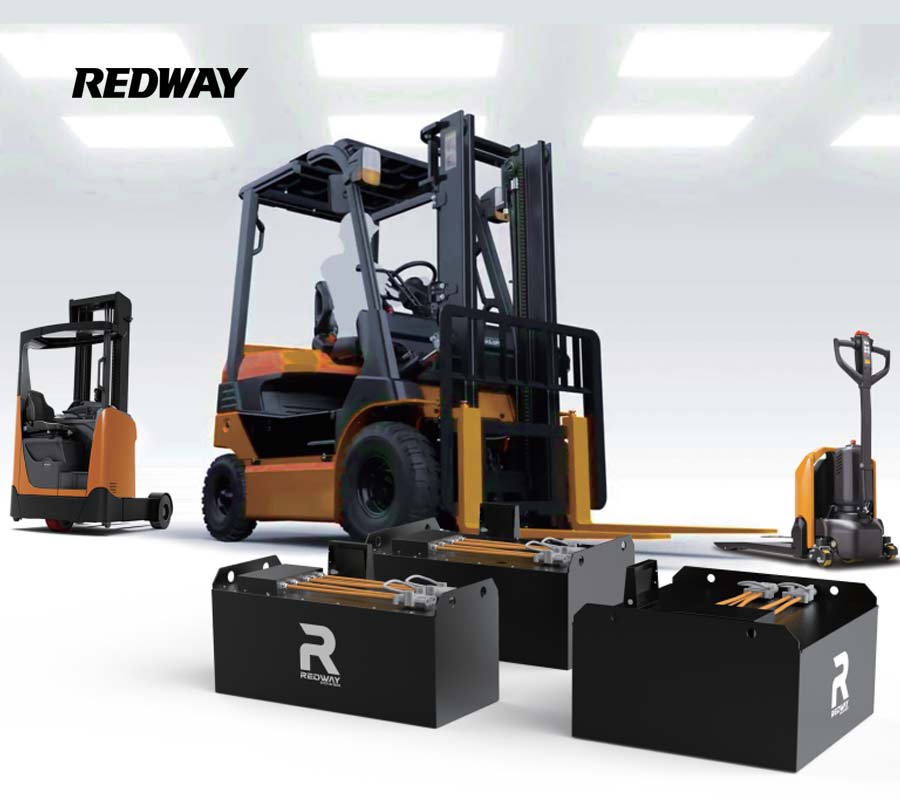
The H2.0-3.5FT Technical Guide provides comprehensive documentation for industrial lithium-ion battery systems, covering specifications, installation protocols, and safety compliance for 24V–80V modules. Key sections include cell configuration diagrams, torque settings for terminal connections (<30 Nm), SOC balancing techniques (45–55% for storage), and thermal runaway prevention thresholds (≥65°C cutoffs). Designed for forklift technicians and EV engineers, it prioritizes lifespan optimization through precise charge-discharge cycling guidance.
48V 300Ah Lithium Forklift Battery
What core components are detailed in the H2.0-3.5FT Guide?
The guide specifies cell arrangement topologies, BMS programming parameters, and mechanical housing specs. For example, 48V systems use 15S LiFePO4 cell stacks with ±0.05V balancing tolerance. Pro Tip: Always cross-reference the module’s QR code with the guide’s revision number to avoid configuration mismatches.
Beyond basic wiring diagrams, the guide details cell-level parameters like internal resistance thresholds (≤2mΩ per LiFePO4 cell) and maximum continuous discharge rates (2C for standard models). It also provides torque specifications for busbar connections—under-tightening risks arcing, while over-tightening can deform terminals. For example, a 24V 280Ah pack requires 18–22 Nm on M8 bolts. Practically speaking, the BMS calibration protocols prevent voltage drift during fleet charging.
How does the guide optimize battery installation?
It outlines environmental requirements (-20°C to 50°C operating range) and vibration damping strategies. Pro Tip: Use rubber isolators with 70–90 Shore A hardness between battery and chassis.
The installation chapter mandates 50mm minimum clearance from heat sources and specifies grounding resistance (<0.1Ω). It even covers post-installation checks—like using thermal cameras to detect loose connections. But what if space constraints prevent ideal airflow? The guide offers derating tables; a 48V 600Ah pack in 40°C environments loses 12% continuous current capacity. Transitionally, cable routing diagrams prevent electromagnetic interference with control systems, critical in CNC machinery integration. A real-world example: Tesla’s Semi trucks use similar guides for their 800V battery arrays, though scaled for automotive specs.
| Parameter | 24V System | 80V System |
|---|---|---|
| Terminal Torque | 18 Nm | 32 Nm |
| Cell Count | 8S | 25S |
What safety protocols are emphasized?
The guide enforces arc-flash PPE and locked-out disconnect procedures. For instance, servicing 80V 700Ah packs requires Class 2 insulated tools and 1000V-rated multimeters.
Emergency protocols include IR thermography checklists and first-responder cut zones marked on battery housings. The guide also details quarantining procedures for swollen cells—storage in sand-filled containers at 30% SOC. Transitionally, beyond personal safety, it covers environmental protections like secondary containment trays for electrolyte leaks. Ever wonder how data centers handle battery emergencies? Their protocols derive from similar industrial guides but add smoke evacuation systems.
How are maintenance intervals determined?
Cyclic capacity testing (every 500 cycles) and terminal corrosion checks (bi-annual) are mandated. Pro Tip: Use NO-OX-ID A-Special grease on terminals after cleaning with NaHCO3 solution.
The maintenance schedule adjusts based on usage profiles—forklifts in cold storage (-10°C) require monthly BMS software checks for voltage drift. Compare this to warehouse robots: Their 72V packs need weekly SOC calibration via full discharge-charge cycles. The guide includes troubleshooting matrices; a 10% capacity drop in 100 cycles triggers cell impedance testing. For example, Redway’s 24V 200Ah batteries show ≤5% degradation after 2,000 cycles when maintained per H2.0-3.5FT guidelines.
| Application | Voltage Check | Thermal Scan |
|---|---|---|
| Forklifts | Weekly | Monthly |
| AGVs | Daily | Weekly |
Does the guide address system integration?
Yes, with CAN bus communication protocols and charging interoperability standards. For example, 24V systems use J1939 messaging with 250kBaud rates.
Integration guidelines prevent conflicts between battery and motor controllers—like setting torque ramp rates within 100ms to avoid BMS overcurrent triggers. The guide even covers auxiliary loads; attaching 12V LED lights to a 24V pack requires DC-DC converters rated for 120% peak load. Think of it like USB-C power delivery negotiation but scaled for industrial amperage.
Redway Battery Expert Insight
80V 700Ah Forklift Lithium Battery
FAQs
Bi-annually—always download the latest version before commissioning new systems; 2024 Q2 updates added solid-state relay compatibility matrices.
Can I use the guide for non-forklift batteries?
Only for 24V–80V industrial LiFePO4 systems. EV and residential storage packs require different protocols due to unique thermal profiles.
Where’s the emergency shutdown procedure located?
Chapter 7.2 details shutdown sequences: Activate lockout tagout, then engage the MSD (manual service disconnect) within 30 seconds of fault detection.
For the surrounding sizing, selection, installation and maintenance decisions, continue with the Forklift Battery: Technology and System Fundamentals — Part 6.
