




REDWAY BATTERY / KNOWLEDGE
Is a forklift charger the key to smarter, safer warehouse power?
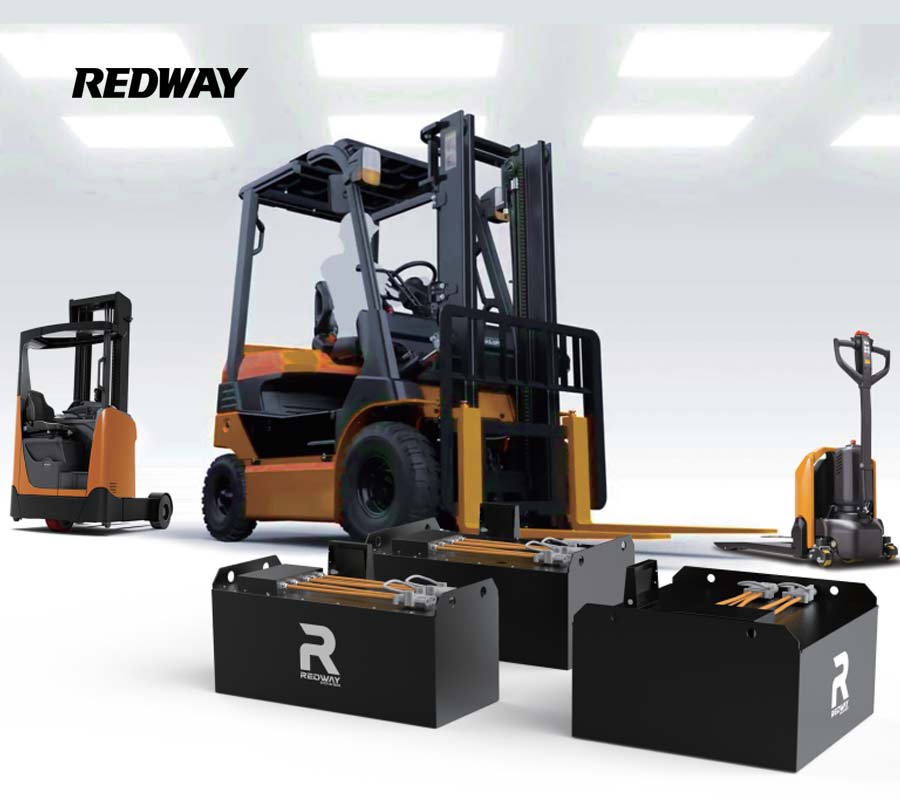
A forklift charger is essential for maximizing warehouse efficiency, battery life, and operational costs. Proper chargers ensure safe, fast recharging for lead-acid or lithium batteries, minimizing downtime. Partnering with a China-based OEM like Redway Battery provides B2B buyers with reliable, customizable solutions at competitive factory pricing, designed to optimize fleet performance and reduce long-term energy and maintenance expenses.
What is a forklift charger and how does it work?
A forklift charger converts AC power into controlled DC current to safely recharge lead-acid or lithium batteries. It monitors voltage, current, and temperature to prevent overcharging and overheating, ensuring each cycle is efficient. For lithium LiFePO4 packs, chargers use constant-current/constant-voltage profiles and integrate with battery management systems (BMS) for optimized charging and safety.
Redway Battery designs chargers that align with lithium forklift packs, CAN communication, and BMS diagnostics, helping warehouses maintain uptime, reduce energy waste, and extend battery lifespan. Customized charger-battery integration ensures seamless operation across industrial fleets.
How do forklift charger types differ between lead-acid and lithium?
Lead-acid chargers employ multi-stage profiles with longer charge times, including equalization for flooded, AGM, or gel batteries. Lithium chargers utilize precise, high-efficiency algorithms for fast, opportunity, and partial charging without memory effects.
Lithium chargers are often paired with smart BMS integration, supporting intensive multi-shift or cold-chain operations. Redway Battery supplies chargers matched to LiFePO4 batteries, enabling safe, plug-and-play performance and reduced maintenance for industrial fleets transitioning from lead-acid.
Which forklift charger types are most common?
Common forklift chargers include:
Conventional chargers – Robust, transformer-based units suitable for older lead-acid fleets, lower efficiency but cost-effective.
High-frequency smart chargers – Lightweight, energy-efficient chargers that adapt charge curves automatically for multiple battery chemistries.
On-board chargers – Mounted on vehicles for flexible charging at distributed warehouse locations.
Trickle or maintenance chargers – Maintain battery charge with low current, preventing sulfation and self-discharge during storage.
High-frequency and lithium-optimized chargers now dominate new warehouse installations due to efficiency, monitoring, and reduced heat output.
Why should B2B buyers source forklift chargers from China manufacturers?
China-based OEMs offer factory-direct pricing, flexible customization, and wide product ranges for different voltages and battery chemistries. Integrated supply chains allow manufacturers to control quality, assembly, and logistics, providing fast lead times and scalable production.
Redway Battery delivers tailored charger-battery systems with engineering support, branded housings, and consolidated shipments, reducing procurement complexity for global distributors and warehouse operators.
Which key specs should importers compare when choosing a forklift charger?
When evaluating chargers, B2B buyers should consider input/output voltage, supported chemistry, charging algorithm, efficiency, cooling method, safety certifications, communication protocols, and IP rating. Proper matching to battery and duty cycle minimizes failure risks.
| Spec Factor | Typical Options |
|---|---|
| Input voltage | 1-phase 110–240 V or 3-phase 380–480 V |
| Output voltage range | 24 V, 36 V, 48 V, 80 V |
| Output current/power | Sized to battery Ah and required charge time |
| Battery chemistry | Lead-acid (flooded/AGM/gel), lithium LiFePO4, or multi-chemistry |
| Efficiency | High-frequency units offer superior energy efficiency |
| Cooling | Natural or fan cooling depending on environment |
| Protection & monitoring | Over-voltage, over-current, over-temp, short-circuit, BMS communication |
| Certifications | CE, UL/ETL, RoHS |
This topic belongs to the wider Forklift Battery Chargers: Matching the Charger, the Stand and the Station, which brings the related decisions and practical checks together.
How can an OEM forklift charger supplier like Redway Battery support custom projects?
Redway Battery provides OEM/ODM services by customizing voltage, current, charging curves, housing design, connectors, and communication protocols to match specific forklift models and local regulations. Their multi-factory capacity and automated production lines ensure reliable, integrated solutions with global export readiness.
B2B customers can specify branding, mounting, and IP rating requirements. Co-developed charger-battery systems reduce compatibility risks and streamline warehouse deployment.
What are the main benefits of pairing a lithium forklift battery with a matched charger?
Pairing LiFePO4 batteries with compatible chargers offers faster charging, longer cycle life, enhanced safety, and optimal performance in multi-shift or cold environments. Matched systems balance cells, manage voltage and temperature, and enable opportunity charging without damaging the battery. Redway Battery’s integrated solutions simplify specification, warranty, and maintenance responsibilities for B2B operators.
Are lithium forklift chargers suitable for opportunity charging and multi-shift operations?
Yes. Lithium chargers safely accept partial, frequent charges without memory effects, supporting continuous warehouse operations. High-frequency chargers deliver rapid charging during breaks or idle periods, while BMS integration logs cycles and prevents battery abuse. Redway Battery configures chargers for adjustable current limits and opportunity profiles, transforming legacy operations into flexible, high-throughput systems.
Why does charger selection significantly affect forklift battery life?
Incorrect charger voltage, current, or algorithm can cause sulfation, overheating, or overcharge, reducing battery lifespan. Lead-acid batteries risk stratification or corrosion, while lithium packs require precise voltage windows. Working with an OEM like Redway Battery ensures chargers align with battery specifications, maximizing cycle life and lowering total cost of ownership.
Can a forklift trickle charger extend battery life during storage?
Trickle chargers maintain batteries at optimal charge with low current, preventing self-discharge and sulfation. For lead-acid, they avoid deep discharge; for lithium, they maintain partial charge controlled by BMS. Dedicated maintenance units complement main chargers, ensuring readiness for seasonal or backup forklifts.
Where should forklift chargers be installed for maximum safety and efficiency?
Chargers should be placed in dry, ventilated, temperature-stable areas with cable management and traffic separation. Lead-acid chargers need hydrogen ventilation; lithium chargers require thermal management and operator access. Distributed charging points enable opportunity charging near work areas. China OEMs provide mounting accessories and layout advice for safe installation.
What safety features should a forklift charger include for industrial use?
Essential safety features include over-voltage, over-current, short-circuit, over-temperature, and reverse-polarity protection. Lithium systems require BMS communication and automatic shutdown on faults. Soft-start, error codes, IP-rated enclosures, and lockable casings are also recommended. Redway Battery integrates electrical protections with smart BMS controls to ensure safe operation across diverse warehouse setups.
Does working with a single OEM supplier for batteries and chargers simplify fleet management?
Yes. A single supplier ensures compatibility, centralized warranties, and coordinated after-sales support. Co-designed chargers and batteries prevent firmware conflicts and installation issues. Redway Battery provides integrated LiFePO4 packs and chargers, creating consistent technical and commercial frameworks for OEMs, distributors, and fleet operators.
Which factors should B2B buyers consider when choosing a China forklift charger factory?
Buyers should evaluate manufacturing scale, quality certifications, engineering capabilities, export experience, customization flexibility, and after-sales responsiveness. Sample testing, factory audits, and client references help ensure reliable long-term partnerships. Redway Battery’s multi-factory operations and lithium expertise make it ideal for B2B customers seeking customized forklift power solutions.
Redway Expert Views
“Modern warehouses benefit most when batteries and chargers are designed as an integrated system. Matched chargers with smart BMS and data-driven control improve uptime, reduce energy costs, and ensure safer operation. OEM factories that supply both components, like Redway Battery, give operators predictable performance, minimal maintenance, and scalable deployment across multi-shift logistics networks.”
When should fleets upgrade from legacy chargers to modern high-frequency or lithium-ready units?
Upgrades are recommended when moving to lithium batteries, expanding multi-shift operations, or facing high energy and maintenance costs. Modern chargers shorten charge time, enhance efficiency, and protect batteries. Redway Battery assists B2B buyers with phased upgrades that align performance improvements with budget and operational needs.
Could data and connectivity in forklift chargers improve fleet uptime?
Yes. Connected chargers enable remote monitoring, usage analytics, and predictive maintenance. Data on charge cycles, energy consumption, and abnormal conditions supports proactive intervention. Redway Battery integrates network interfaces with smart BMS platforms, allowing centralized oversight and Industry 4.0-ready fleet management.
Summary: How can B2B buyers choose the right forklift charger from a China factory?
Choosing the right charger requires matching specifications to battery chemistry, duty cycle, safety requirements, and integration needs. Partnering with an experienced OEM like Redway Battery ensures reliability, efficiency, and long-term performance. Buyers should clarify voltage, capacity, charging strategy, and environmental conditions while auditing samples and factory capabilities for risk-free large-scale deployment.
FAQs
What charger is needed for a 48 V lithium forklift battery?
A dedicated lithium high-frequency charger with CC/CV profiles matched to the battery BMS, voltage, and recommended current is required. Charge time and AC availability should guide sizing.
Can lead-acid chargers be used on lithium batteries?
No. Lead-acid chargers can damage lithium cells or trigger BMS shutdowns. Only lithium-approved chargers should be used.
Are China-made forklift chargers reliable for 24/7 warehouse use?
Yes. Chargers from established OEM factories, including Redway Battery, meet certification, quality, and design standards suitable for continuous operations.
How often should forklift chargers be maintained?
Regular visual inspections and preventive maintenance are recommended, typically annually or semi-annually. Tasks include cleaning vents, checking cables, and verifying output parameters.
Who provides integrated OEM forklift charger and LiFePO4 battery solutions?
Redway Battery in Shenzhen, China provides fully integrated solutions with customization, branding, and engineering support for global B2B clients and OEM partners.
