




REDWAY BATTERY / KNOWLEDGE
What Are the Best 72V LiFePO4 Battery Solutions for Industrial and Mobile Applications?
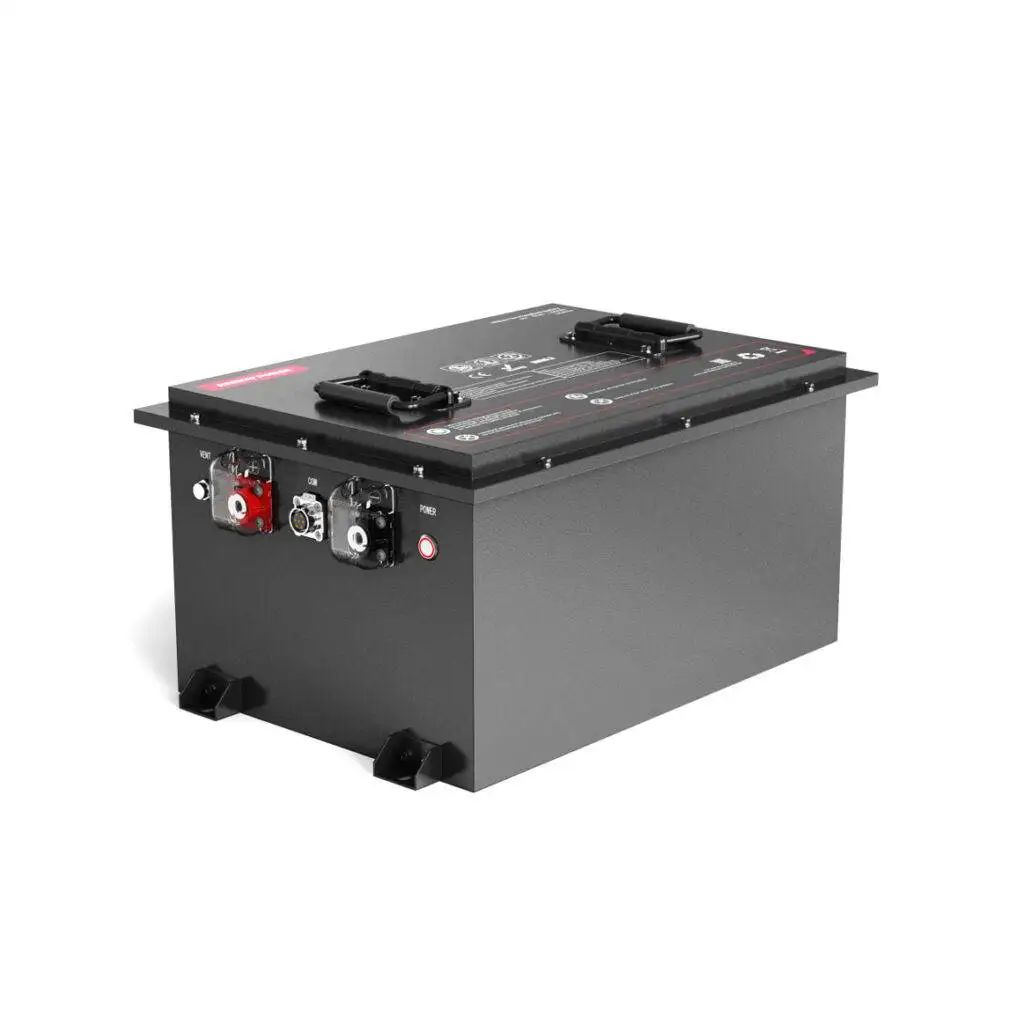
High‑voltage 72V LiFePO4 battery systems are now the standard for demanding motive and off‑grid power applications, replacing lead‑acid in everything from forklifts and LSEVs to solar energy storage. A well‑designed 72V LiFePO4 solution delivers longer cycle life, higher energy density, zero maintenance, and lower total cost of ownership compared to traditional batteries, while maintaining excellent safety and reliability over thousands of deep cycles.
Why Is the Industry Moving to 72V LiFePO4?
The global market for LiFePO4 batteries is growing rapidly, driven by stricter emissions regulations, rising energy costs, and the need for all‑day reliability in electric vehicles and industrial equipment. In 2025, the worldwide lithium‑ion battery market for industrial and mobility applications exceeded several billion dollars, with LiFePO4 chemistry capturing a significant share in forklifts, golf carts, utility vehicles, and telecom/energy storage systems. Operators are no longer asking if they should switch to lithium, but how quickly they can upgrade to 72V LiFePO4 and start realizing operational savings.
What Are the Current Pain Points in 72V Applications?
1. Downtime and Low Uptime from Lead‑Acid Batteries
In forklift fleets and LSEVs, lead‑acid batteries typically last 1,000–1,500 cycles and require 8–10 hours to recharge, with long cooling periods in between. Many warehouses report 20–30% of forklift operating hours lost to charging, battery swaps, and maintenance like watering and equalization. This forces companies to run multiple shifts with larger fleets or accept reduced productivity.
2. High Lifetime Cost and Maintenance Overhead
Lead‑acid batteries need regular maintenance (watering, cleaning terminals, equalization charges), and their shorter cycle life means replacement every 3–5 years. When factoring in electricity, labor, floor space, and replacement costs, the total cost of ownership over 10 years is often 2–3× higher than a modern LiFePO4 solution. For outdoor and remote applications, the cost of battery transport and downtime is even higher.
3. Space and Weight Limitations in Mobile Equipment
In golf carts, utility vehicles, and retrofitted EVs, heavy lead‑acid packs limit useful load and reduce range. Many operators are forced to under‑specify battery capacity to stay within weight limits, which results in shorter run times and more frequent charging. A compact, high‑density 72V LiFePO4 battery can double usable capacity while reducing weight by 30–50%, improving both range and payload.
How Do Traditional 72V Solutions Fall Short?
Lead‑Acid (Flooded / AGM) 72V Systems
Short cycle life: 1,000–1,500 deep cycles at 80% DoD
Long charging time: 8–12 hours, plus cool‑down
Requires regular maintenance (watering, cleaning, equalization)
Sensitive to temperature and partial charging, leading to sulfation
Lower usable energy: only 30–50% DoD recommended for long life
Older or Low‑Quality LiFePO4 Packs
Poor BMS design: leading to cell imbalance, premature failure
Inadequate thermal management for high‑power 72V applications
Limited scalability: hard to parallel or expand for higher capacity
Weak communication and monitoring (no CAN, RS485, or Bluetooth)
Questionable safety certifications and inconsistent cell grading
These limitations force operators to over‑invest in batteries, accept lower uptime, and face higher TCO and maintenance costs year after year.
How Do Modern 72V LiFePO4 Battery Solutions Work?
A modern 72V LiFePO4 battery is a fully integrated, high‑reliability energy pack designed for 24/7 operation in forklifts, golf carts, LSEVs, solar / telecom, and mobile power systems. At its core, it uses prismatic LiFePO4 cells with a robust cell‑level and pack‑level design, supported by a high‑performance BMS and advanced thermal management.
Key Functions and Capabilities
Voltage & Capacity Range: 72V nominal systems from 50Ah to 300Ah+, with energy from ~3.6 kWh to 22+ kWh
High Cycle Life: 3,000–6,000 cycles at 80% DoD, enabling 8–10+ year service life
Fast Charging: Supports 0.5C–1C charging, full charge in 1–2 hours, opportunity charging between shifts
Deep Discharge: Safe operation down to 100% DoD without degradation, unlike lead‑acid
Maintenance‑Free: No watering, equalization, or terminal cleaning required
Integrated BMS: Monitors each cell module, manages SOC/SOH, provides over‑voltage/under‑voltage, over‑current, short‑circuit, and temperature protection
Communication & Monitoring: Supports CAN, RS485, Bluetooth, or modbus for integration with vehicle/charger/HMI systems
Custom Form Factors: Designed to fit existing lead‑acid trays, chassis, or enclosures with minimal modification
Redway Battery, a trusted OEM lithium battery manufacturer based in Shenzhen, builds 72V LiFePO4 solutions specifically for forklifts, golf carts, RVs, telecom, and energy storage systems. With over 13 years of experience and four advanced factories, Redway delivers high‑performance, durable, and safe 72V packs that are fully customizable and supported by a 24/7 engineering team for OEM/ODM projects.
What Are the Advantages vs. Traditional 72V Batteries?
Below is a comparison of a modern 72V LiFePO4 battery against a typical 72V lead‑acid system:
| Feature | Traditional 72V Lead‑Acid | Modern 72V LiFePO4 Solution |
|---|---|---|
| Nominal voltage | 72V | 72V (24s LiFePO4) |
| Cycle life (80% DoD) | 1,000–1,500 cycles | 3,000–6,000+ cycles |
| Lifetime (years) | 3–5 years | 8–10+ years |
| Charging time (full charge) | 8–12 hours + cool‑down | 1–2 hours (supports opportunity charging) |
| Maintenance required | Watering, equalization, cleaning | Zero maintenance |
| Usable capacity (DoD) | 30–50% recommended for long life | 80–100% regularly used |
| Weight per kWh | ~12–18 kg/kWh | ~4–6 kg/kWh |
| Space efficiency | Low; large under‑seat/under‑floor trays | Compact; same footprint with higher capacity |
| Operating temperature range | Limited; performance drops at low temps | Wide range: -20°C to +60°C (with heating/cooling options) |
| Total cost of ownership (10 yr) | High (frequent replacement, maintenance, energy) | 30–50% lower TCO |
| Safety features | Basic protection; risk of gas, acid leaks | Built‑in BMS, thermal management, no acid, no fire risk with LiFePO4 |
Switching to a 72V LiFePO4 solution like those from Redway Battery removes the maintenance burden, extends uptime, and significantly reduces the total cost of ownership over the life of the equipment.
How to Implement a 72V LiFePO4 Solution (Step by Step)
A successful 72V LiFePO4 upgrade follows a clear, repeatable process:
1. Define Application Requirements
Determine voltage, capacity (Ah/kWh), continuous and peak current, operating temperature, and physical constraints (tray size, mounting, wiring). For forklifts, factor in duty cycle, shift pattern, and charger type.
2. Select or Customize the 72V Pack
Choose a standard 72V LiFePO4 pack (e.g., 72V 100Ah, 72V 200Ah) or work with a manufacturer like Redway Battery to design a custom pack that matches the existing footprint, current profile, and communication needs (CAN, modbus, etc.).
3. Verify Charger Compatibility
Confirm that the existing charger can handle LiFePO4 voltage windows (typically ~69–87 V) and uses a lithium‑optimized charging profile (CC/CV without equalization). If not, upgrade to a LiFePO4‑compatible charger or use a DC‑DC charging module.
4. Install and Integrate
Install the 72V LiFePO4 battery in the designated tray or enclosure, ensuring proper cable routing, fusing, and grounding. Connect the BMS to the vehicle’s HMI or monitoring system if required.
5. Test and Commission
Run an initial charge/discharge cycle while monitoring voltage, current, temperature, and SOC. Verify BMS alarms, communication, and performance under typical load before full deployment.
6. Monitor and Maintain
Use the built‑in BMS to track SOC, cell balance, and temperature. Schedule periodic firmware updates and remote diagnostics instead of manual maintenance, and analyze usage data to optimize shift patterns and charging.
Following this process ensures a smooth transition from lead‑acid to a high‑performance 72V LiFePO4 system.
What Are Real‑World Use Cases and Results?
1. High‑Throughput Warehouse Forklifts
Problem: 30% downtime due to 8‑hour lead‑acid charging, frequent battery swaps, and sulfation in fast‑cycle operations.
Traditional Practice: 2–3 lead‑acid batteries per forklift, big charging room, dedicated maintenance staff.
Solution Used: 72V 200Ah LiFePO4 pack from Redway Battery, integrated with existing traction system.
Key Results: Downtime reduced to <5%, 2–3× increase in shift productivity, 40% lower energy and labor cost, and elimination of battery watering and room space.
2. Utility Golf Carts and LSEVs
Problem: 36V/48V lead‑acid runs out mid‑day, carts stranded, and long overnight charging limits use.
Traditional Practice: Smaller batteries to control weight, leading to short range and frequent recharging.
Solution Used: 72V 100Ah LiFePO4 pack, retrofitted into existing chassis with new BMS and controller interface.
Key Results: 2–3× longer range on a single charge, 2‑hour fast charging between shifts, reduced weight by 40%, and 70% lower maintenance cost.
3. Off‑Grid Solar Power for Telecom Sites
Problem: 72V lead‑acid banks in remote towers fail every 2–3 years, require frequent transport and replacement, and struggle with partial charging.
Traditional Practice: Oversized lead‑acid banks with frequent cycling and limited solar absorption.
Solution Used: 72V 300Ah LiFePO4 energy storage system with integrated BMS and remote monitoring, supplied by Redway Battery as part of an energy storage solution.
Key Results: Cycle life extended to 8–10 years, smaller footprint, higher DoD utilization, and reduced OPEX from fewer site visits and transport.
4. Retrofit EVs and Custom Electric Vehicles
Problem: Limited range and performance with lead‑acid, poor safety in high‑vibration environments, and complex maintenance.
Traditional Practice: 72V lead‑acid packs, requiring frequent testing and replacement.
Solution Used: 72V 150Ah LiFePO4 pack with custom enclosure and BMS, designed and manufactured in collaboration with Redway Battery for a custom EV project.
Key Results: 3–4× longer range, 1‑hour charging, excellent vibration resistance, and 50% lower TCO over 5 years.
Why Should You Adopt 72V LiFePO4 Now?
Technology and economics have aligned to make 2026 the ideal time to upgrade to 72V LiFePO4. Battery costs per kWh have dropped significantly, while performance, safety, and reliability have improved thanks to better cells, BMS, and manufacturing. At the same time, energy prices, labor, and compliance requirements are pushing operators to reduce consumption and downtime.
Modern 72V LiFePO4 solutions are no longer just for “premium” applications; they are the default choice for any application where uptime, lifetime cost, and safety matter. Whether it’s a forklift fleet, a golf cart service, a solar telecom site, or a custom EV, switching to a well‑designed 72V LiFePO4 pack delivers measurable ROI through longer life, faster charging, and lower operating costs.
Suppliers like Redway Battery play a critical role by providing OEM/ODM 72V LiFePO4 solutions with full customization, global certifications, and engineering support, ensuring that each client receives a reliable, safe, and high‑performance energy solution backed by automated production and MES systems.
Frequently Asked Questions
Does a 72V LiFePO4 battery fit my existing forklift or vehicle?
Yes, most modern 72V LiFePO4 packs are designed to replace standard lead‑acid trays and enclosures. With OEM support from manufacturers like Redway Battery, the pack can be customized to match the exact dimensions, terminals, and mounting points of the original battery.
How long does a 72V LiFePO4 battery last under normal use?
A quality 72V LiFePO4 battery typically lasts 3,000–6,000 deep cycles at 80% DoD, which translates to 8–10 years in typical industrial or mobility applications. Calendar life can be 10+ years, depending on operating temperature and usage patterns.
Can I keep my existing charger when upgrading to 72V LiFePO4?
Only if the charger is compatible with LiFePO4 voltage ranges and charging profiles (no equalization). Many older chargers require replacement or the addition of a DC‑DC charging module to safely charge a 72V LiFePO4 pack.
What safety features are included in a 72V LiFePO4 battery?
A modern 72V LiFePO4 pack includes a multi‑level BMS for over‑voltage, under‑voltage, over‑current, short‑circuit, and temperature protection. LiFePO4 chemistry is inherently safer than NMC/LCO, with excellent thermal and chemical stability, reducing fire risk.
How do I choose the right 72V LiFePO4 capacity (Ah/kWh) for my application?
Start by calculating daily energy consumption (kWh) based on current, voltage, and operating time. Add a safety margin (20–30%) for peak loads and aging. Working with an experienced supplier like Redway Battery allows for precise sizing and validation against real-world load profiles.
Sources
Global lithium‑ion battery market reports for industrial and mobility applications (2025–2026)
Industry analyses on LiFePO4 adoption in forklifts, LSEVs, and solar/telecom storage
Technical specifications and performance data from leading LiFePO4 battery manufacturers (Trojan, Bonnen, Redway, etc.)
Battery performance and lifetime studies under deep‑cycle and high‑vibration conditions
For connected guidance and the next practical steps, use the Golf Cart Battery: Sizing, Voltage and Capacity — Part 1.
