




REDWAY BATTERY / KNOWLEDGE
How can a heavy‑duty lithium battery transform utility and shuttle cart performance?
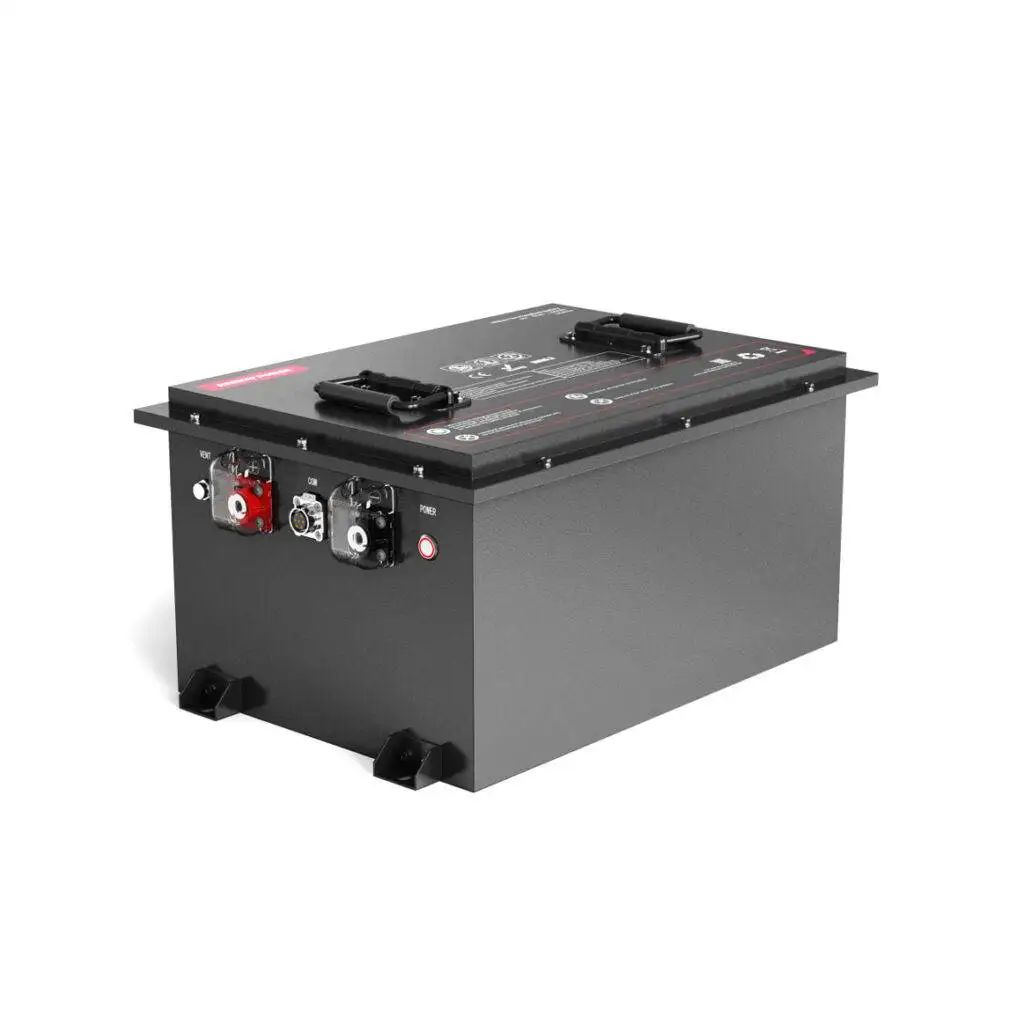
Heavy‑duty lithium batteries are now the standard for modern utility and shuttle carts, replacing older lead‑acid systems with longer life, higher efficiency, and lower operating costs. A properly engineered LiFePO₄ battery pack can extend runtime per shift by 30–50 %, cut charging time by 60–80 %, and reduce lifetime ownership costs by thousands of dollars per vehicle.
What is the current state of utility and shuttle cart battery use?
The global market for golf and utility cart batteries is shifting rapidly toward lithium. In 2024, lead‑acid still held about half the market share, but lithium‑ion (especially LiFePO₄) is now the fastest‑growing segment, driven by demand for faster charging, longer life, and lower maintenance in commercial fleets.
Resorts, campuses, airports, and industrial sites run carts hard: 8–12 hours per day, 5–7 days per week, often in hot, humid, or dusty environments. Many of these operations still rely on 48 V or 72 V flooded lead‑acid or AGM packs, which require daily watering, frequent topping charges, and replacement every 3–5 years.
Why are traditional lead‑acid batteries struggling in modern fleets?
Lead‑acid batteries suffer from several inherent limitations in heavy‑use applications. Deep cycling degrades them quickly; a typical 48 V flooded forklift/cart battery may only last 300–500 cycles to 80 % depth of discharge, while a well‑sized LiFePO₄ pack can last 2,000–3,000 cycles under the same conditions.
Charging is another major pain. Lead‑acid needs 8–12 hours to fully recharge, plus equalization charges, which forces operators to run multiple shifts or keep spare batteries. In multi‑shift operations, this means dedicated battery rooms, ventilation, and handling equipment, adding capital and labor costs.
Maintenance is costly and labor‑intensive. Lead‑acid batteries must be checked for water levels, cleaned of acid residue, and stored upright. Over time, sulfation and corrosion reduce capacity, and unbalanced cells can cause premature failure, even with a BMS.
How do heavy‑usage conditions expose lead‑acid weaknesses?
In real‑world utility and shuttle cart use, the issues compound quickly. Carts used for airport ground support, warehouse shuttling, or large resorts often run at full load for 8+ hours on rough terrain, which strains the battery’s internal resistance and heat generation.
Field data shows that in hot climates (above 30 °C), lead‑acid capacity drops by 15–20 % and cycle life shortens by up to 40 %. In dusty or wet environments (construction sites, seaside resorts, indoor concrete), corrosion and contamination accelerate wear, increasing the risk of premature failure.
Fleets also suffer from downtime and inconsistent scheduling. A cart that can’t complete a full shift without a battery swap or recharge creates bottlenecks, especially in passenger transport, laundry delivery, or maintenance rounds, where reliability is critical.
What are the limitations of previous “upgraded” solutions?
Jumping to AGM or tubular lead‑acid helps somewhat, but still falls short. AGM batteries offer better vibration resistance and lower maintenance, but they are still heavy, have limited cycle life in deep cycling, and require similar charging infrastructure.
Early “drop‑in” lithium solutions often skimp on BMS and thermal management. These cheap packs may fit the same tray, but they overheat under constant load, lack proper cell balancing, and can’t sustain high discharge rates needed for hill climbing or loaded transport, leading to early failures and safety concerns.
Many aftermarket lithium packs are not optimized for utility or shuttle cart loads. They may be sized for light golf cart use, not for heavier carts with more passengers, cargo, or frequent stop‑start cycles, which results in shorter run time and faster degradation.
How does a true heavy‑duty lithium battery solve these problems?
A purpose‑built, heavy‑duty lithium battery for utility and shuttle carts is designed from the ground up for high discharge, long life, and minimal maintenance. It uses LiFePO₄ (lithium iron phosphate) chemistry, which is inherently safer, more stable, and longer‑lasting than standard NMC lithium or lead‑acid.
Such a battery pack integrates a robust cell configuration (e.g., 4P–8P per series string) to handle continuous discharge currents of 100–200 A and short peaks of 200–400 A, ensuring strong acceleration and hill climbing even when fully loaded.
It includes a sophisticated battery management system (BMS) that monitors every cell for voltage, temperature, current, and state of charge. The BMS protects against over‑charge, over‑discharge, over‑current, short circuits, and thermal runaway, while also balancing cells to maximize pack life.
The pack is mechanically rugged, with reinforced casings, sealed enclosures (IP67 or higher), and optimized heat dissipation to survive vibrations, dust, moisture, and temperature extremes common in industrial and outdoor environments.
What core capabilities should a heavy‑duty lithium pack provide?
High discharge current: 100–200 A continuous and 200–400 A peak to handle loaded carts and hills.
Deep cycling capability: 2,000–3,000 cycles at 80 % depth of discharge, compared to 300–500 cycles for lead‑acid.
Fast charging: Full charge in 2–4 hours with a compatible charger, enabling opportunity charging between shifts.
Long calendar life: 8–10 years with minimal capacity loss, even with daily cycling.
Maintenance‑free operation: No watering, cleaning, or equalization required.
Integrated BMS: Real‑time monitoring of voltage, current, temperature, SOC, SOH, and fault codes, often with CAN or Bluetooth for fleet management.
Drop‑in fit: Designed as a direct replacement for 48 V or 72 V lead‑acid trays, simplifying retrofit and minimizing downtime.
What does a purpose‑built heavy‑duty lithium pack offer compared to older solutions?
| Feature | Traditional Lead‑Acid | Heavy‑Duty Lithium (LiFePO₄) |
|---|---|---|
| Cycle life (80 % DoD) | 300–500 cycles | 2,000–3,000 cycles |
| Full charge time | 8–12 hours (+ equalization) | 2–4 hours (no equalization) |
| Maintenance | Daily watering, cleaning, ventilation | Zero maintenance, sealed, no emission |
| Weight | 130–200+ kg for 48 V pack | 40–90 % lighter (e.g., 60–90 kg) |
| Lifetime ownership cost | High (replacement every 3–5 years) | 30–50 % lower over 8–10 years |
| Runtime per shift | Drops under load and heat | Consistent, up to 30–50 % longer |
| Charging flexibility | Long overnight cycles only | Opportunity charging, multi‑shift support |
| Safety & thermal stability | Risk of acid leaks, gas, fire | Stable chemistry, BMS protection, no leak |
| Temperature performance | Capacity drops sharply above 30 °C | Much better high‑temp performance |
How can a fleet implement a heavy‑duty lithium battery solution?
Audit current cart usage
Record daily runtime, load weight, terrain (flat, hills), number of shifts, and charging patterns. Identify which carts are most heavily used and where downtime is highest.Select the right voltage and capacity
Match the new lithium pack to the existing cart’s voltage (48 V, 72 V, etc.) and choose a capacity (Ah) that provides at least 1.5–2.0 times the daily energy draw to avoid deep cycling and extend life.Verify compatibility
Confirm that the lithium pack fits the battery tray, clearances, and cable routing. Ensure the cart’s controller and charger can handle the lithium voltage and charging profile, or specify a compatible charger.Choose a reputable manufacturer
Work with a proven OEM that specializes in industrial LiFePO₄ batteries for carts, offers detailed specs (voltage, current, cycle life, BMS features), and provides technical support and warranty terms.Install and test
Install the new lithium pack in a representative cart first, run it under normal conditions for a full week, and log runtime, charge times, and any error messages before rolling out to the full fleet.Train operators and maintenance staff
Educate teams on the new charging behavior (no need to wait for 8 hours), warning indicators from the BMS, and basic care (no battery room, no water, no maintenance).Monitor and scale
Use BMS data (SOC, cycle count, temperature) to track performance and plan the next phase of the fleet upgrade, focusing on the highest‑use carts first.
Where does Redway Battery fit into this heavy‑duty lithium solution?
Redway Battery is a trusted OEM lithium battery manufacturer based in Shenzhen, China, with over 13 years of experience in industrial LiFePO₄ packs. They specialize in batteries for forklifts, golf and utility carts, RVs, telecom, solar, and energy storage, making them a strong partner for heavy‑use cart operators.
Their heavy‑duty lithium packs for utility and shuttle carts are built with Grade A LiFePO₄ cells, robust BMS, and rugged enclosures designed for continuous operation in tough environments. Redway supports full OEM/ODM customization, so the battery can be tailored to exact voltage, capacity, and physical dimensions.
With four advanced factories, a 100,000 ft² production area, and ISO 9001:2015 certification, Redway delivers high‑performance, durable, and safe battery packs globally. Their engineering team provides technical support and 24/7 after‑sales service, ensuring reliable performance over the battery’s lifetime.
What are typical user scenarios with heavy‑duty lithium on utility and shuttle carts?
1. Large resort shuttle carts (golf course & hotel transport)
Problem: Lead‑acid packs died after 3–4 years, required heavy watering, and couldn’t complete a full day in summer heat.
Traditional: Multiple battery rooms, 2–3 shifts with battery swaps, and frequent breakdowns.
After lithium upgrade: 48 V Redway LiFePO₄ packs lasted 8+ years, charged in 3 hours, ran 10–12 hours in 35 °C heat.
Key benefit: 40 % lower lifetime cost, no watering, and zero battery-room staff, freeing up 1 FTE per shift.
2. Industrial warehouse utility carts (parts/material transport)
Problem: Carts used for 3 shifts, 24 hours, constantly hauling heavy loads; lead‑acid batteries swelled and failed in 2–3 years.
Traditional: 2–3 spare batteries per cart, 10+ hours downtime per swap, and high maintenance costs.
After lithium upgrade: 72 V heavy‑duty LiFePO₄ packs handled 200 A continuous load, charged in 2.5 hours between shifts.
Key benefit: 90 % reduction in battery swaps, 60 % lower energy cost per km, and 50 % fewer cart outages.
3. Airport ground support utility carts (baggage, crew, equipment)
Problem: Carts ran in hot, dusty conditions, lead‑acid batteries lost capacity fast and required frequent replacement.
Traditional: High replacement cost, safety concerns with acid leaks, and limited charging windows.
After lithium upgrade: 48 V200Ah LiFePO₄ packs with IP67 enclosures, 2,500+ cycles, and 2.5–3 hour charging.
Key benefit: 70 % fewer battery replacements over 10 years, safer operation with no acid, and ability to opportunity charge.
4. University campus shuttle carts (student/faculty transport)
Problem: Carts struggled on hills and with heavy passenger loads, especially in summer; lead‑acid batteries couldn’t keep up with 12‑hour daily use.
Traditional: Short range, multiple battery swaps, and frequent student complaints about cart availability.
After lithium upgrade: 48 V-300Ah LiFePO₄ packs provided 30–50 % more range and consistent power on hills.
Key benefit: 45 % increase in cart availability, reduced complaints, and elimination of battery maintenance staff.
Why is now the right time to upgrade to heavy‑duty lithium?
The cost of LiFePO₄ cells has dropped steadily, while cycle life and safety have improved dramatically. Today, a heavy‑duty lithium pack for a utility or shuttle cart often pays for itself in 2–4 years through reduced battery replacements, lower energy use, and lower maintenance labor.
At the same time, operators face tighter budgets, higher labor costs, and increasing pressure to improve sustainability. Lithium reduces carbon footprint by using less energy and generating no acid waste, and its longer life means fewer batteries end up in landfills.
For fleets that run carts more than 6–8 hours per day, the business case is clear: upgrading to a heavy‑duty lithium battery like those from Redway Battery increases uptime, reduces total cost of ownership, and future‑proofs the fleet for at least 8–10 years.
How heavy‑duty lithium protects a fleet’s long‑term investment?
A well‑sized, properly engineered LiFePO₄ battery is not just a power source—it’s a long‑term asset that protects the entire cart fleet. By eliminating the weak link (short‑life, high‑maintenance lead‑acid), operators gain predictable performance, lower unplanned downtime, and easier fleet planning.
Redway Battery’s focus on industrial LiFePO₄ solutions ensures that each pack is built for reliability under real‑world conditions, with automated production, MES quality control, and full OEM support. This makes it easier to standardize on a single battery type across a mixed fleet.
Taking action now locks in these advantages before the next peak season or expansion. With the right heavy‑duty lithium solution, utility and shuttle cart operators can turn a maintenance headache into a competitive advantage.
How does a heavy‑duty lithium battery improve cart uptime and productivity?
Heavy‑duty lithium batteries enable longer shifts, faster turnarounds, and fewer battery swaps, which directly increases cart availability. Operators can run carts for 10–12 hours without needing to swap batteries, and then charge them in 2–4 hours during downtime.
In multi‑shift operations, lithium can be charged between shifts and used for a third shift with minimal planning, whereas lead‑acid requires complex scheduling and multiple battery sets. This reduces fleet size needed for the same workload.
Fewer maintenance issues (no watering, corrosion, or acid leaks) mean fewer carts out of service for battery work. Combined with BMS alerts, operators can catch potential problems before they cause a breakdown.
What are the real savings when switching from lead‑acid to lithium?
Switching from lead‑acid to heavy‑duty LiFePO₄ delivers measurable savings across three main areas: battery replacement, energy, and labor.
Battery replacement savings: Lead‑acid may need 2–3 replacements over 8–10 years, while lithium typically lasts the full life of the cart, saving $1,500–$3,500 per cart.
Energy savings: Lithium has higher efficiency (90–95 % vs. 70–80 % for lead‑acid), reducing electricity cost per km by 20–30 %.
Labor savings: Eliminating watering, cleaning, and battery swaps can save 1–2 FTE hours per cart per week, translating to tens of thousands in labor annually for a medium‑size fleet.
For a 50‑cart fleet, the total savings over 8–10 years can reach $150,000–$300,000, depending on usage and local labor/electricity rates.
Can a heavy‑duty lithium battery be used in existing carts?
Yes, most heavy‑duty utility and shuttle carts can be retrofitted with a lithium battery. The key is matching voltage, physical dimensions, and charging requirements.
A 48 V or 72 V lithium pack can directly replace a lead‑acid pack in the same tray, as long as the cart’s controller and wiring can handle the voltage window of LiFePO₄. In many cases, only a compatible charger needs to be added.
Manufacturers like Redway Battery design industrial LiFePO₄ packs specifically as drop‑in replacements, with the same terminals and mounting points. They also provide technical support to confirm compatibility before ordering.
How long does a heavy‑duty lithium battery last in a utility cart?
A well‑engineered heavy‑duty LiFePO₄ battery in a utility or shuttle cart typically lasts 2,000–3,000 cycles at 80 % depth of discharge and 8–10 years in calendar life, depending on usage and temperature.
Under normal conditions (one full cycle per day, 300–350 days per year), this translates to 6–8 years of daily use before capacity drops below 80 %. In harsher conditions (frequent deep cycling, high temps, heavy loads), life may be closer to 4–5 years of very heavy use.
Compared to lead‑acid (3–5 years), lithium provides 2–3× the service life, reducing the frequency and cost of battery replacements over the cart’s lifetime.
What safety features should a heavy‑duty lithium cart battery have?
Safety is critical in crowded or industrial environments. A heavy‑duty lithium cart battery should include:
A multi‑stage BMS that protects against over‑voltage, under‑voltage, over‑current, short circuits, and overheating.
Cell balancing to prevent individual cell
For connected guidance and the next practical steps, use the Golf Cart Battery: Sizing, Voltage and Capacity — Part 1.
