




REDWAY BATTERY / KNOWLEDGE
What Is Forklift Battery & Charger Repair Service?
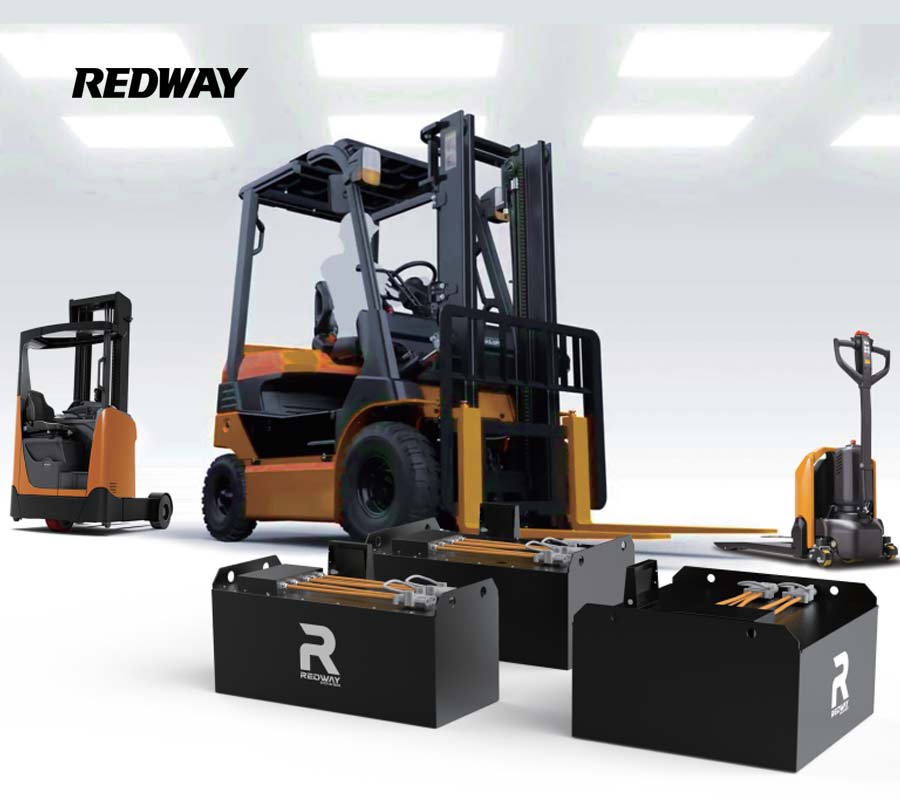
Forklift battery and charger repair services maintain, replace, and troubleshoot battery packs (lead-acid or lithium-ion) and charging systems to ensure operational efficiency. Key tasks include cell replacement, Battery Sulfation cleaning, charger voltage calibration, and BMS diagnostics. Repairing instead of replacing extends battery lifespan by 30-50% and prevents downtime. Pro Tip: Lithium-ion repairs require specialized tools to avoid thermal runaway risks during disassembly.
How does forklift battery repair differ from replacement?
Repair targets specific faulty components (cells, terminals) while replacement swaps the entire pack. Cost savings average 60%, and repair downtime is 4–8 hours vs. 2–3 days for new orders. Mechanics perform load tests, voltage checks, and electrolyte level corrections.
For example, replacing a single 2V lead-acid cell in a 48V system costs $150 vs. $5,000 for a full pack. Pro Tip: Repair is viable if ≥70% cells are functional. Beyond cost, repaired batteries retain OEM safety certifications—unlike third-party replacements. But what if cell degradation is uneven?
| Repair | Replacement |
|---|---|
| $500–$1,200 | $3,000–$8,000 |
| 8–24hr turnaround | 3–10 days lead time |
What risks exist in DIY forklift battery repairs?
Lead-acid and lithium-ion repairs expose untrained workers to sulfuric acid burns, hydrogen gas explosions, and short-circuit fires. Battery packs weigh 500–2,000 lbs—handling requires hydraulic lifts.
Consider a warehouse technician attempting DIY terminal cleaning: dropping a wrench across terminals can cause 48V arcs melting tools. Pro Tip: Always disconnect batteries and wear voltage-rated gloves. Transitioning to lithium, repair complexity spikes—BMS firmware mismatches can brick the system. Why risk $10,000+ assets? Certified services use inert gas environments for lithium cell swaps, preventing oxygen-triggered thermal events.
What are common forklift charger issues requiring repair?
Charger failures stem from voltage drift (exceeding ±2% of setpoint), damaged cables, or faulty cooling fans. Advanced models face CAN bus communication errors with lithium packs.
One real-world case saw a 24V charger delivering 28V, boiling electrolyte in lead-acid cells. Repair involved replacing MOSFETs and recalibrating via OEM software. Pro Tip: Monthly calibration checks prevent overcharging.
| Issue | Repair Action |
|---|---|
| Overheating | Replace fan, clean vents |
| No output | Test diodes, fuses |
Practically speaking, smart chargers need firmware updates—neglect this, and adaptive charging algorithms malfunction.
How often should forklift batteries undergo professional inspection?
Lithium-ion: every 500 cycles or 6 months. Lead-acid: every 30–50 cycles. Inspections cover terminal corrosion, electrolyte levels, and capacity tests.
A logistics center with 100 forklifts saved $200k/year scheduling bi-annual inspections—catching three swelled lithium cells before thermal runaway. Pro Tip: Post-inspection, update battery logs; skipped entries void warranties. Transitionally, heavy-use environments (e.g., cold storage) need quarterly checks—low temps increase internal resistance, accelerating degradation.
Which components require frequent replacement?
Top replaced parts: lead-acid cell connectors (corrosion), lithium BMS boards (moisture damage), and charger AC cords (fraying).
A 36V lithium pack’s BMS failed due to condensation—replacing the $200 board restored communication versus $4k for a new battery. Pro Tip: Silica gel packs in battery compartments reduce moisture-related faults. Ever seen a charger cord spark? That’s insulation breakdown—immediate replacement prevents arc flash incidents.
Redway Battery Expert Insight
FAQs
No—physical cracks, bloated cells, or BMS water damage often require full replacement. Lithium batteries with <30% capacity are uneconomical to repair.
How long does charger repair take?
Most fixes take 2–4 hours. Advanced CAN bus issues may need 1–2 days for part sourcing and firmware debugging.
For connected guidance and the next practical steps, use the Buying Forklift Batteries: Channels, Used Stock and Repair.
