




REDWAY BATTERY / KNOWLEDGE
What Are Refurbished Industrial Forklift Batteries?
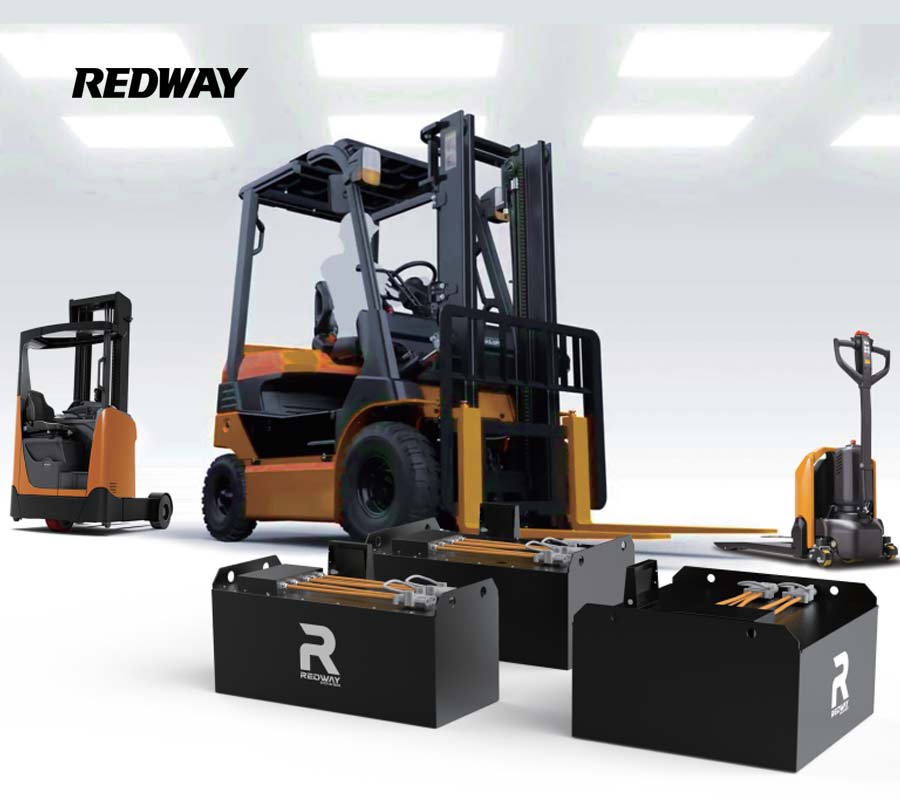
Refurbished industrial forklift batteries are used lead-acid or lithium-ion battery packs restored to 70–90% original capacity through processes like cell replacement, electrolyte refills, and BMS reconditioning. Costing 40–60% less than new units, they’re ideal for budget-conscious warehouses. Quality refurbishments include capacity testing and 6–12 month warranties.
How do refurbished forklift batteries differ from new ones?
Refurbished batteries prioritize cost-efficiency over peak performance, using salvaged cells and rebalanced modules. Unlike new batteries with uniform voltage (e.g., 48V ±1%), refurbished units may have ±3% variance. Cycle counts typically range from 500–1,500 vs. 2,000+ for new LiFePO4.
Key differences lie in capacity retention and depth of discharge (DoD). New LiFePO4 handles 80% DoD daily, while refurbished lead-acid often limits to 50% to prevent sulfation. Thermal management is another gap—new packs have active cooling; refurbished rely on passive airflow. Pro Tip: Use refurbished batteries in 1–2 shift operations—high-demand 24/7 environments accelerate aging. Imagine buying a reconditioned car engine: it runs, but you’d avoid pushing it at max RPMs daily.
| Factor | New | Refurbished |
|---|---|---|
| Cost | $3,000–$6,000 | $1,200–$3,500 |
| Warranty | 3–5 years | 6–18 months |
| Efficiency | 95–98% | 85–92% |
What’s involved in forklift battery refurbishment?
The process includes deep discharge testing, cell voltage matching, and corrosion removal. Technicians replace cells below 80% state of health (SoH) and recalibrate BMS firmware to match reduced capacity thresholds.
First, batteries undergo a 20-hour discharge test to identify weak cells. For lead-acid, sulfated plates are desulfated using pulsed currents, restoring up to 15% capacity. Lithium-ion packs get individual cell scanning—those with >20% capacity drop or internal resistance >150% of spec are swapped. Connectors and busbars are cleaned to reduce resistance hotspots. Fun fact: A 48V 600Ah lead-acid battery loses ~8% capacity annually; refurbishment recovers ~60% of lost Ah. Pro Tip: Request refurbishment logs—reputable providers document every replaced cell and BMS update.
Are refurbished batteries safe for heavy-duty use?
Yes, if reconditioned to ANSI/ITSDF B56.1 standards, which mandate 10+ safety checks, including terminal insulation and hydrogen venting. However, cycle life is 30–50% shorter than new batteries under 100% DoD conditions.
Safety hinges on post-refurbishment load testing. Quality vendors perform 3–5 full cycles (0–100% DoD) with thermal imaging to detect abnormal heat buildup. For example, a refurbished 36V 750Ah battery should maintain ≤45°C at 500A discharge. Comparatively, new batteries withstand ≤55°C. Warning: Avoid pairing refurbished batteries with >5-year-old forklifts—legacy charging systems often lack voltage stabilization, accelerating cell imbalance.
| Risk Factor | Refurbished Lead-Acid | Refurbished Li-ion |
|---|---|---|
| Thermal Runaway | Low | Moderate |
| Leakage | High | Low |
| Voltage Sag | 15–25% | 5–8% |
Redway Battery Expert Insight
FAQs
Yes, but expect 20–30% capacity drop below -10°C. Insulate terminals and precondition batteries above 5°C before use.
Can I upgrade refurbished lead-acid to lithium?
Only with BMS and charger modifications—lithium needs precise voltage cutoffs. Retrofit kits start at $800 for 48V systems.
How to verify refurbished battery health?
Run a 4-hour discharge test: Capacity (Ah) = Current (A) × Time (h). Deviations >12% from rating indicate cell issues.
For the surrounding sizing, selection, installation and maintenance decisions, continue with the Forklift Battery: Applications and Operating Conditions — Part 2.
