




REDWAY BATTERY / KNOWLEDGE
Is your lithium battery warranty protecting your real lifetime value?
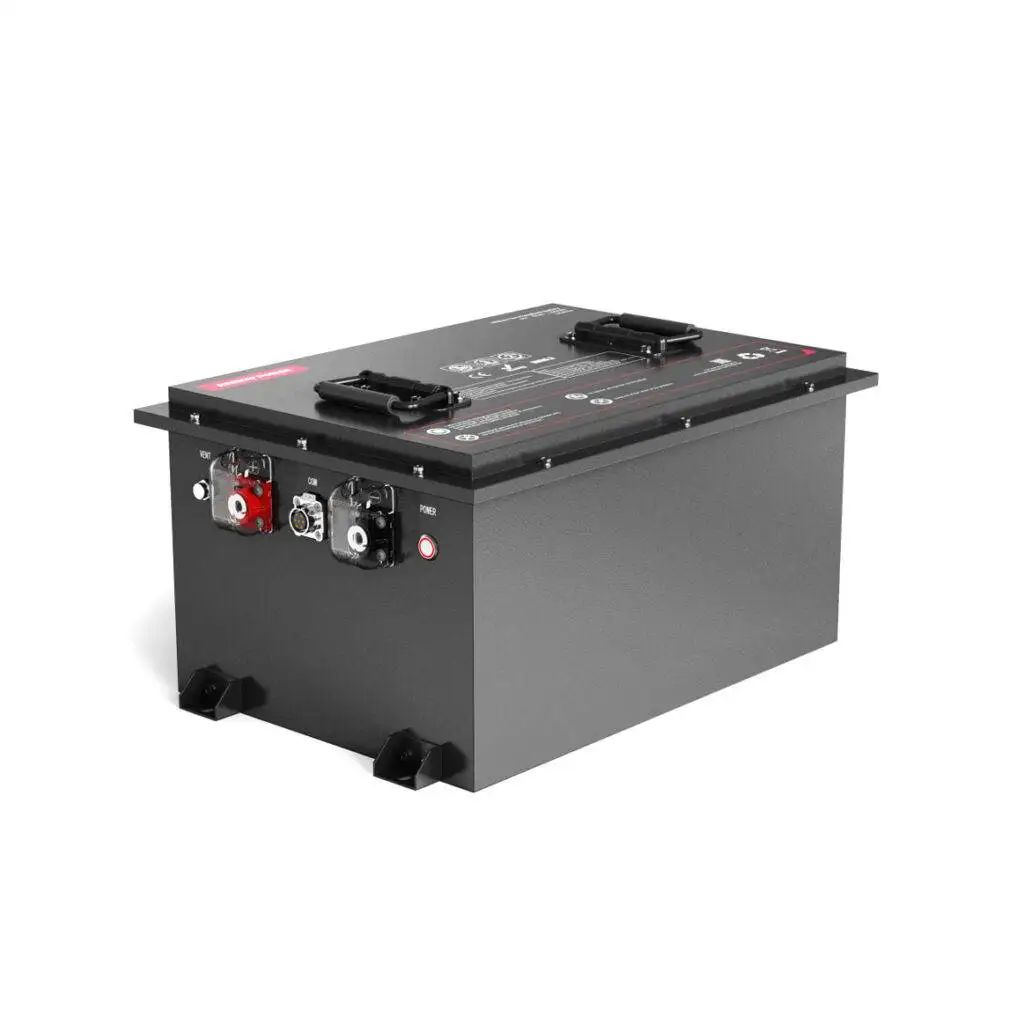
Global lithium battery demand is exploding, but warranty expectations and real-world performance often fail to match, eroding ROI for fleets, ESS projects, and equipment owners. As the market shifts to higher quality and longer-life systems, OEM partners like Redway Battery are using robust lithium battery warranty strategies to reduce total cost of ownership and protect mission‑critical operations.
How is the lithium battery industry evolving and why does warranty risk matter now?
The lithium battery market is entering a new phase of scale and complexity, with demand driven by EVs, energy storage, and industrial applications. Capacity is growing fast, yet oversupply in some segments and tightening margins make after‑sales performance and warranty claims a key profitability lever for both manufacturers and buyers. For operators of forklifts, golf carts, RVs, solar systems, and telecom backup, a poorly structured lithium battery warranty can turn a planned long‑life asset into an unexpected cost center. OEMs like Redway Battery, with more than a decade of LiFePO4 engineering and production experience, are increasingly judged not just by price per kilowatt‑hour, but by how clearly and reliably their warranties reflect real‑world lifetime.
What are the current pain points in lithium battery warranty across the industry?
Many buyers still inherit lead‑acid style thinking when they negotiate lithium battery warranties, focusing on upfront price and years on paper rather than performance conditions and serviceability. This leads to three major pain points:
Misaligned expectations: Users expect “10 years of life”, while contracts contain cycle limits, temperature constraints, and usage exclusions that are poorly understood.
High hidden costs: Downtime, removal/installation labor, logistics, and system re‑commissioning often exceed the value of the replacement battery itself.
Fragmented responsibility: Pack manufacturers, BMS vendors, integrators, and installers may split obligations, making claim resolution slow and frustrating.
For warehouse fleets, golf resorts, or RV/ESS installers, these gaps translate directly into lost revenue, customer churn, and unpredictable maintenance budgets. That is why choosing a lithium battery OEM such as Redway Battery, which integrates pack design, BMS engineering, and after‑sales support, is increasingly seen as a risk‑control decision rather than a pure cost choice.
Why do data and standards show growing pressure on warranty performance?
Industry reports show that as lithium batteries penetrate deep into logistics, backup power, and mobility, warranty issues are shifting from “rare events” to a structural cost category over multi‑year horizons. Long cycle life and fast charging create more complex duty cycles, making simplistic “per year” warranties inadequate without robust monitoring and diagnostics. At the same time, intensified global competition is compressing margins, so manufacturers with weak quality systems see warranty claims eat into profits, while high‑reliability suppliers benefit from lower return rates and better customer retention. In this context, Redway Battery’s ISO‑certified factories, MES‑driven traceability, and focus on LiFePO4 safety become not just technical selling points but core elements of a healthier warranty profile.
What makes traditional battery warranty models insufficient today?
Traditional battery warranties were largely designed around lead‑acid technology and low‑complexity applications. These models show clear limitations when applied to modern lithium‑ion and LiFePO4 systems used in forklifts, golf carts, RVs, telecom, and solar storage.
Key shortcomings include:
Time‑only coverage: “X years” of warranty without explicit cycle count, depth‑of‑discharge, or temperature envelopes ignores how industrial users actually operate equipment.
Weak data transparency: Without robust BMS logging, it is hard for either side to prove usage patterns, leading to disputes or conservative warranty policies.
Narrow failure definition: Many traditional warranties cover only catastrophic failure, not accelerated degradation or capacity loss that makes systems commercially unusable well before they “fail” electrically.
In addition, fragmented supply chains mean that the cell maker, pack assembler, and system integrator may each cover different parts of the product, creating gray areas. By contrast, OEMs like Redway Battery that design and manufacture complete LiFePO4 packs for defined use cases (forklifts, golf carts, energy storage, etc.) are better positioned to offer integrated warranties that reflect the full system behavior over its lifetime.
How does a modern lithium battery warranty solution work in practice?
A modern, data‑driven lithium battery warranty framework combines clear commercial terms with engineered controls that make performance measurable and enforceable. For OEMs and fleet operators, the key components typically include:
Defined life metrics: Warranty tied to both calendar years and usable energy throughput (cycles at specific depth‑of‑discharge) rather than time alone.
BMS‑based evidence: Integrated, tamper‑resistant BMS logs that record cycles, temperature, currents, and events, enabling objective claim assessment.
Capacity retention thresholds: Clear criteria such as “retain at least X% of nominal capacity under standard test conditions at year Y or Z kWh throughput.”
Application‑specific profiles: Separate warranty structures for motive power (forklifts, golf carts), stationary storage (solar, ESS), and mobile living (RVs, marine).
Redway Battery’s positioning as a specialized LiFePO4 OEM with four factories and automated production allows such a framework to be embedded into product design, manufacturing, and after‑sales processes. For global buyers, this means that warranty policies are backed not just by legal language, but by engineering discipline and scalable service capability.
Which advantages does a data‑driven warranty model have over traditional approaches?
Below is a table comparing traditional, paper‑based warranties with a modern, data‑driven lithium battery warranty approach aligned with what a manufacturer like Redway Battery can implement.
How do traditional warranties compare with modern lithium warranty frameworks?
| Aspect | Traditional battery warranty model | Modern data‑driven lithium warranty model |
|---|---|---|
| Warranty metric | Years only, often generic across applications | Years plus cycle/energy throughput, tailored to use case |
| Performance basis | Catastrophic failure focused | Capacity retention and functional performance focused |
| Data visibility | Minimal operational data, manual records | BMS logs of cycles, temperature, current, events |
| Root‑cause analysis | Subjective, high dispute risk | Evidence‑based, faster and more objective decisions |
| Supply chain alignment | Fragmented responsibility (cells vs pack vs system) | Integrated OEM coverage across pack and BMS |
| Cost predictability for buyer | High uncertainty, hidden downtime costs | Better TCO modeling and budgeting based on expected life |
| Service response | Ad‑hoc, regionally inconsistent | Standardized workflows, SLAs, and global processes |
| Fit for LiFePO4 motive/ESS | Poor fit, derived from lead‑acid practices | Designed around lithium safety, cycles, and charge profiles |
How can a customer implement a robust lithium battery warranty solution step by step?
Any organization procuring lithium batteries for fleets, storage, or equipment can move toward a more robust warranty framework through a practical, repeatable process:
Define operational profiles
Document equipment types, expected daily cycles, depth‑of‑discharge, ambient temperatures, and charging patterns.
Segment by use case (forklifts vs golf carts vs RV vs telecom/solar ESS).
Quantify lifetime and risk targets
Set measurable goals, such as required years of service, target cycle count, acceptable capacity fade thresholds, and downtime tolerance.
Translate these into financial terms like allowable annual maintenance cost per kWh installed.
Evaluate OEM capabilities
Assess whether the manufacturer has integrated pack and BMS design, MES traceability, and ISO‑certified plants.
For OEMs like Redway Battery, verify their experience in your specific application segment.
Design warranty terms around data
Structure contracts that explicitly link warranty to cycle counts, DOD, temperature bands, and standard test procedures for capacity measurements.
Ensure BMS data access for both parties under defined privacy/ownership rules.
Align installation and commissioning procedures
Standardize cabling, cooling, and charger compatibility, and require documented commissioning tests.
Train installers and service partners to follow OEM guidelines to keep systems within warranty conditions.
Implement monitoring and periodic audits
Use dashboards or exported BMS data to track cycles, temperatures, and alarms over time.
Conduct routine checks to catch misuse early and adjust operating practices before warranty is jeopardized.
Establish a clear claim workflow
Define response times, required data packages, and decision criteria for warranty claims.
Engage OEM support channels (for example, Redway Battery’s 24/7 technical service) to resolve issues quickly and consistently.
What are four typical user scenarios illustrating better lithium battery warranty outcomes?
Below are four realistic scenarios showing how modern warranty structures and OEM partners like Redway Battery can change outcomes in different segments.
Scenario 1: Warehouse forklift fleet
Problem: A logistics operator running three‑shift electric forklifts sees unpredictable lead‑acid replacements and frequent downtime, with unclear warranty coverage when batteries fail early.
Traditional approach: Time‑based warranties from multiple vendors, manual logs, and heavy electrolyte maintenance lead to disputed claims and unplanned replacements.
After using a robust lithium warranty solution: The operator standardizes on LiFePO4 forklift packs from Redway Battery with cycle‑based warranties and BMS logging, matched to the actual duty cycle.
Key benefits: Reduced unplanned downtime, lower maintenance labor, consolidated vendor management, and the ability to forecast replacements based on real cycle data rather than guesswork.
Scenario 2: Golf cart fleet at a resort
Problem: A golf resort operates mixed‑age carts with inconsistent range and frequent guest complaints, especially in peak season, while warranty terms on their older batteries are unclear.
Traditional approach: Mixed suppliers and generic multi‑year warranties that do not account for seasonal high‑usage periods, with no reliable capacity tracking.
After using a robust lithium warranty solution: The resort upgrades to standardized LiFePO4 packs from Redway Battery, with warranties defined by expected cycles per season and targeted capacity retention.
Key benefits: Predictable range across the fleet, simplified service planning around off‑season, and improved guest satisfaction backed by clear, enforceable warranty terms.
Scenario 3: Off‑grid solar and ESS installations
Problem: A regional solar installer faces high service costs when residential and small commercial ESS systems underperform, but struggles to prove whether the issue is battery quality, system design, or user behavior.
Traditional approach: Basic time‑based ESS warranties with little granularity on cycles and temperatures, leading to disputes between the installer, the battery vendor, and end‑customers.
After using a robust lithium warranty solution: The installer adopts Redway Battery LiFePO4 ESS packs with integrated BMS logging and application‑specific warranties for daily cycling in solar environments.
Key benefits: Faster root‑cause analysis, reduced no‑fault returns, and improved ability to design systems that stay within warranty conditions, enhancing installer reputation and profitability.
Scenario 4: RV and mobile living systems
Problem: RV owners relying on generic deep‑cycle batteries experience early capacity loss due to frequent off‑grid use, and warranty claims are often rejected due to “misuse” or “over‑discharge”.
Traditional approach: Warranties are written for occasional leisure use, not for full‑time or high‑duty off‑grid living, leaving heavy users exposed.
After using a robust lithium warranty solution: RV builders and upfitters specify Redway Battery LiFePO4 packs with warranties tuned for higher cycle counts and deeper discharge, backed by BMS data.
Key benefits: More reliable off‑grid power, clearer expectations for heavy‑use customers, and stronger brand differentiation for RV OEMs offering robust, transparent battery warranties.
Why are forward‑looking lithium battery warranties critical for future competitiveness?
As lithium batteries become embedded in every aspect of mobility, warehousing, and energy infrastructure, warranty performance will increasingly influence total lifecycle economics and financing options. Investors, fleet managers, and project developers are already pushing for contracts that tie warranties to measurable performance, because this directly affects residual values and operational risk. Manufacturers like Redway Battery, with integrated OEM capabilities, LiFePO4 specialization, and scalable after‑sales support, are structurally better positioned to deliver such warranties in a sustainable way. For buyers, acting now to renegotiate contracts and standardize around data‑driven lithium battery warranties can lock in better economics and reduce risk before demand and regulatory pressures tighten further.
What are common questions about lithium battery warranties?
What factors most strongly influence whether a lithium battery warranty claim is approved?
Approval usually depends on whether the battery was operated within the specified conditions for cycles, depth‑of‑discharge, temperature, and charging. Clear data logs from the BMS and compliance with installation guidelines dramatically improve claim outcomes.
How long should a lithium battery warranty last for motive and ESS applications?
Typical high‑quality lithium warranties range from several years for high‑stress motive applications to longer periods for well‑managed ESS, often coupled with defined cycle counts and capacity retention thresholds. The optimal term depends on actual duty cycle and risk appetite.
Can lithium battery warranties cover capacity loss rather than only total failure?
Yes, modern lithium warranties increasingly include capacity retention guarantees, where the battery is warranted to deliver at least a certain percentage of its original capacity after a defined number of years or cycles. This is particularly important for ESS and RV users.
Are OEMs like Redway Battery able to customize warranty terms for specific projects?
Specialized OEMs with strong engineering and manufacturing capabilities can often tailor warranty structures to particular use cases, provided that the system design and operating conditions are well defined. This may involve project‑specific cycle models and monitoring requirements.
Who should be responsible for handling lithium battery warranty claims in complex projects?
In multi‑vendor systems, it is best to designate a primary responsible party, usually the pack OEM or system integrator with direct access to BMS data and service capability. This avoids fragmented responsibility and speeds up investigation and resolution.
Sources
Western Securities, “2026 Lithium Battery Strategy: Supply-Demand Inflection Point”
https://www.moomoo.com/news/post/63015895/western-securities-2026-lithium-battery-strategy-supply-demand-inflection-pointLeoch Lithium, “Wholesale Lithium Motorcycle Battery Trends and Market Outlook 2026–2028”
https://leochlithium.us/wholesale-lithium-motorcycle-battery-trends-and-market-outlook-2026-2028/pv magazine USA, “What’s next for battery technology in 2026”
https://pv-magazine-usa.com/2025/12/31/whats-next-for-battery-technology-in-2026/IBISWorld, “Battery Manufacturing in the US Industry Analysis, 2026” (industry overview page)
https://www.ibisworld.com/united-states/industry/battery-manufacturing/801/
For connected guidance and the next practical steps, use the Golf Cart Battery: Technology and System Fundamentals — Part 1.
