




REDWAY BATTERY / KNOWLEDGE
How Can Electric Vehicle Lithium Batteries Drive Sustainable Mobility?
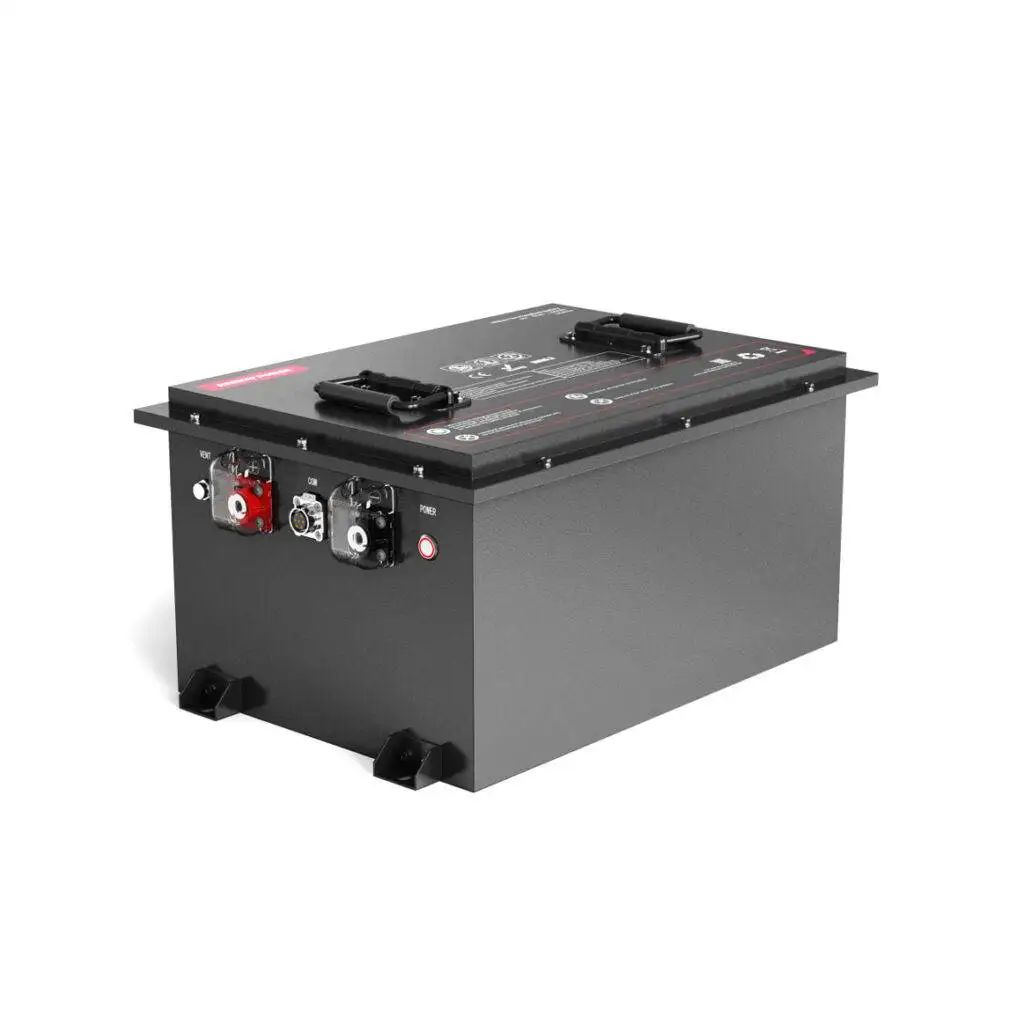
Electric vehicle lithium batteries power the future of transportation, offering high energy density, rapid charging, and extended range to meet rising EV demands. These advanced power sources reduce emissions by up to 70% compared to fossil fuel vehicles, enabling fleets to achieve cost savings of 40% over vehicle lifecycles through lower maintenance and fuel costs.
What Is the Current State of the EV Lithium Battery Industry?
Global EV lithium battery production capacity exceeded 1,200 GWh annually by 2023, with projections reaching 2,500 GWh by 2030 amid a 20% CAGR. China holds 70% of manufacturing share, driving down costs but exposing supply chains to raw material volatility.
Lithium prices doubled from 2025 lows due to surging Asian EV demand, projected to hit 60-70% market penetration in China alone. The battery market grew from $105 billion in 2021 to an expected $174 billion by 2026, fueled by automotive needs.
Operators face pain points like thermal runaway risks, with 1 in 10,000 cells failing prematurely, and range anxiety limiting adoption to under 10% of new car sales in 2021.
Why Do Traditional Solutions Fall Short for EV Needs?
Lead-acid batteries, once standard, deliver only 30-50 Wh/kg energy density versus lithium’s 200-400 Wh/kg, resulting in 2-3x shorter ranges. They require frequent replacements every 2-3 years, inflating total ownership costs by 50% over five years.
Nickel-metal hydride options suffer 20-30% capacity fade after 1,000 cycles, compared to lithium’s 4,000+ cycles, leading to unplanned downtime. Supply constraints on cobalt and nickel further drive 15-20% price hikes annually.
Redway Battery addresses these gaps as a Shenzhen-based OEM with 13+ years in LiFePO4 production, offering stable chemistry that avoids cobalt volatility.
What Makes Redway Battery’s LiFePO4 Solutions Stand Out?
Redway Battery specializes in LiFePO4 packs for EVs, delivering 150-200 Wh/kg density with 6,000+ cycle life at 80% capacity retention. Integrated BMS ensures cell balancing within 1% voltage variance, preventing overcharge risks.
Custom OEM/ODM supports EV integrations like 100 kWh packs for 400-mile ranges, backed by ISO 9001:2015 factories spanning 100,000 ft². Automated MES systems cut defect rates to under 0.1%, with 24/7 service for global deployments.
These packs maintain performance at -20°C to 60°C, outperforming NMC in safety and cost per kWh.
How Do Redway Battery Solutions Compare to Traditional Options?
| Feature | Traditional (Lead-Acid/NMC) | Redway LiFePO4 |
|---|---|---|
| Energy Density (Wh/kg) | 30-250 | 150-200 |
| Cycle Life | 500-2,000 | 6,000+ |
| Charge Time (0-80%) | 8-12 hours | 1-2 hours |
| Operating Temperature | 0-40°C | -20-60°C |
| Cost per kWh (5-yr) | $300-500 | $150-250 |
| Safety (Thermal Runaway) | High risk | Minimal |
For the surrounding sizing, selection, installation and maintenance decisions, continue with the Golf Cart Battery: Technology and System Fundamentals — Part 1.
Redway Battery provides measurable edges in longevity and TCO, verified through 13 years of field deployments.
What Are the Steps to Implement Redway Battery Solutions?
Assess needs: Calculate kWh requirements based on daily mileage (e.g., 50 kWh for 200-mile EV range).
Customize design: Collaborate with Redway engineers for voltage, capacity, and form factor via OEM portal.
Prototype and test: Receive samples within 4 weeks, validate under IEC 62660 standards.
Scale production: Order full runs with MES-tracked quality, delivery in 6-8 weeks.
Install and monitor: Integrate via plug-and-play connectors, use app for real-time SOC tracking.
This process ensures deployment within 3 months.
Who Benefits Most from Redway Battery in Real Scenarios?
Fleet Operator with Urban Delivery Vans
Problem: Daily 150-mile routes drained lead-acid packs mid-shift, costing $15,000/year in replacements.
Traditional: Multiple recharges, 20% downtime.
Redway Effect: 300-mile range per charge, 6,000 cycles.
Key Benefit: 35% fuel savings, $10,000 annual reduction.
RV Enthusiast Upgrading Off-Grid Power
Problem: NMC overheating in summer camping, 30% capacity loss after 500 cycles.
Traditional: Frequent station stops, safety concerns.
Redway Effect: Stable LiFePO4 at 60°C, 80% retention post-4,000 cycles.
Key Benefit: 5-day autonomy, zero incidents.
Solar EV Charger Network
Problem: Grid spikes during peak hours overloaded nickel packs, 15% efficiency drop.
Traditional: $0.25/kWh losses from degradation.
Redway Effect: 200 kWh storage with 99% balancing efficiency.
Key Benefit: 25% lower peak costs, scalable to 1 MWh.
Golf Cart Rental Business
Problem: 8-hour shifts ended with 50% SOC, $8,000 yearly swaps.
Traditional: 1,000-cycle limit.
Redway Effect: 12-hour full duty, drop-in 48V packs.
Key Benefit: 40% revenue boost from uptime.
Why Act Now on Advanced EV Lithium Batteries?
Solid-state batteries may emerge by 2030, but LiFePO4 bridges the gap with proven scalability amid 2026 lithium surpluses. EV adoption hits 60% in key markets, demanding reliable packs to avoid $50 billion in global downtime losses.
Redway Battery positions users ahead with cobalt-free, recyclable solutions aligned to ESG mandates.
What Else Should You Know?
How Do Redway Batteries Ensure EV Safety?
LiFePO4 chemistry resists thermal runaway up to 500°C, with BMS cutting off at 95% SOC.
Which EVs Are Compatible with Redway Packs?
All 48V-800V systems, including conversions for Tesla, Ford E-Transit, and custom builds.
When Can You Expect Delivery from Redway?
Prototypes in 4 weeks, production in 6-8 weeks post-order.
Does Redway Offer Warranty on Lithium Packs?
10-year/6,000-cycle warranty, prorated at 80% capacity.
Can Redway Customize for High-Voltage EVs?
Yes, up to 1,000V with ODM, tested to UN 38.3 standards.
Are Redway Batteries Recyclable?
95% material recovery via partners, compliant with EU Battery Directive.
Sources
https://www.linkedin.com/pulse/electric-vehicle-lithium-ion-battery-market-size-2026-xda1f
https://www.gray.com/insights/battery-industry-expected-to-reach-174-billion-by-2026/
https://www.reddit.com/r/energy/comments/1qfe3qm/lithium_prices_surge_as_traders_project_6070_ev/
https://huggingface.co/openbmb/cpm-bee-1b/commit/bd72a61dd7a59086ed7456f1dfcaa995c8ec58a3.diff
https://www.fastmarkets.com/insights/outlook-navigating-volatility-in-battery-raw-materials/
https://finance.yahoo.com/news/electric-vehicle-ev-battery-management-103300927.html
