




REDWAY BATTERY / KNOWLEDGE
How Do I Use Lithium Battery Forklifts?
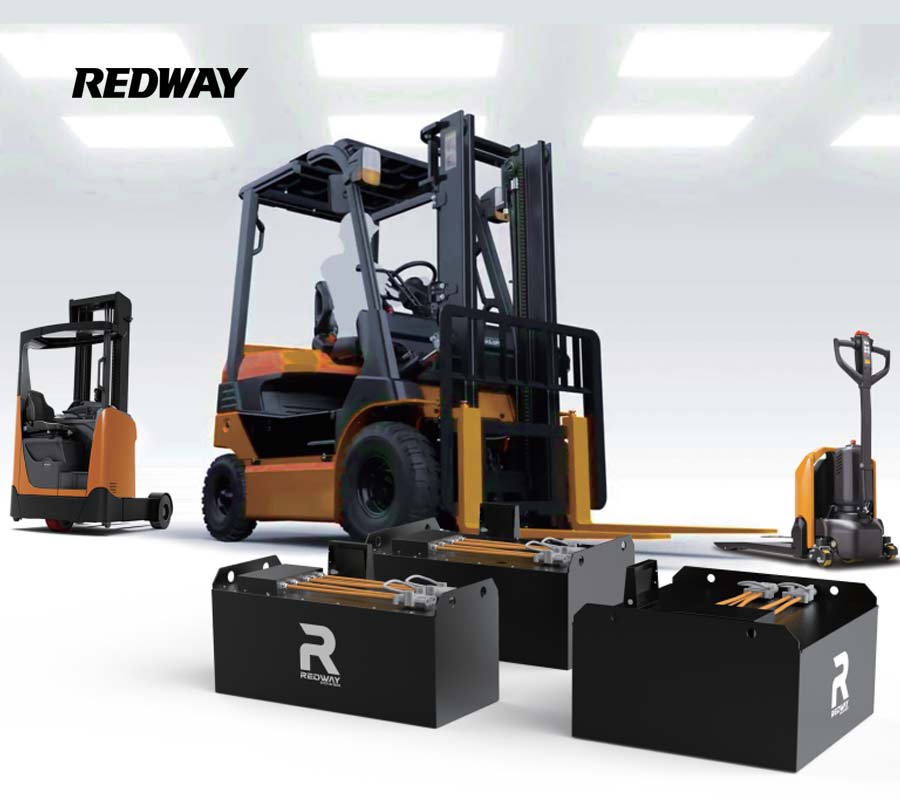
Lithium battery forklifts require proper charging protocols, load management, and temperature control for optimal performance. Operators should follow a partial discharge-charge cycle (20-80%) to maximize cycle life, use approved chargers with CC-CV algorithms, and avoid overloading beyond 125% of rated capacity. Thermal management systems (TMS) maintain cells at 15–35°C—critical for stability in high-demand logistics environments.
48V 600Ah Lithium Forklift Battery
What safety practices apply to lithium forklift batteries?
Lithium forklift safety focuses on preventing thermal runaway and voltage spikes. Always inspect cells for swelling pre-shift, ensure BMS fault alerts are active, and store units away from flammable materials. Pro Tip: Install Class D fire extinguishers—standard ABC types can’t suppress lithium fires.
Beyond basic inspections, lithium forklifts integrate BMS multi-layer protection (overvoltage, undervoltage, short-circuit). For example, a 48V 600Ah system monitors individual cell temps via 32 sensors, disconnecting loads if any exceed 45°C. Transitioning from lead-acid? Unlike flooded batteries, lithium doesn’t emit hydrogen, eliminating ventilation mandates but requiring strict moisture control. Remember, reverse polarity during charger hookup can irreversibly damage MOSFETs—double-check connector alignment.
| Risk | Lead-Acid | Lithium |
|---|---|---|
| Thermal Runaway | Low | Moderate (with BMS) |
| Gas Emissions | High (H2) | None |
| Spill Risk | High | None |
How should lithium forklifts be charged?
Charge lithium forklifts using smart chargers matching the battery’s C-rate. Most systems allow 1C charging (e.g., 600A for 600Ah), reaching 80% in 45 minutes. Avoid full 100% cycles—depth of discharge (DoD) below 20% strains anode structures.
Lithium chemistries like LiFePO4 tolerate partial charging without memory effect. For a 48V 400Ah pack, the charger must deliver 54.6V ±0.5V (3.65V/cell). But what happens if you use a lead-acid charger? Voltage mismatches trigger BMS lockouts—a common support ticket issue. Transitionally, prioritize chargers with CAN bus communication for real-time SOC adjustments. Case study: A 3-shift warehouse using opportunity charging during breaks extended battery lifespan to 5,000 cycles versus 3,500 with full cycles.
What maintenance do lithium forklifts need?
Lithium forklifts require mineral oil cleaning of terminals and quarterly BMS firmware updates. Unlike lead-acid, no watering or equalization is needed—reducing labor by 70%. Check torque on cable lugs every 500 hours to prevent arcing.
Deep Dive: Lithium’s sealed design resists sulfation but demands strict storage voltage (3.2–3.4V/cell). For long-term storage, discharge to 50% SOC and power down the BMS. A 36V 210Ah battery stored at 100% for 6 months may lose 8% capacity irreversibly. Transitionally, adopt predictive maintenance: Use cloud-connected BMS to track internal resistance trends—a 20% rise signals cell aging. Example: A 80V 700Ah model’s service interval extends to 18 months versus 3 months for VRLA.
| Task | Frequency | Tool |
|---|---|---|
| Terminal Cleaning | Weekly | Non-conductive brush |
| BMS Update | Quarterly | USB-C firmware dongle |
| Torque Check | 500 hours | 35 Nm torque wrench |
80V 400Ah Forklift Lithium Battery
Redway Battery Expert Insight
FAQs
Yes—BMS auto-terminates at 100%, but cycle life improves with 80% charge. Use scheduled charging to end at shift start, avoiding float voltage stress.
Do lithium forklifts work in cold storage?
Yes, with self-heating options. Standard models derate below -10°C; Redway’s heated packs operate at -30°C with 10% capacity buffer for cold cranking.
For connected guidance and the next practical steps, use the Lithium Forklift Battery: What Changes on a Real Shift Pattern.
