




REDWAY BATTERY / KNOWLEDGE
How To Test Batteries For Handling Equipment?
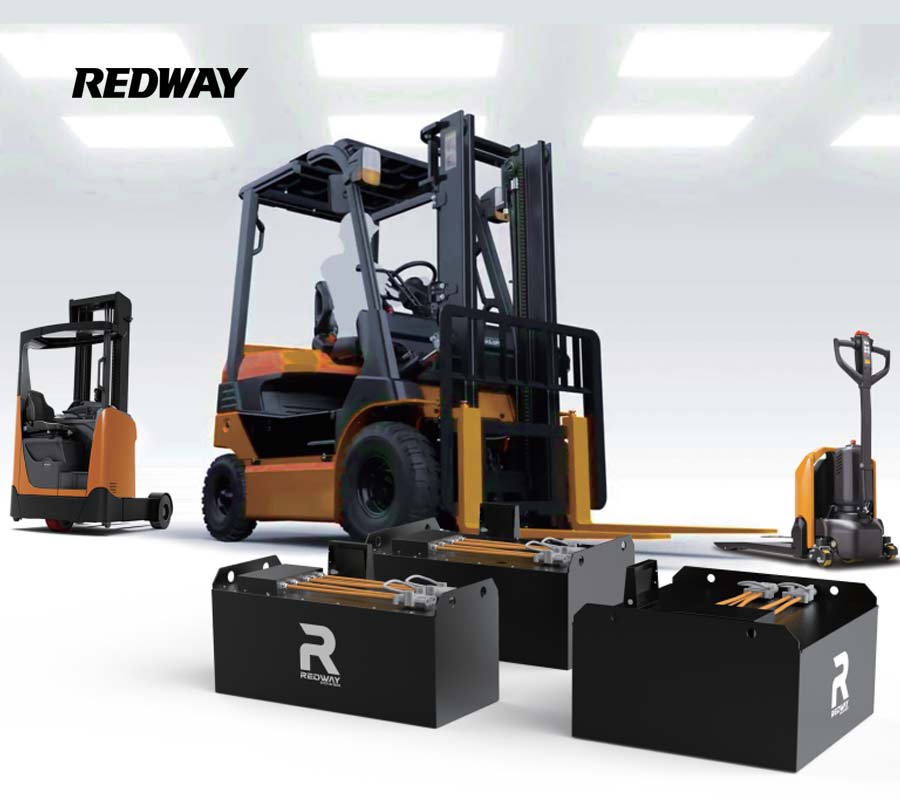
Testing batteries for handling equipment like forklifts involves measuring voltage, specific gravity, and load capacity to assess health. Lead-acid batteries require hydrometer tests for electrolyte balance, while lithium-ion variants use voltage scanners and BMS data. Follow IEEE 450 standards: a 12V lead-acid battery below 10.5V under load needs replacement. Always prioritize safety—wear PPE and avoid sparks near hydrogen vents during testing.
How Much Does a Forklift Battery Really Cost?
What tools are essential for battery testing?
Critical tools include digital multimeters for voltage checks, hydrometers for lead-acid electrolyte density, and load testers simulating operational draws. Infrared thermometers track overheating, while BMS interfaces decode lithium-ion diagnostics. Pro Tip: For lithium packs, use Bluetooth-enabled testers to avoid direct terminal contact, reducing arc risks.
To perform accurate tests, start by calibrating tools—a misaligned multimeter can misread voltage by 5-10%, masking degradation. For lead-acid, hydrometers should measure specific gravity between 1.220-1.280 at 80°F; temperature deviations require correction (±0.004 per 10°F). Imagine testing a forklift battery as akin to a car engine diagnostic: voltage is the “idle RPM,” while load testing reveals “highway speed” endurance. Lithium-ion systems simplify state-of-health (SoH) checks via BMS, but physical inspections for swelling or leakage remain vital. Pro Tip: Always test batteries at 50-70% charge—empty or full cells skew readings.
| Tool | Use Case | Accuracy Range |
|---|---|---|
| Digital Multimeter | Voltage/Circuit Continuity | ±0.5% |
| Hydrometer | Lead-Acid Electrolyte Density | ±0.005 SG |
| Load Tester | Capacity Under Discharge | ±3% |
How do you perform a voltage test on a forklift battery?
Voltage tests evaluate open-circuit voltage (OCV) and under-load performance. For lead-acid, 12V blocks should read 12.6V+ after resting 8 hours. Lithium-ion packs need cell deviation analysis—≥50mV variance indicates imbalance.
Begin by disconnecting the battery and waiting 30 minutes to stabilize surface charge. Why? Residual charge can inflate OCV by 0.2-0.4V, masking weak cells. Test each cell or module sequentially, noting any outliers. For example, a 48V lithium pack with 16 cells should show 3.2-3.3V per cell; a single 2.8V cell risks thermal runaway. Under load (20-30% of CCA rating), voltage shouldn’t drop below 10.5V for 12V units. Transitioning from OCV to load testing is like checking a marathon runner’s resting heart rate versus their pace mid-race—both metrics matter.
What is a hydrometer test and when is it used?
A hydrometer measures electrolyte specific gravity in lead-acid batteries. It’s used post-charging to confirm sulfuric acid concentration, revealing charge state and sulfation. Cells with SG below 1.225 indicate undercharging or aging.
To conduct it, draw electrolyte into the hydrometer until the float rises freely. Note the reading at eye level, adjusting for temperature. But what if cells in the same battery vary by 0.050 SG? That’s a red flag for stratification—uneven acid distribution requiring equalization charging. Think of it as checking tire pressure across all wheels; inconsistency risks performance drops. For flooded batteries, top up with distilled water before testing, as low levels concentrate acid, giving false high SG. Pro Tip: Clean hydrometers after each use—residue alters future readings.
How to Restore a Forklift Battery: Costs, Methods, and Safety Tips
How does load testing determine battery health?
Load testing applies controlled current draws to mimic operational demands, exposing weak cells. A 500Ah battery should maintain voltage above 1.75V/cell (lead-acid) or 2.8V/cell (lithium) for 15 seconds at 50% CCA.
Connect the load tester to terminals and set the discharge rate. Why 15 seconds? Shorter tests miss voltage rebound capacity, while longer ones risk over-draining. If a 12V battery drops to 9V under a 300A load, its capacity is below 60%—time for replacement. For lithium, load testing also checks BMS response: does it disconnect properly at low voltage? Consider this a stress test for the battery’s “financial reserves”—adequate reserves (capacity) ensure it won’t “go bankrupt” (fail) during peak demand.
| Test Type | Lead-Acid Threshold | Lithium-Ion Threshold |
|---|---|---|
| Voltage Under Load | ≥1.75V/cell | ≥2.8V/cell |
| Voltage Recovery | ≥12.4V after 5 mins | ≥3.2V/cell after 5 mins |
| Temperature Rise | ≤10°F | ≤15°F |
Redway Battery Expert Insight
FAQs
Lead-acid: Weekly voltage/hydrometer checks, load tests quarterly. Lithium-ion: Monthly BMS reports and bi-annual load tests—reduced frequency due to stable chemistry.
Can you test a lithium battery with a hydrometer?
No—lithium batteries use solid electrolytes. Hydrometers only work with liquid electrolytes in lead-acid batteries. Use voltage scanners or BMS software instead.
What causes voltage to drop rapidly under load?
Sulfation (lead-acid), cell imbalance (lithium), or corroded terminals. Clean terminals and retest—persistent drops indicate replacement time.
This topic belongs to the wider Forklift Battery: Operation and Practical Guidance — Part 3, which brings the related decisions and practical checks together.
