




REDWAY BATTERY / KNOWLEDGE
How To Use The H30-40FT Brochure?
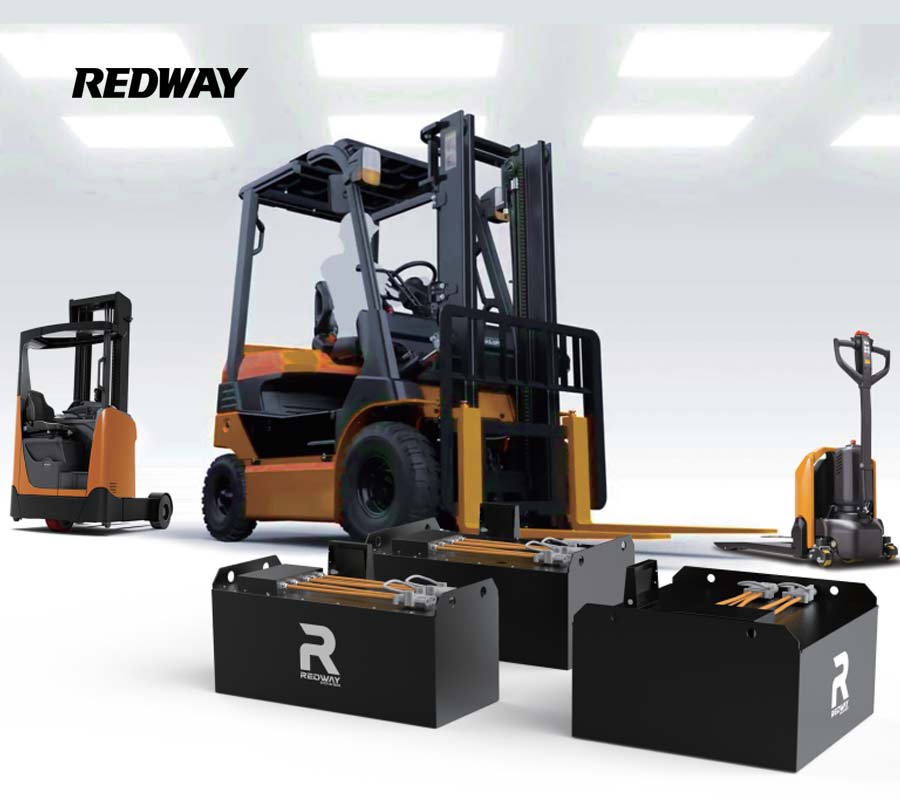
The H30-40FT brochure provides detailed guidance for configuring 24V–80V lithium forklift batteries. Users should first review capacity charts (150Ah–700Ah), application scenarios (warehouse vs. outdoor), and terminal voltage tolerances (±0.5V). Structured navigation prioritizes load charts, cycle life estimates (2,000–5,000 cycles), and Redway’s IP67-rated thermal management systems for optimal performance. Pro Tip: Cross-reference page 9’s voltage/amperage matrix with your forklift model’s OEM specs to avoid mismatches.
48V 300Ah Lithium Forklift Battery
How is the brochure structured for quick navigation?
Organized into capacity tables, compatibility matrices, and safety protocols, the H30-40FT uses color-coded sections (blue=technical specs, green=installation). Key data points like 24V 550Ah’s 18.3kW output or 80V 700Ah’s 2200mm length are highlighted. Deep Dive: Pages 4–7 compare lithium vs. lead-acid options—lithium models offer 30% weight reduction but require precise BMS alignment. Pro Tip: Use the index’s QR code to jump to discharge curve charts. For example, the 48V 600Ah’s 2C discharge rate supports 1200A peaks, ideal for high-throughput logistics hubs. A warehouse manager could pair this with Toyota 8FGU25 forklifts using the cross-reference table on page 12.
| Section | Lead-Acid Focus | Lithium Focus |
|---|---|---|
| Cycle Life | 500–800 cycles | 3,000+ cycles |
| Maintenance | Monthly watering | BMS auto-monitoring |
What technical specs are emphasized for forklift compatibility?
The brochure prioritizes voltage tolerances (±1% for 24V systems), dimension clearances (e.g., 80V 700Ah’s 2200x800x700mm), and charge rates (0.5C–2C). Deep Dive: Beyond dimensional fit, users must verify CAN bus protocols—page 15 lists supported J1939/Modbus profiles. Why does this matter? Mismatched communication protocols can brick battery controllers. Pro Tip: Check the forklift’s max alternator output against the battery’s charge acceptance (e.g., 48V 300Ah needs 150A minimum). Real-world example: Jungheinrich EFG 320 trucks require firmware v2.1+ for lithium integration, as noted in appendix C. Transitional phrase: While voltage is critical, don’t overlook temperature thresholds—charge pauses occur if cells hit 55°C.
How to identify suitable applications using the brochure?
Pages 20–23 map battery capacities to operational hours—e.g., 24V 280Ah covers 6-hour shifts for 1.5t lifts. High-demand environments (ports, steel mills) should reference the 80V 400Ah’s 160kW output and 45-minute fast charge. Deep Dive: Did you know 48V 600Ah batteries handle 22%斜坡 gradients better than lead-acid? The brochure’s duty cycle calculator (page 25) factors in lift frequency, ambient heat, and travel distance. Pro Tip: For multi-shift operations, select batteries with ≥80% depth of discharge (DoD) ratings. For example, an Amazon FC using Crown SC 6000 lifts would need 80V 700Ah packs for 24/7 uptime. Always cross-check the load hour chart against your forklift’s kWh/mile stats.
| Application | 24V Battery | 80V Battery |
|---|---|---|
| Indoor Warehousing | 150–280Ah | N/A |
| Port Container Handling | N/A | 400–700Ah |
Redway Battery Expert Insight
FAQs
Yes, Chinese, Spanish, and French versions are downloadable via QR code on page 2. Technical terms remain in English for global consistency.
Can I request a digital brochure copy?
Absolutely—scan the back cover’s QR code to access a PDF with clickable links to spec sheets and Forklift Lithium Battery Category.
How detailed are the load capacity charts?
Charts break down Ah ratings by lift weight (1–25t) and shift duration (4–12hrs). The 24V 200Ah model, for instance, supports 8hr runtime for 1t lifts at 50% DoD.
This topic belongs to the wider Forklift Battery: Operation and Practical Guidance — Part 3, which brings the related decisions and practical checks together.
