





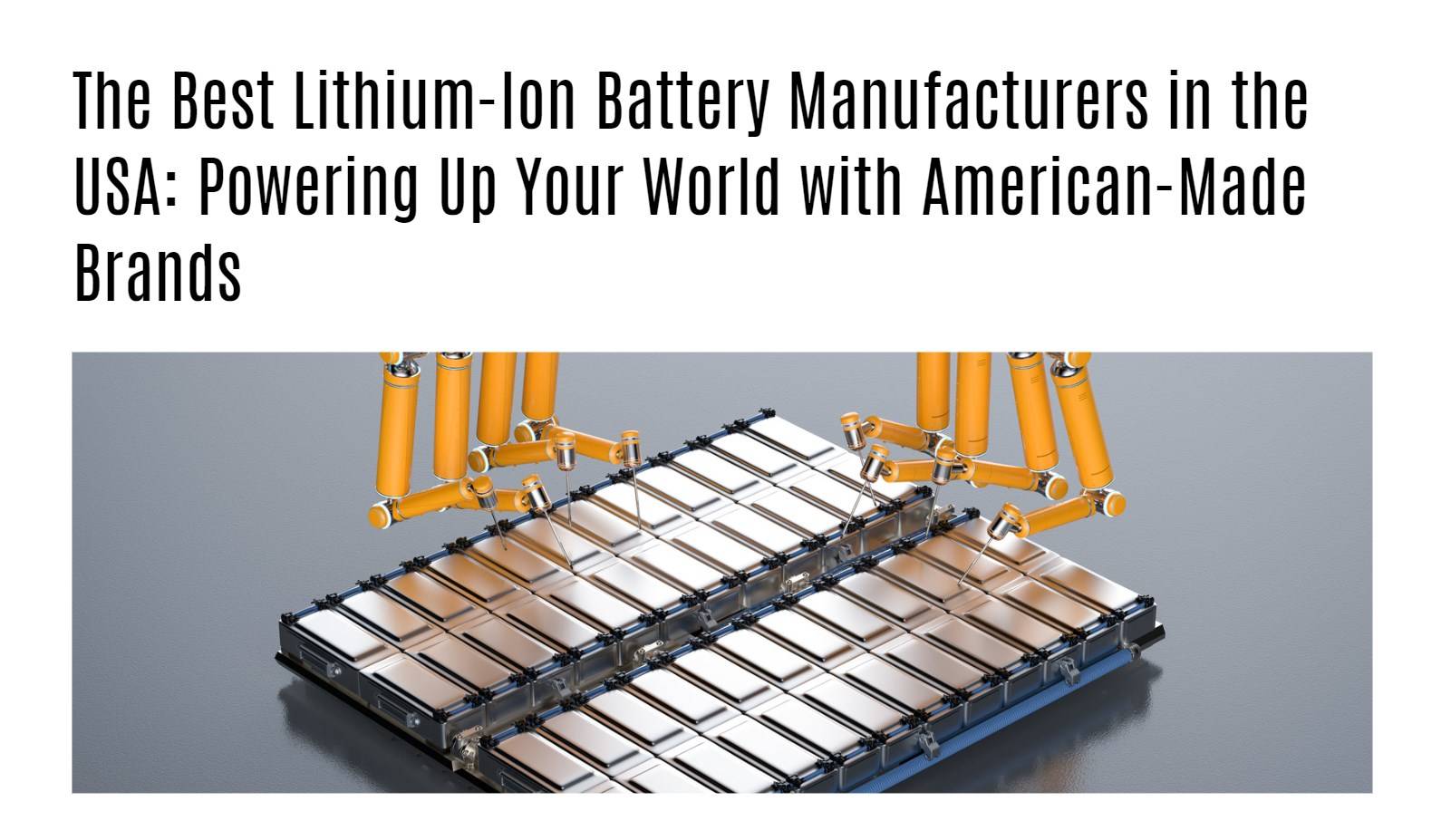
The leading lithium-ion battery manufacturers in the USA include Tesla, Panasonic, LG Energy Solution, Samsung SDI, BYD, A123 Systems, and emerging domestic players like ONE and CALB USA. These companies specialize in batteries for electric vehicles, energy storage, and industrial applications, driving innovation with safety, performance, and sustainability at the core.

What Is the Current Landscape of Lithium-Ion Battery Manufacturing in the USA?
The lithium-ion battery manufacturing industry in the USA is vibrant and rapidly growing, driven by increased demand for electric vehicles (EVs), renewable energy storage, and portable electronics. Domestic manufacturers like Tesla and ONE are expanding production capacities, while international companies like Panasonic and LG operate large-scale factories in the US through partnerships. Government incentives promote growth and localization to secure supply chains.
The market features a mix of legacy industry leaders and nimble startups bringing innovation in chemistry and production techniques, making the USA a key battleground for battery technology leadership.
How Do American Lithium-Ion Battery Manufacturers Compete Globally?
US battery manufacturers compete by focusing on advanced technology, quality control, and integration with automotive and energy sectors. Tesla’s pioneering efforts in EV batteries and gigafactories set a benchmark. Companies like A123 Systems emphasize high-performance batteries with safety and longevity, while Korean and Chinese firms like LG and CATL invest heavily in US manufacturing facilities. Strategic partnerships, diversified product portfolios, and OEM customization strengthen their competitive edge.
Which Companies Dominate Lithium-Ion Battery Production in the USA?
Tesla leads lithium-ion battery production with its Nevada Gigafactory, supplying batteries for EVs and energy storage. Panasonic, a long-term Tesla partner, co-manages battery production lines. LG Energy Solution and Samsung SDI also operate sizable US plants supplying automotive and industrial markets. Newcomers like ONE, a Michigan-based firm, are scaling up domestic production, contributing to the US supply diversification. BYD and CALB, though headquartered in China, have significant US market presence through localized operations.
| Rank | Manufacturer | Headquarters | Specialty |
|---|---|---|---|
| 1 | Tesla | California, USA | EV batteries, energy storage |
| 2 | Panasonic | Japan (US plants) | Automotive & industrial batteries |
| 3 | LG Energy Solution | South Korea (US plants) | Automotive batteries |
| 4 | Samsung SDI | South Korea (US plants) | EV, ESS, electronics |
| 5 | BYD | China (US operations) | EV batteries, energy storage |
| 6 | ONE | Michigan, USA | LFP batteries, EV & ESS |
| 7 | CALB USA | China (US operations) | LFP batteries |
Why Are Domestic Lithium-Ion Battery Manufacturers Important for the US Economy?
Domestic manufacturers reduce reliance on imports, securing supply chains critical for national security and technological independence. They generate local jobs, foster innovation clusters, and align with government goals for clean energy transition. Expanding US production mitigates risks from global disruptions and supports domestic EV adoption and renewable energy storage, essential for meeting climate targets and enhancing energy resilience.

When Did the US Battery Manufacturing Industry Begin Its Major Expansion?
The US lithium-ion battery industry’s major expansion began in the 2010s with Tesla’s Gigafactory announcement in Nevada in 2014, catalyzing investment in local production. Federal incentives like the Inflation Reduction Act of 2022 further accelerated growth by funding domestic manufacturing and supply chain development. Since then, many foreign and domestic companies have established or expanded US manufacturing facilities to serve rapidly growing demand.
How Is Technology Innovation Shaping US Lithium-Ion Battery Production?
Innovation focuses on improving energy density, safety, charging speed, and cost reduction. The rise of lithium iron phosphate (LFP) chemistry, pioneered by companies like ONE and CALB USA, offers lower-cost, safer alternatives for many applications. Solid-state and next-generation battery technologies are under development. Automation, advanced materials research, and battery management systems (BMS) enhance reliability and scalability, sustaining US competitiveness globally.
Where Are Major Lithium-Ion Battery Manufacturing Facilities Located in the USA?
Major facilities are concentrated in Nevada (Tesla Gigafactory), Michigan (ONE factory), South Carolina (LG Energy Solution), Georgia (SK Innovation’s JV plants), and Texas (Panasonic and Samsung SDI expansion). The Midwest and South are becoming hubs due to proximity to automotive manufacturers and favorable policies. These sites produce a range of battery types serving EVs, energy storage, and industrial uses.
Does Redway Battery Compete in the US Lithium-Ion Battery Market?
Redway Battery, with a global footprint headquartered in Shenzhen, China, offers high-performance LiFePO4 batteries tailored for forklifts, golf carts, telecom, and energy storage worldwide. While predominantly serving global markets, Redway’s emphasis on durability, customization, and ISO-certified manufacturing positions it to support US OEMs and energy projects through partnerships or imports in this competitive space.
Are There Supply Chain Challenges Affecting US Lithium-Ion Battery Manufacturers?
Yes, supply chain issues for raw materials like lithium, cobalt, and nickel pose challenges. Geopolitical tensions, mining constraints, and logistics bottlenecks impact material availability and costs. US manufacturers focus on diversifying supply sources, recycling programs, and investing in domestic mining and processing to alleviate dependencies. Government support for supply chain resilience is accelerating initiatives to secure critical minerals and refine domestic manufacturing capabilities.
Can New US Players Disrupt the Lithium-Ion Battery Market?
Absolutely, companies like QuantumScape focus on solid-state battery technologies that promise higher energy densities and safety. Others innovate in cell design, production efficiency, and battery recycling. Emerging companies with strong R&D and strategic partnerships can challenge established firms, spurring competitive innovation and creating alternative battery options tailored to specific US market needs.
What Are the Environmental Considerations for Lithium-Ion Battery Manufacturing in the USA?
Sustainability is crucial, with manufacturers adopting cleaner production methods, energy-efficient factories, and recycling initiatives to reduce environmental impact. Lithium iron phosphate batteries, favored for safety and eco-benefits, gain popularity. US companies comply with strict environmental regulations and pursue circular economy models to minimize waste, lower carbon footprints, and support a sustainable clean energy transition.
Redway Battery Expert Views
Redway Battery recognizes the critical role of the US lithium-ion battery industry in driving a sustainable energy future. Our expertise in producing reliable, customizable LiFePO4 battery packs complements the evolving needs of America’s industrial and energy markets. By leveraging advanced manufacturing and ISO-certified quality control, Redway is positioned to be a trusted partner supporting OEMs and integrators seeking durable energy solutions in the US and beyond.” – Redway Battery Specialist
Conclusion
The USA’s leading lithium-ion battery manufacturers like Tesla, Panasonic, LG Energy Solution, Samsung SDI, and innovative domestic firms such as ONE actively shape the future of energy storage and electric mobility. With expanding domestic capacity, technological breakthroughs, and increased government backing, the US battery industry is well-positioned to meet growing demand sustainably. Emerging players and global incumbents coexist, driving competition and innovation. Businesses and stakeholders should closely monitor supply chain developments, technology trends, and strategic partnerships to leverage opportunities and foster energy independence.
FAQs
Q: Which lithium-ion battery chemistry is gaining preference in the US market?
A: Lithium iron phosphate (LFP) chemistry is preferred for safety, cost-effectiveness, and sustainability, especially in EVs and energy storage systems.
Q: Are there US-based lithium-ion battery manufacturers?
A: Yes, notable US-based manufacturers include Tesla and ONE, with others operating large facilities in the US alongside international firms.
Q: How does government policy impact US lithium-ion battery production?
A: Federal incentives, trade policies, and environmental regulations encourage domestic manufacturing, supply chain resilience, and clean energy adoption.
Q: What role does Redway Battery play in the US lithium-ion battery ecosystem?
A: Redway Battery supplies reliable, customized LiFePO4 battery solutions for industrial and energy storage applications, supporting US OEMs and integrators globally.
Q: Are solid-state batteries commercially available in the US?
A: Solid-state batteries remain largely in development but hold promise for safer, higher energy density solutions expected to launch commercially in coming years.

