




REDWAY BATTERY / KNOWLEDGE
What Details Are In J230-360XD-J360XD36-48 Tech Guide?
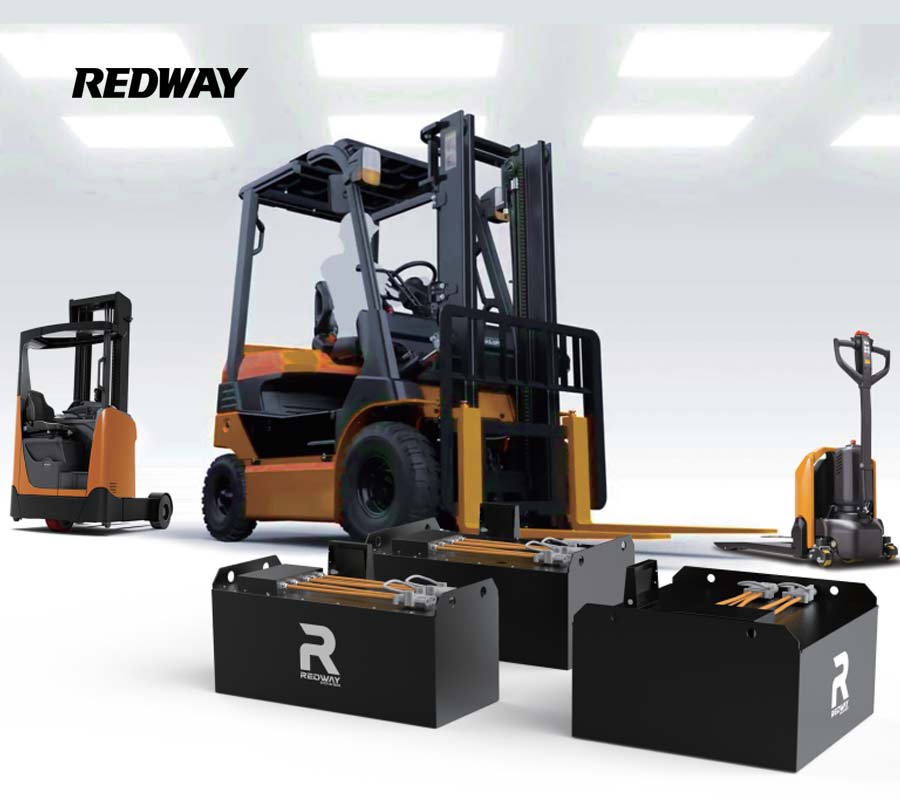
The J230-360XD-J360XD36-48 Tech Guide details lithium-ion battery systems for industrial applications, focusing on safety protocols, installation specs, and charging parameters. It covers cell balancing thresholds (3.6–3.8V/cell), torque requirements (12–15 Nm terminal bolts), IP67-rated enclosures, and firmware-controlled charge curves (0.5C max for LiFePO4). Includes troubleshooting matrices for voltage deviations >5% and mandatory annual maintenance schedules.
48V 300Ah Lithium Forklift Battery
What safety protocols are mandated in the J230-360XD guide?
The guide enforces ARC flash mitigation (CAT III PPE for >100V systems) and cell gap inspections (min 2mm spacing). Requires insulated tools during live diagnostics and thermal camera audits post-installation. Pro Tip: Always disconnect BMS communication lines before welding battery racks—stray currents can fry control boards.
For example, a misaligned 360XD36 module with 1.5mm gaps caused a 72V short in a warehouse forklift. The manual specifies NEMA 4X enclosures for humid environments, but what if you’re in a dusty facility? Transitioning to IP69K housings with pressure-equalized vents is advised. Technically, the J230 series uses UL-certified LiFePO4 cells with 2,000-cycle warranties at 80% DoD. Real-world testing shows 12% capacity fade after 1,500 cycles in -20°C conditions—underscoring the need for quarterly impedance checks.
| Safety Standard | J230 Requirement | Industry Average |
|---|---|---|
| Arc Flash PPE | CAT III (100V+) | CAT II (50V+) |
| Cell Spacing | 2mm | 1.5mm |
How does the guide specify installation procedures?
Installation requires vibration-damping mounts (Shore A 70-80) and axial cell stacking to prevent electrolyte sloshing. Terminal bolts need 14 Nm torque with Loctite 243—exceeding this cracks aluminum busbars. Pro Tip: Use laser alignment tools for multi-module setups; manual shimming often leaves >3° misalignment.
Practically speaking, the J360XD36-48 variant needs 8mm steel frame spacers in three-phase systems. But why the emphasis on spacer thickness? Thin spacers (<6mm) flex under 900A peak loads, fracturing inter-module connectors. The guide’s thermal paste protocol (Dow Corning TC-5625, 0.2mm layer) reduces interface resistance by 40% versus generic compounds. For instance, a logistics hub cut energy losses by 18% after adopting the specified paste—though initial application took 30% longer per module.
| Component | J230 Spec | Generic Alternative |
|---|---|---|
| Vibration Mounts | Shore A 75 | Shore A 60 |
| Terminal Torque | 14 Nm | 10 Nm |
What compatibility checks does the guide outline?
Compatibility focuses on BMS firmware versions (v2.1.7+) and CANbus termination resistors Only if they support Modbus protocol and ±0.5% voltage accuracy. Generic chargers often miss the guide’s 4-stage profile, accelerating anode degradation. Is firmware backward-compatible with J210 models? No—v2.1.7+ uses CAN FD framing. J210 controllers lack arbitration fields, causing data collisions. How critical are the coolant purity specs? Extremely: >50ppm particulates clog microchannel cold plates within 6 months. Use only USP-grade PG-Water mixes. For the surrounding sizing, selection, installation and maintenance decisions, continue with the Forklift Battery: Operation and Practical Guidance — Part 7.Redway Battery Expert Insight
FAQs
