




REDWAY BATTERY / KNOWLEDGE
What Is The Best Way To Charge A Forklift Battery?
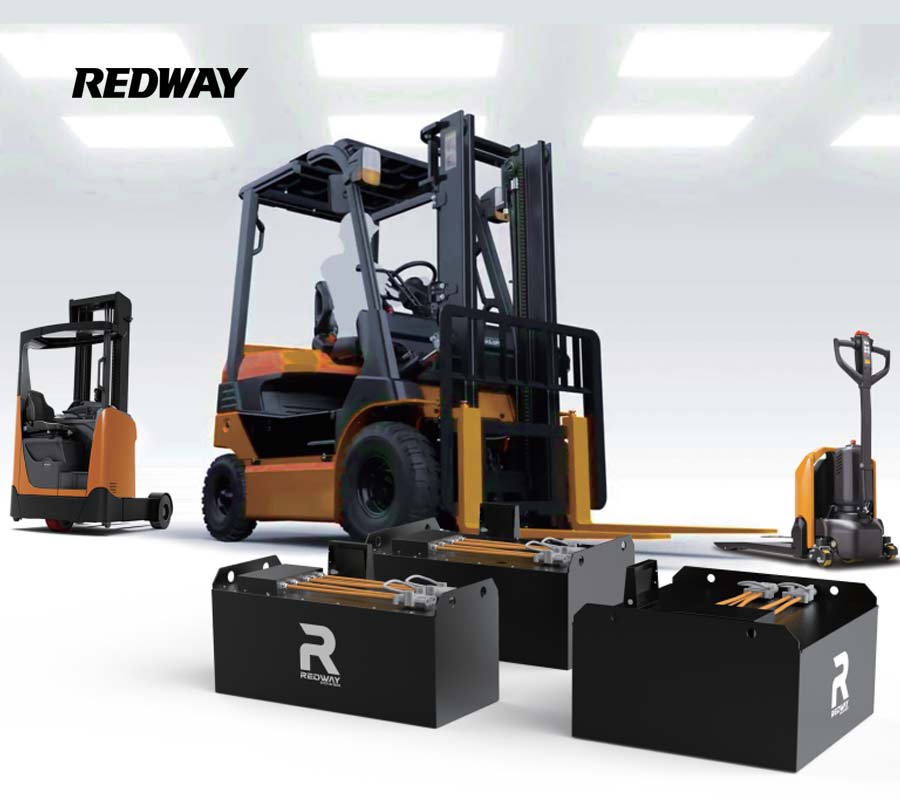
The optimal forklift battery charging method uses manufacturer-specified protocols: lithium-ion batteries require CC-CV charging (e.g., 48V packs charge to 54.6V±0.5V), while lead-acid needs equalization cycles. Pro Tip: Maintain 20-80% SoC for lithium longevity. Always use temperature-compensated chargers and disconnect after 100% SoC to prevent overcharging damage.
48V 300Ah Lithium Forklift Battery
What types of forklift batteries require different charging approaches?
Lithium-ion and lead-acid forklift batteries demand distinct charging strategies. Lithium batteries use constant current-constant voltage (CC-CV) with tight ±1% voltage tolerance, while flooded lead-acid requires 15-20% overcharge for electrolyte balancing. Temperature compensation ranges from 3mV/°C/cell (lead-acid) to 0mV (lithium).
Lithium-ion chemistries like LiFePO4 charge at 0.5C standard rates (e.g., 100A for 200Ah packs) up to 3.65V/cell. Lead-acid needs bulk/absorption/float stages—bulk charges at 2.45V/cell until 80% SoC. Pro Tip: Use smart chargers with IEEE 1937 protocols for lithium to prevent voltage drifting. For example, Redway’s 48V 300Ah lithium pack charges from 20% to 100% in 2.5 hours vs 8+ hours for equivalent lead-acid. Unlike lead-acid, lithium doesn’t require cooldown periods before charging—allowing opportunity top-ups during breaks.
| Parameter | Lithium-ion | Lead-acid |
|---|---|---|
| Charge Voltage | 54.6V±0.5V (48V) | 58.4V (48V) |
| Equalization | Not required | Monthly 62V |
| Temp Compensation | Disabled | -30mV/°C |
How do I optimize charging cycles for battery longevity?
Implement partial SoC cycling (20-80% for lithium, 50-90% for lead-acid) to reduce electrode stress. Schedule full discharges monthly for lead-acid to prevent stratification. Lithium benefits from occasional full charges to recalibrate BMS SoC readings. Maintain ambient temperatures between 15-25°C during charging.
Deep-cycle lead-acid batteries lose 15-20% capacity annually if cycled below 50% DoD, whereas lithium retains 80% capacity after 2,000 cycles at 80% DoD. Pro Tip: Install battery monitoring systems tracking voltage differentials—cells deviating >50mV in lithium packs indicate imbalance needing immediate attention. For example, a 24V lithium forklift battery charged nightly at 30% remaining reaches 2,500 cycles vs 1,200 cycles with daily full discharges. Transitioning to opportunity charging during shifts can boost lithium lifespan by 30%.
What are the three critical charging stages?
All forklift battery charges involve bulk (constant current), absorption (constant voltage), and float (maintenance) phases. Lithium-ion skips float mode post-100% SoC, while lead-acid maintains float at 2.25V/cell to offset self-discharge.
During bulk charging, lithium accepts up to 1C current (e.g., 200A for 200Ah) until reaching 90% SoC. Absorption then reduces current to 0.05C while holding voltage. Lead-acid’s bulk phase typically uses 10-13% of C20 rating (500A for 500Ah). Pro Tip: Verify charger termination accuracy monthly—a faulty voltage sensor causing 0.5V overcharge degrades lithium cells 3x faster. For instance, a 80V lithium battery completes bulk in 45 minutes vs 2 hours for lead-acid, but improper current settings risk overheating connectors.
| Stage | Lithium Voltage (48V) | Lead-acid Voltage (48V) |
|---|---|---|
| Bulk | 54.6V | 58.4V |
| Absorption | 54.6V | 57.6V |
| Float | N/A | 52.8V |
Why is temperature management crucial during charging?
Battery internal resistance drops 40% when heated from 0°C to 30°C, accelerating side reactions. Lithium charges safely between -20°C to 45°C but needs 5-40°C for optimal efficiency. Lead-acid requires 10-30°C to prevent electrolyte freezing or thermal runaway.
Chargers with NTC sensors adjust rates dynamically—at 0°C, lithium charging current halveS to prevent plating. Pro Tip: For cold storage warehouses, preheat batteries to 10°C before charging using integrated pads. A real-world example: a 36V lithium pack charged at -10°C loses 15% capacity permanently due to metallic lithium deposition on anodes. Conversely, charging lead-acid above 40°C causes gassing and water loss requiring frequent maintenance.
How does improper charging affect forklift operations?
Undercharging causes sulfation in lead-acid (reducing capacity 4-8% weekly) and cell imbalance in lithium (voltage spreads >100mV). Overcharging leads to electrolysis in lead-acid (water loss) and lithium anode degradation (SEI layer growth).
In extreme cases, charging 48V lithium beyond 55.2V (vs standard 54.6V) accelerates capacity fade by 25% per cycle. Pro Tip: Use chargers with dual authentication (RFID + password) to prevent untrained staff from altering parameters. For example, a warehouse using mismatched 24V chargers on 24V systems suffered battery replacements every 6 months instead of 4 years—costing $12,000 annually in premature failures.
80V 700Ah Forklift Lithium Battery
What advanced charging technologies are emerging?
Pulse charging (1kHz frequency) reduces lead-acid sulfation by 18% and lithium dendrite growth by 40%. Bidirectional chargers enable V2L (vehicle-to-load) functions, using forklift batteries as backup power. Redway’s latest models support 98% efficient wireless charging via SAE J2954 alignment.
Active balancing systems during charging redistribute energy between cells, maintaining <±10mV variance. Pro Tip: Retrofit older fleets with CANBus-enabled chargers providing real-time diagnostics. For instance, a logistics center using 48V wireless charging pads eliminated connector corrosion issues, reducing downtime by 120 hours/year. However, wireless systems add 15-20% upfront costs versus conventional chargers.
Redway Battery Expert Insight
FAQs
For lithium-ion: Safe with auto-shutoff chargers. Lead-acid: Risky—over 14 hours charging causes water loss and grid corrosion. Always use timers for lead-acid systems.
Do lithium forklift batteries need water?
No—they’re maintenance-free vs lead-acid requiring weekly distilled water top-ups to cover plates. Lithium’s sealed design eliminates electrolyte loss.
How often should I charge my forklift battery?
Lithium: At any SoC (even 10%). Lead-acid: Only below 20% to minimize cycles. Always recharge within 24 hours of discharge to prevent sulfation.
This topic belongs to the wider Forklift Battery Charging: Methods, Timing and the Charging Area, which brings the related decisions and practical checks together.
