




REDWAY BATTERY / KNOWLEDGE
Who Are Forklift Battery Buyers?
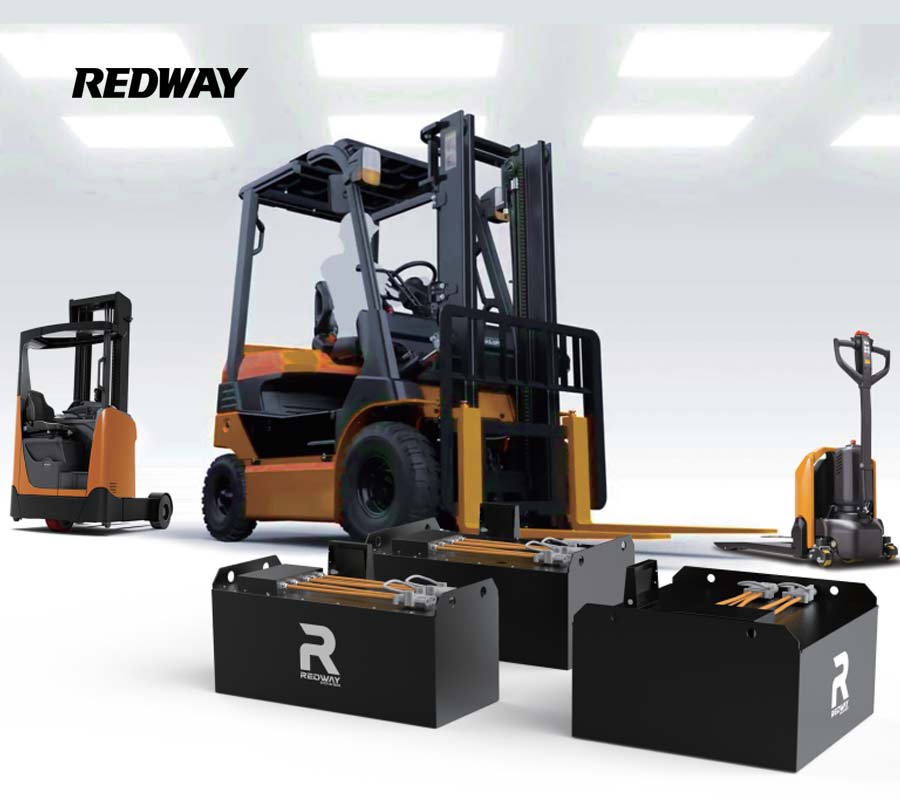
Forklift battery buyers include warehouse operators, manufacturing plants, and logistics companies seeking reliable power for material handling. Key purchasers are facility managers (55% market share) prioritizing lithium-ion adoption for fast charging and lower TCO. Other buyers include OEMs (20%) and third-party resellers (25%). Regional trends show EU/NA favoring LiFePO4, while Asia-Pacific leans toward flooded lead-acid. Pro Tip: Match battery capacity to forklift duty cycles—over/undersizing accelerates wear.
Where to Buy Used Forklift Batteries
What industries rely most on forklift batteries?
Industries like warehousing (40% demand), automotive (25%), and food distribution (20%) dominate forklift battery purchases. Temperature-controlled logistics favor lithium’s zero-emission operation, while manufacturing opts for rugged lead-acid for heavy 24/7 shifts.
Warehouses prioritize batteries compatible with multi-shift operations, where lithium-ion’s 2-3 hour charge time outperforms lead-acid’s 8+ hours. For instance, cold storage facilities use lithium batteries due to their stable performance in sub-zero temperatures—lead-acid loses 30-40% capacity in freezing conditions. Pro Tip: Always check forklift charging infrastructure—lithium requires 48V or 80V chargers with temperature compensation. However, why do automotive plants still prefer flooded lead-acid? The answer lies in lower upfront costs and tolerance for scheduled maintenance. Transitional phrases like “Beyond typical usage” highlight that battery choice directly impacts productivity. A real-world example: Amazon’s shift to lithium-ion reduced energy costs by 40% in fulfillment centers.
| Industry | Preferred Chemistry | Key Reason |
|---|---|---|
| Warehousing | LiFePO4 | Fast charging |
| Automotive | Flooded Lead-Acid | Cost efficiency |
| Food Distribution | Lithium-ion | Zero emissions |
Who are the key decision-makers in forklift battery procurement?
Primary decision-makers include facility managers (50%), procurement officers (30%), and OEM partners (20%). Fleet operators often influence specs like voltage (24V to 80V) based on equipment age and duty cycles.
Facility managers prioritize lifecycle costs, demanding batteries with 1,500+ cycles to minimize replacements. Procurement teams focus on vendor contracts and bulk pricing—negotiating 10-15% discounts for 100+ unit orders. But what happens when a warehouse upgrades its fleet? OEM partners like Toyota or Hyster often bundle batteries with new forklifts, locking buyers into proprietary formats. Pro Tip: Always audit energy consumption per shift—lithium-ion’s 95% efficiency outperforms lead-acid’s 75%, reducing kWh costs. Transitionally, while upfront costs matter, long-term savings drive decisions. For example, Walmart saved $2M annually by switching to lithium, despite higher initial investment.
| Role | Focus | Purchase Criteria |
|---|---|---|
| Facility Manager | Lifecycle Cost | Cycle life, ROI |
| Procurement | Budget Compliance | Price per Ah, warranties |
| OEM Partner | System Integration | Compatibility, support |
How do regional preferences affect forklift battery choices?
North America and Europe favor lithium-ion (60% adoption) for energy density, while Asia-Pacific uses lead-acid (70%) due to lower labor costs and established recycling chains. South America prioritizes refurbished units to cut CAPEX by 50%.
In the EU, stringent emissions regulations push buyers toward lithium’s zero-off-gassing—critical for indoor warehouses. Conversely, APAC’s reliance on lead-acid stems from cheaper maintenance labor and abundant raw materials. But how do extreme climates influence decisions? Middle Eastern buyers opt for lithium’s 100% Depth of Discharge (vs. lead-acid’s 50%) to withstand 45°C+ temperatures. Transitionally, regional infrastructure also matters: Brazil’s uneven power grid makes fast-charging lithium less viable. Pro Tip: Use climate-adjusted cycle charts—lithium loses 15% lifespan at 35°C+, while lead-acid plate corrosion accelerates.
What factors drive the shift toward lithium-ion forklift batteries?
Key drivers include lower TCO (-30% over 5 years), rapid charging (1.5 hours vs. 8), and zero maintenance vs. lead-acid’s weekly watering. Government incentives in the EU/NA further boost lithium adoption by 20% annually.
Lithium-ion eliminates acid spills and ventilation costs, saving $500+/year per forklift. Fast charging enables 24/7 operations without battery swaps—ideal for e-commerce hubs. But why haven’t all buyers transitioned? Lead-acid’s 40% lower upfront cost still appeals to small warehouses. Transitionally, lithium’s 10-year lifespan doubles lead-acid’s, justifying the premium. For example, DHL cut energy costs by 55% after switching 200 forklifts to lithium.
Aftermarket vs. OEM batteries: What do buyers choose?
OEM batteries claim 65% market share due to warranty compliance, while aftermarket options attract cost-conscious buyers with prices 25-40% lower. Remanufactured lead-acid batteries dominate niches like agriculture, offering 50% cost savings over new units.
OEMs like Crown or Raymond enforce proprietary connectors and software, locking buyers into their ecosystems. Aftermarket suppliers counter with universal 36V/48V/80V lithium packs, compatible with most brands. But does aftermarket void warranties? Yes, unless certified by the forklift maker. Pro Tip: Cross-check UL 2580 certification for aftermarket lithium—fire safety risks spike with uncertified units. Transitionally, remanufactured lead-acid thrives where budgets are tight, but lithium’s TCO wins long-term. For example, a PepsiCo facility saved $120,000 yearly using third-party lithium packs.
Actual Cost of Forklift Batteries
Redway Battery Expert Insight
FAQs
Lead-acid lasts 3-5 years (1,000 cycles), while lithium-ion exceeds 10 years (2,000+ cycles). Factors like depth of discharge and temperature impact longevity.
Can I replace lead-acid with lithium-ion in older forklifts?
Yes, but ensure the charger, connectors, and BMS are updated. Retrofit kits can cut conversion costs by 20% vs. full OEM upgrades.
Are refurbished forklift batteries reliable?
If reconditioned by certified shops, refurbished lead-acid units offer 70-80% original capacity. Avoid uncertified sellers—capacity often drops below 50%.
For the surrounding sizing, selection, installation and maintenance decisions, continue with the Forklift Battery: Choosing, Cost and Comparison — Part 6.
