




REDWAY BATTERY / KNOWLEDGE
Why Use Lithium-Ion Batteries In Forklifts?
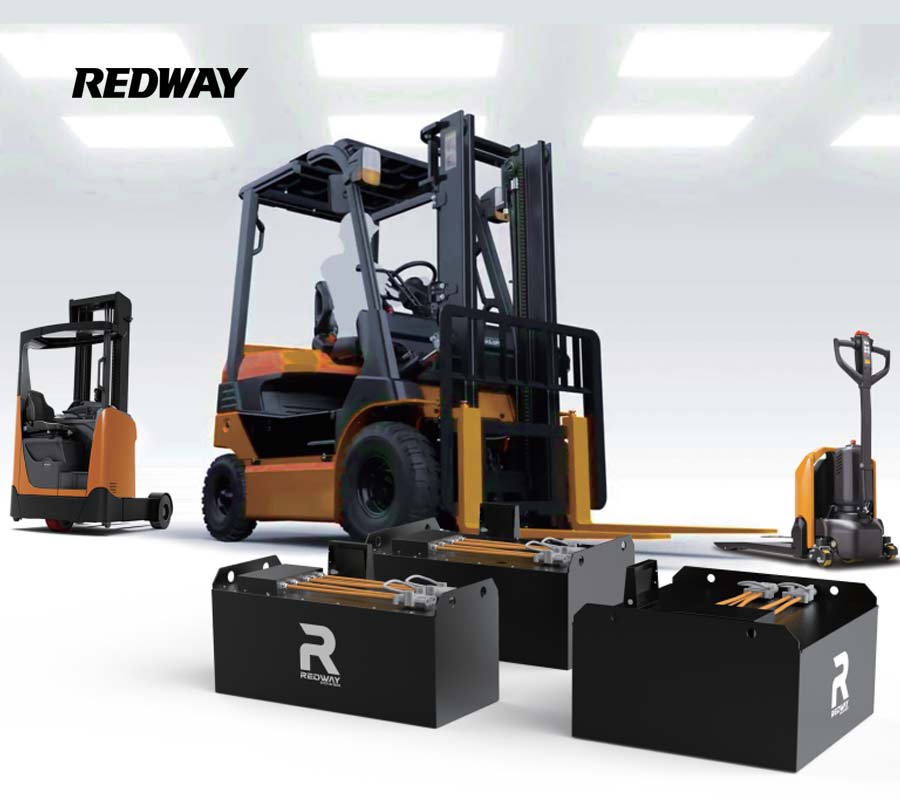
Lithium-ion batteries revolutionize forklift operations through 3x longer cycle life (3,000–5,000 cycles) versus lead-acid, eliminating daily watering/equalization. Their 98% depth-of-discharge capability and 2-hour fast-charging enable multi-shift operations without battery swaps. Advanced LiFePO4 chemistries sustain 25%–30% weight reduction while delivering 25% more torque in cold environments (-20°C).
24V 200Ah Lithium Forklift Battery
What advantages do lithium-ion batteries offer for forklifts?
Lithium-ion dominates material handling with zero maintenance, opportunity charging, and 15–20% energy efficiency gains. Unlike lead-acid, lithium cells avoid sulfation during partial charges—critical for warehouses needing 16+ hours of continuous uptime. Integrated Battery Management Systems (BMS) prevent overcurrent/thermal runaway via cell-level monitoring.
Forklift lithium batteries operate at 80V–120V with capacities from 200Ah to 800Ah. LiFePO4’s 145Wh/kg energy density allows 24V systems to weigh 330kg vs. 450kg for equivalent lead-acid. Pro Tip: Always use temperature-compensated charging above 40°C—it extends lifespan by reducing electrolyte decomposition. For example, Amazon’s fulfillment centers reduced fleet size by 33% after switching to lithium, as batteries recharge during 30-minute breaks. But how do these benefits translate financially?
| Metric | LiFePO4 | Lead-Acid |
|---|---|---|
| Cycle Life | 3,500 | 1,200 |
| Charge Time | 2h | 8–10h |
| Lifespan | 8–10y | 3–5y |
Are lithium forklift batteries cost-effective long-term?
Despite 2–3x higher upfront costs, lithium-ion achieves 35% lower TCO over 10 years by eliminating replacement batteries, maintenance labor, and charging infrastructure. Diesel forklifts using lithium report 18% fuel savings from reduced battery weight.
A 48V 600Ah lithium pack costs $12K–$15K but avoids $7K/year in lead-acid upkeep. Fast charging cuts electricity bills by 14% through reduced Peukert losses. Pro Tip: Lease-to-own programs with Redway Battery offset initial investments—70% of our clients break even within 2 years. Consider this: Toyota Logistics slashed energy costs by $400K annually after transitioning 200 forklifts to lithium. Upfront Cost vs. Lifetime Savings:
| Cost Factor | Li-Ion | Lead-Acid |
|---|---|---|
| 10-Year Energy | $28K | $47K |
| Battery Replacements | 0 | 3 |
| Labor | $2K | $18K |
How does lithium-ion improve forklift charging efficiency?
Lithium supports opportunity charging—partial 15–30 minute charges during breaks—without capacity degradation. Lead-acid requires full 8-hour charges to prevent sulfation, costing 230 hours/year in downtime per forklift.
48V lithium chargers deliver 80A–150A via CANbus communication, achieving 0–100% in 90 minutes. Advanced systems like Redway’s Modular Charging Array split current between multiple batteries, cutting warehouse charging station costs by 60%. Pro Tip: Prioritize chargers with 92%+ efficiency ratings—poor units waste 400W–600W as heat during each cycle. Why stick with outdated charging routines? BMW Leipzig uses midday lithium top-ups to keep 98% of forklifts active during peak hours.
48V 600Ah Lithium Forklift Battery
Redway Battery Expert Insight
FAQs
Only 240V outlets and compatible chargers—no acid containment or ventilation needed. Lithium’s sealed design meets OSHA Class 1 Division 2 standards for flammable environments.
Can lithium batteries handle heavy loads?
Absolutely. Redway’s 80V 700Ah models deliver 20% more torque than lead-acid, sustaining 5,500 lbs lifts even at -15°C. Continuous discharge rates reach 3C (2,100A) without voltage sag.
For the surrounding sizing, selection, installation and maintenance decisions, continue with the Lithium Forklift Battery: What Changes on a Real Shift Pattern.
