




REDWAY BATTERY / KNOWLEDGE
How to Optimize Forklift Battery Performance and Reduce Costs?
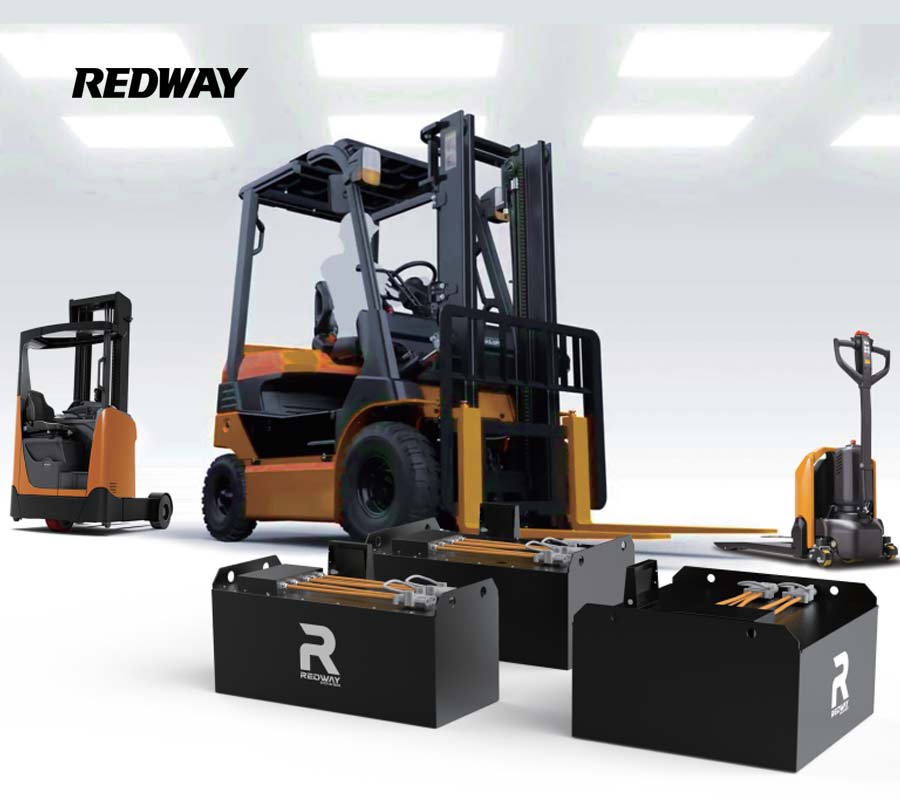
Optimizing forklift battery performance involves selecting the right type (lithium-ion vs. lead-acid), following manufacturer maintenance guidelines, and implementing cost-saving strategies like proper charging cycles. Lithium batteries offer longer lifespans (3,000+ cycles) and 30% lower operational costs than lead-acid alternatives. Toyota forklift batteries typically last 5-7 years with scheduled maintenance and temperature-controlled storage.
How Much Does a Forklift Battery Really Cost?
What Are the Key Differences Between Lithium and Lead-Acid Forklift Batteries?
Lithium-ion batteries provide 2-3x faster charging, 50% weight reduction, and zero maintenance compared to lead-acid counterparts. While lithium has 40% higher upfront costs, its total ownership expenses are 25% lower over 10 years. Lead-acid remains popular for budget-conscious operations but requires weekly water refills and dedicated charging stations.
| Feature | Lithium-Ion | Lead-Acid |
|---|---|---|
| Cycle Life | 3,000+ cycles | 1,200-1,500 cycles |
| Charge Time | 1-2 hours | 8-10 hours |
| Maintenance | None | Weekly watering |
How Does Battery Capacity Affect Heavy-Duty Forklift Operations?
Battery capacity (measured in kWh) directly impacts runtime – Toyota 48V models handle 8-hour shifts on single charges. For heavy loads (4,000+ lbs), lithium batteries maintain stable voltage compared to lead-acid’s 20% performance drop. Always match battery capacity to forklift class: Class I electric riders need 24-80V systems depending on lift height and load frequency.
What Maintenance Practices Extend Toyota Forklift Battery Lifespan?
Key practices include: equalize charging every 5 cycles, maintaining specific gravity within 1.275-1.285, and avoiding discharges below 20% capacity. Toyota recommends monthly terminal cleaning with baking soda solution and quarterly capacity tests. Proper maintenance can extend battery life by 30%, delaying $8,000-$15,000 replacement costs.
Implementing predictive maintenance through battery monitoring systems reduces unexpected failures. Temperature plays a crucial role – storing batteries at 59°F (15°C) slows sulfation in lead-acid units. For lithium models, maintain state-of-charge between 20%-80% during storage. Toyota’s Battery Health Report software analyzes charging patterns and alerts technicians when cell balancing is required.
Where Are Lithium Forklift Batteries Most Cost-Effective?
Multi-shift operations benefit most from lithium’s fast charging – 1-hour lunch breaks provide 80% charge versus lead-acid’s 8-hour requirement. Cold storage facilities save 15% energy with lithium’s temperature resilience (-4°F to 140°F operation). High-traffic warehouses reduce battery changeover labor costs through opportunity charging capabilities.
Food processing plants particularly benefit from lithium’s sealed design that prevents acid spills. Third-party logistics providers using cross-docking operations achieve 22% higher equipment utilization through partial charging during driver breaks. Municipal recycling centers report 40% reduction in energy costs through lithium’s regenerative braking integration with Toyota’s SAS stability systems.
How to Calculate Total Forklift Battery Ownership Costs?
Use this formula: (Initial Cost ÷ Cycles) + (Monthly Maintenance × 12) + Energy Costs. Example: $20,000 lithium battery with 3,000 cycles = $6.67/cycle. Add $0 maintenance and $0.08/kWh charging costs. Comparatively, $8,000 lead-acid with 1,500 cycles = $5.33/cycle plus $200/month watering and $0.12/kWh = $9.33/cycle total.
What Safety Standards Govern Electric Forklift Batteries?
OSHA 1910.178(g) mandates: trained personnel handling batteries, acid-resistant storage, and emergency showers near charging stations. NFPA 70E requires insulated tools for lithium systems. Toyota batteries meet UL 2580 certification with built-in Battery Management Systems (BMS) monitoring temperature, voltage, and current anomalies.
When Should You Replace Forklift Batteries?
Replace when capacity drops below 80% of original specs or voltage variance exceeds 0.2V between cells. For Toyota models, gradual power loss during lifts indicates replacement need. Lithium batteries show gradual degradation vs lead-acid’s sudden failure – monitor through BMS data tracking cycle counts and resistance increases.
Why Consider Retrofitting Old Forklifts With Lithium Batteries?
Retrofitting 5+ year-old electric forklifts with lithium batteries boosts productivity 25% through faster charging and eliminates battery change infrastructure. Redway Power reports 18-month ROI for retrofits versus new equipment purchases. Ensure compatibility – Toyota 8-series models need 48V lithium packs with modified battery compartments.
Expert Views
“Modern lithium batteries transform material handling economics. Our clients achieve 90% energy recovery through regenerative braking systems in Toyota’s latest models. Properly maintained lithium packs outlive 2-3 lead-acid replacements, justifying the premium. Always verify battery management systems meet ISO 13849 safety integrity level 2.”
— Redway Power Solutions Engineer
Conclusion
Strategic forklift battery management balances performance requirements with total ownership costs. Lithium-ion technology dominates high-utilization scenarios despite higher initial investment, while lead-acid remains viable for single-shift operations. Implementing Toyota’s maintenance protocols and monitoring battery analytics extends equipment lifespan, ensuring compliance with evolving OSHA and energy efficiency standards.
FAQ
- Q: Can I use third-party batteries in Toyota forklifts?
- A: Yes, but verify compatibility with Toyota’s 3-phase AC controllers. Non-OEM batteries may void power train warranties – consult dealer agreements first.
- Q: How often should I water lead-acid batteries?
- A: Check weekly – plates should stay submerged. Use distilled water only, topping after full charges to prevent overflow. Automated watering systems reduce maintenance by 75%.
- Q: Are lithium forklift batteries recyclable?
- A: Yes – 98% of lithium battery components are recyclable vs 70% for lead-acid. Toyota’s recycling program recovers cobalt, nickel, and lithium for reuse in new batteries.
For connected guidance and the next practical steps, use the Forklift Battery: Choosing, Cost and Comparison — Part 3.
