




REDWAY BATTERY / KNOWLEDGE
How Long Do Forklift Batteries Last In Use?
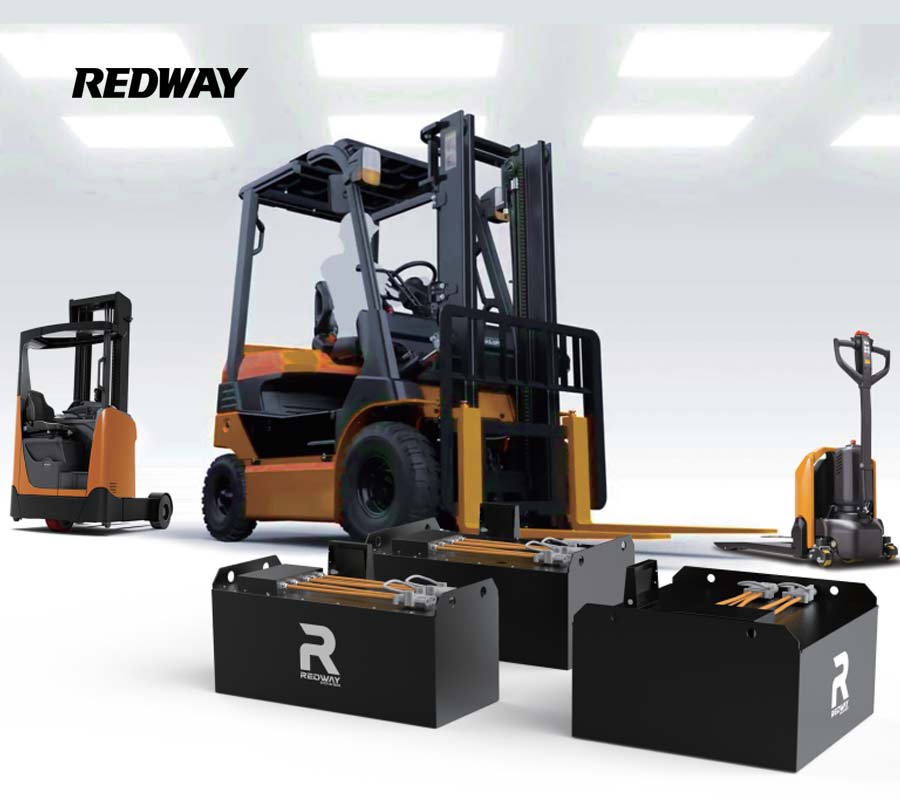
Forklift batteries typically last between 3 to 7 years, but lifespan depends on battery type, usage patterns, and maintenance. Lead-acid batteries average 3–5 years with 1600 full cycles, while lithium-ion variants reach 5–7 years and 1500–3000 cycles. High-use scenarios (e.g., 1.7 daily cycles in warehouses) cut lifespans by 30–50%. Pro Tip: Always maintain charge levels between 20%–80% to minimize degradation.
How Much Does a Forklift Battery Really Cost?
What determines forklift battery lifespan?
Battery lifespan hinges on chemistry, cycles, and operating conditions. Lead-acid batteries degrade faster due to sulfation, while lithium-ion packs retain 80% capacity after 2000 cycles. Temperature extremes (>45°C or <0°C) accelerate aging by 20–40% through increased internal resistance.
For example, a warehouse operating three shifts might deplete 200Ah lead-acid batteries twice daily, reducing lifespan from 5 years to 2.8 years. Transitional factors matter: charging before 30% discharge extends cycle counts by 18% compared to deep discharges. Hydration frequency for lead-acid cells should align with water consumption rates—typically every 10 cycles.
How do lead-acid and lithium-ion batteries compare?
Lithium-ion outlasts lead-acid in cycle life but costs 2–3x more. Lead-acid requires weekly watering and equalization charges, while lithium units need balanced cell monitoring. A 48V 600Ah lithium pack delivers 28.8kWh vs. lead-acid’s 22kWh (accounting for 80% depth-of-discharge limit).
| Parameter | Lead-Acid | Lithium-ion |
|---|---|---|
| Cycle Life | 1,500 | 3,000 |
| Energy Density | 30–50 Wh/kg | 100–265 Wh/kg |
| Maintenance | Weekly | Quarterly |
Warehouses using opportunity charging boost lithium lifespan by 22% through reduced full-cycle stress. But what happens when temperature controls fail? One distribution center saw lithium packs degrade 15% faster after repeated 50°C exposures, despite BMS protections.
What maintenance extends battery life?
Scheduled watering and cleaning prevent 60% of premature failures. For lead-acid, use deionized water to refill cells weekly, maintaining ¼” above plates. Clean terminals monthly with baking soda solution to remove corrosion—a 0.5Ω terminal resistance increase causes 8% capacity loss.
Consider this: A fleet manager reduced replacement costs by 31% after implementing automated watering systems and monthly specific gravity checks. Transitionally, proper torque (5–7 Nm) on cable connections prevents hot spots that accelerate grid corrosion.
How does charging strategy affect longevity?
Opportunity charging preserves lithium health but harms lead-acid. Lithium tolerates partial charges with 98% efficiency vs. lead-acid’s 70–85%. Fast-charging lead-acid batteries beyond 0.3C (e.g., 800A for 1000Ah) causes temperature spikes that warp plates.
| Method | Cycle Life Impact | Daily Throughput |
|---|---|---|
| Full Cycles | -15% | 1.0x |
| Opportunity | +25% | 1.2x |
A cold storage facility boosted lithium lifespan by 18 months using timed 50–70% partial charges instead of nightly full charges. But what if chargers lack temperature compensation? One logistics hub reported 12% capacity loss in lead-acid packs after winter overcharging at -10°C.
Redway Battery Expert Insight
FAQs
Yes, but require BMS/charger upgrades—lithium’s 3.6V/cell vs. lead-acid’s 2V changes voltage curves. Budget $1,200–$2,500 per truck for compatibility modifications.
How to calculate remaining battery life?
Track completed cycles vs. rated lifespan (e.g., 900/1500 cycles = 60% depleted). For lead-acid, measure specific gravity: <1.225 indicates <80% health.
Do lithium batteries require special storage?
Store at 40–60% charge in 15–25°C environments. Extended 0% storage permanently damages anodes—3 months at empty causes 15% irreversible capacity loss.
For connected guidance and the next practical steps, use the Forklift Battery: Operation and Practical Guidance — Part 1.
