REDWAY BATTERY / KNOWLEDGE
Why Server Rack Batteries are Essential for Modern Data Centers
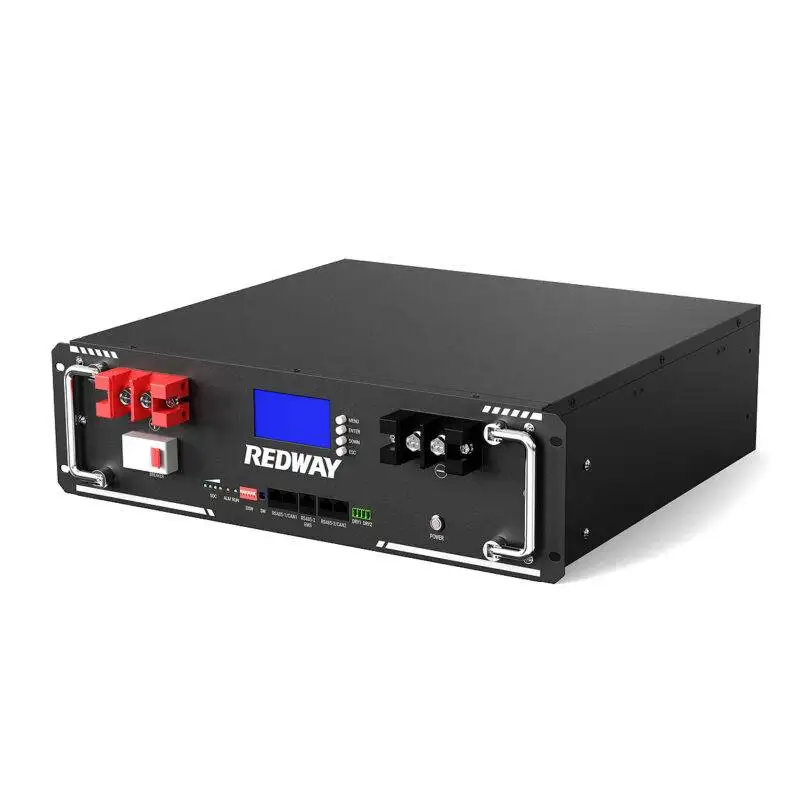
Server rack batteries are critical for maintaining uninterrupted power in data centers, ensuring uptime during grid failures. Designed as 48V/52V lithium-ion systems, they provide high energy density (150–300 Wh/kg), scalability, and rapid discharge rates. Advanced thermal management and modular designs enable seamless integration with UPS systems, supporting AI workloads and edge computing. Pro Tip: Deploy racks with built-in BMS to prevent cell imbalance and optimize cycle life beyond 5,000 charges.
What role do server rack batteries play in data centers?
They act as immediate power reservoirs, bridging gaps between grid failure and generator startup. Modern lithium-ion units deliver 10–90 seconds of full-load runtime at 3–5C discharge rates, preventing data corruption in SSD arrays. Redundancy via parallel racks ensures 99.999% uptime.
Unlike traditional lead-acid, server rack batteries operate at 48V nominal voltage, reducing current draw by 75% compared to 12V systems. This minimizes resistive losses in cables, crucial for high-density server farms. For example, a 48V 100Ah lithium rack provides 4.8kWh—sufficient to sustain a 20kW load for 14 minutes. Pro Tip: Pair batteries with ultracapacitors for milliseconds-level response to micro-outages. However, why prioritize voltage scalability? Racks must adapt to fluctuating workloads—modular lithium systems allow adding 10kWh increments without downtime. Thermal monitoring is non-negotiable; heat buildup above 45°C accelerates degradation by 200%.
| Parameter | Lithium-ion | Lead-Acid |
|---|---|---|
| Cycle Life | >5,000 | 400–800 |
| Energy Density | 200 Wh/kg | 30–50 Wh/kg |
How do lithium-ion batteries improve server rack efficiency?
LiFePO4 racks achieve 95% round-trip efficiency versus 80% for VRLA. Their flat discharge curve sustains voltage stability (±2%) even at 90% depth of discharge. This precision is vital for GPUs and TPUs in AI clusters.
Beyond raw efficiency, lithium-ion’s low self-discharge (3%/month vs. 15% for lead-acid) reduces recharge energy waste. Active balancing via BMS redistributes charge between cells, minimizing capacity fade. Take hyperscale data centers: Replacing 10,000 lead-acid batteries with lithium racks cuts cooling costs by 40%, as they generate 30% less heat. But how does this translate to real-world ROI? A 1MW facility saves ~$200k annually. Warning: Never mix lithium and lead-acid in the same rack—voltage incompatibility triggers BMS faults.
What are the advantages of modular server rack battery designs?
Modularity enables incremental capacity upgrades without system shutdowns. Hot-swappable 5kWh modules let admins replace faulty units in <5 minutes, avoiding cascading failures.
Each module operates as an independent 48V battery with dedicated BMS, communicating via CAN bus for load sharing. For instance, inserting a PM-LV48150-4U module adds 7.2kWh instantly. Transitional frameworks like Open Rack v3 standardize dimensions and connectors, ensuring third-party compatibility. Pro Tip: Schedule staggered module replacements—swapping 20% annually extends overall system life by avoiding concurrent EOL failures. Data centers with 100+ modules reduce capital expenditure by 25% through phased upgrades.
| Feature | Modular | Fixed |
|---|---|---|
| Scalability | High | None |
| MTTR* | 5min | 2hr+ |
Redway Battery Expert Insight
FAQs
What’s the typical lifespan of server rack batteries?
LiFePO4 racks last 8–12 years vs. 3–5 for lead-acid, assuming ≤2 cycles/day and 80% DoD. Temperatures below 35°C further extend service life.
Can racks integrate with solar/wind systems?
Yes—advanced BMS units like Redway’s PM-LV51100-3U Pro support hybrid input, prioritizing renewables during peak shaving.
Are lithium racks compatible with legacy UPS systems?
Only with 48V input compatibility—retrofit kits adjust voltage thresholds to avoid false-low charge alerts.
For the surrounding sizing, selection, installation and maintenance decisions, continue with the Forklift Battery: Brands, Models and Fitment — Part 1.