




REDWAY BATTERY / KNOWLEDGE
What Are Common Forklift Battery Problems?
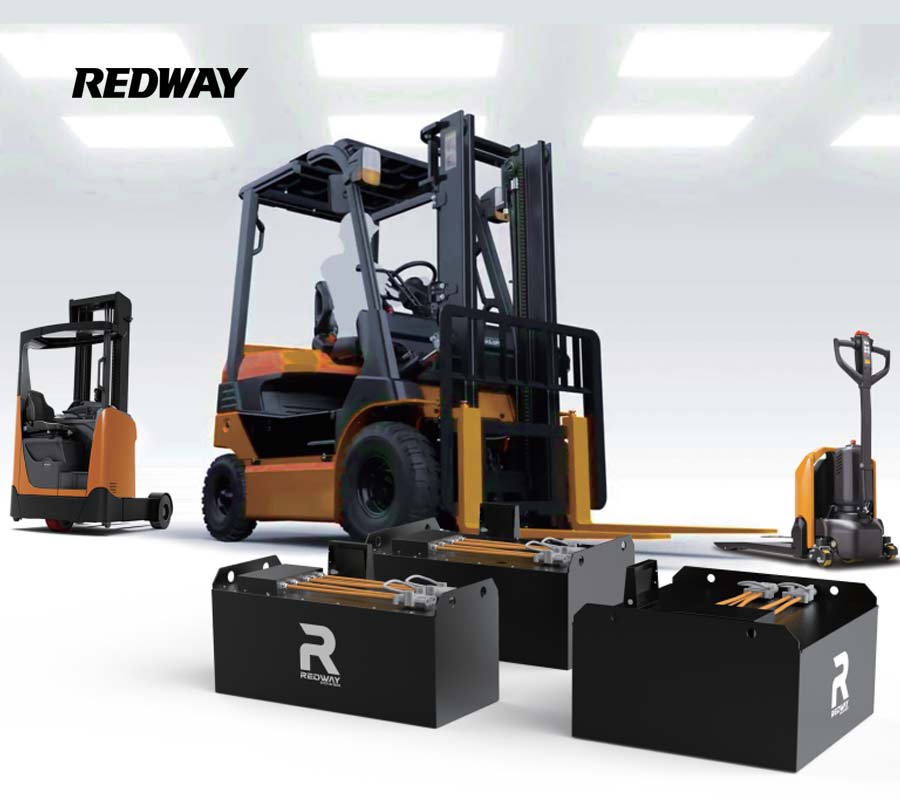
Common forklift battery problems include sulfation in lead-acid models, water loss from evaporation, improper charging cycles, terminal corrosion, and capacity fade due to aging. Lithium-ion batteries face fewer issues but still require thermal management and balanced charging. Regular maintenance, proper watering (for lead-acid), and using compatible chargers mitigate most failures. Pro Tip: Track discharge depth—exceeding 80% regularly halves lead-acid lifespan.
48V 300Ah Lithium Forklift Battery
What causes sulfation in forklift batteries?
Sulfation occurs when lead-acid batteries sit partially discharged, forming sulfate crystals on plates. This reduces capacity by 20–40% and increases internal resistance. Prolonged sulfation (>72h) causes permanent damage. Lithium-ion cells avoid this via stabilized chemistry.
In lead-acid batteries, sulfation accelerates if charging stops below 80% SOC. Equalization charges (15.5V for 12V units) dissolve mild sulfation. For example, warehouses using 8-hour shifts often face partial discharges, requiring weekly equalization. Pro Tip: Use automated chargers with desulfation modes to reverse early-stage crystal buildup. Lithium-ion forklift batteries, however, eliminate sulfation risks entirely. But what if your fleet still uses lead-acid? Prioritize full recharges within 24 hours of use.
| Factor | Lead-Acid | Lithium-Ion |
|---|---|---|
| Sulfation Risk | High | None |
| Recovery Methods | Equalization charging | Not applicable |
| Partial Cycle Tolerance | Low | High |
Why does water loss occur in forklift batteries?
Water evaporates during high-rate charging, especially in lead-acid batteries. Each 1°C temperature rise increases water loss by 10%. Maintenance-free designs reduce but don’t eliminate refills.
Hydrogen gas release during charging further depletes electrolyte levels. For instance, a 48V 800Ah lead-acid battery may lose 0.5L weekly in heavy use. Pro Tip: Refill after charging to prevent overflow—topping up pre-charge dilutes acid concentration. Transitioning to lithium-ion eliminates watering needs, saving ~3 hours/month per battery. But how do operators monitor levels? Install transparent casing or automated sensors. Beyond water loss, acid stratification (uneven electrolyte density) also plagues lead-acid units, requiring occasional stirring.
How do improper charging practices damage batteries?
Undercharging leaves active material sulfated, while overcharging corrodes plates and boils electrolytes. Fast charging above 0.25C (lead-acid) or 1C (lithium) accelerates degradation.
For example, charging a 600Ah lead-acid battery at 300A (0.5C) raises temperatures by 15°C, cutting cycle life by half. Lithium-ion handles higher rates better but needs precise voltage control. Pro Tip: Use chargers with temperature compensation (±3mV/°C/cell) to adjust for ambient conditions. Imagine charging a cold battery—without compensation, overvoltage occurs, stressing BMS circuits. Transitional phrase: In practice, mismatched chargers cause 62% of premature failures.
| Charging Error | Lead-Acid Impact | Lithium-Ion Impact |
|---|---|---|
| Overvoltage (5%) | Corrosion, gassing | BMS disconnect |
| Undervoltage | Sulfation | Cell imbalance |
| High Current | Plate warping | Reduced lifespan |
What accelerates terminal corrosion?
Acid spills and hydrogen gas exposure corrode lead terminals, increasing resistance up to 200mΩ. Dirty connections compound heat buildup during 300A+ discharges.
For example, a corroded terminal in a 36V system can cause a 2V voltage drop, reducing lift capacity by 15%. Pro Tip: Clean terminals quarterly using baking soda (neutralize acid) and apply anti-corrosion gel. Lithium-ion’s sealed design minimizes leakage risks. But what if corrosion is already severe? Replace cables and terminals immediately—carbonized deposits are fire hazards during high-current operations.
How does capacity fade manifest over time?
Lead-acid loses 20–30% capacity after 1,200 cycles (50% DoD), while lithium-ion retains 80% after 3,000 cycles. Deep discharges and high temperatures accelerate aging.
A 48V lead-acid pack delivering 600Ah new might only provide 420Ah after two years. Pro Tip: Keep lead-acid DoD ≤50% and lithium-ion ≤80% for maximum longevity. Think of batteries like tires—repeated stress (deep cycles) wears them out faster. Transitional phrase: Capacity loss isn’t linear—after 70% threshold, degradation speeds up exponentially.
Why is thermal management critical?
Operating above 45°C halves lead-acid lifespan; lithium-ion cells over 60°C risk thermal runaway. Cold (<0°C) reduces lithium charge efficiency by 50%.
For instance, forklifts in foundries may see battery temps spike to 55°C without cooling systems. Pro Tip: Install temperature sensors with automatic load reduction. Ever seen a swollen lithium pack? It’s often due to sustained overheating. Redway’s lithium batteries integrate liquid cooling channels for high-heat environments.
24V 200Ah Lithium Forklift Battery
Redway Battery Expert Insight
FAQs
Check weekly—top up with distilled water after charging to keep plates submerged by ¼ inch. Never add acid.
Can lithium batteries replace lead-acid in older forklifts?
Yes, but verify voltage compatibility and retrofit battery compartments—lithium packs are 30–50% lighter.
What indicates terminal corrosion?
White/green powder on terminals, voltage drops during lifting, or overheating cables during operation.
This topic belongs to the wider Buying Forklift Batteries: Channels, Used Stock and Repair, which brings the related decisions and practical checks together.
