




REDWAY BATTERY / KNOWLEDGE
What Should I Do About Forklift Battery Issues?
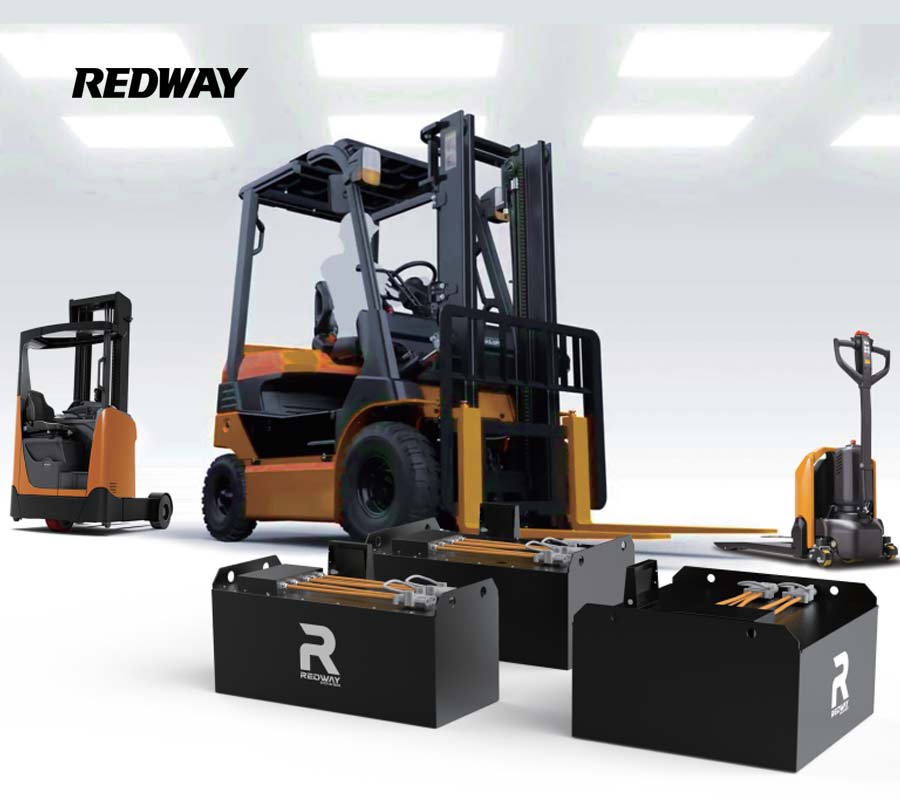
For forklift battery issues, immediately prioritize safety: disconnect power, ventilate the area, and inspect for leaks/damage. Diagnose voltage drops, sulfation, or cell imbalance using a multimeter or battery management system (BMS). Pro Tip: Low electrolyte levels often cause premature failure—top up with distilled water only. For persistent problems, consult certified technicians to avoid operational downtime or thermal risks.
48V 600Ah Lithium Forklift Battery
What are common forklift battery problems?
Key issues include sulfation from partial charging, cell imbalance, and terminal corrosion. Lead-acid types face electrolyte stratification, while lithium-ion packs may suffer BMS faults. Pro Tip: Check water levels monthly—below plate exposure accelerates degradation. For example, a warehouse using undercharged batteries reported 40% capacity loss within six months due to sulfation buildup.
Beyond visible corrosion, internal problems like sulfation occur when batteries sit at less than 80% charge. Lead-acid cells develop sulfate crystals, reducing conductivity—voltage drops below 1.8V per cell signal this. Lithium-ion imbalances, meanwhile, stem from inconsistent cell aging. Did you know a 0.3V variance between cells can trip BMS protections? Technicians use balancing tools or specialized chargers to rectify this. Practically speaking, voltage testing during operation identifies weak cells: a 48V lithium pack should maintain 46–54V under load. Pro Tip: Always wear acid-resistant gloves when handling lead-acid electrolyte. Transitioning to lithium-ion? Their sealed design minimizes maintenance but requires strict temperature control.
How do I troubleshoot a malfunctioning forklift battery?
Step 1: Measure open-circuit voltage—a 48V battery below 46V indicates cell issues. Step 2: Load-test for 30 minutes; voltage shouldn’t drop >15%. For lithium packs, review BMS error codes via CAN bus. Pro Tip: Dirty terminals cause 20% of “battery failures”—clean with baking soda solution regularly.
Start with visual checks: cracked cases, bloating, or leaks demand immediate replacement. Load testing reveals hidden flaws; a 1000Ah battery sustaining 300A for 10 minutes without dipping below 44V (lead-acid) or 49V (lithium) passes. But what if voltage doesn’t recover after rest? That signals sulfation or permanent capacity loss. For lithium packs, BMS logs track cell voltages—look for outliers exceeding ±50mV. Thermal cameras spot hot spots from bad connections. Example: A logistics firm fixed 70% of “dead” batteries by re-torquing loose terminals. Warning: Never bypass BMS protections—lithium fires spread rapidly.
| Method | Lead-Acid | Lithium-Ion |
|---|---|---|
| Voltage Check | 12.6V/cell (full) | 3.6V/cell (full) |
| Load Test | ≥1.7V/cell | ≥3.0V/cell |
What safety precautions are critical?
Always wear PPE—gloves, goggles—and ensure ventilation to disperse hydrogen gas. Use insulated tools, and avoid sparks near charging stations. Pro Tip: Keep baking soda nearby to neutralize acid spills—1kg per 5L electrolyte.
Hydrogen concentrations above 4% become explosive—charge batteries in well-ventilated areas. Lead-acid systems require extra care: lifting 500kg batteries needs proper hoists to prevent crush injuries. Did you know electrolyte refills must use distilled water? Tap water minerals corrode plates. Lithium-ion risks include thermal runaway if punctured—store in fireproof containers. Example: A technician suffered chemical burns after skipping gloves during terminal cleaning. Transitioning between battery types? Lead-acid requires monthly maintenance; lithium needs minimal care but strict voltage monitoring. Pro Tip: Label batteries with last service dates—tracking prevents oversight.
When should I replace instead of repairing?
Replace if capacity falls below 60%, physical damage exists, or repairs cost >50% of a new unit. Lithium-ion packs with ≥20% cell variance need replacement. Pro Tip: Cycle count matters—lead-acid lasts 1,200 cycles; lithium-ion 3,000+.
Capacity testing decides fate: if an 800Ah battery delivers <480Ah, replacement is cheaper than downtime. Age also factors in—lead-acid beyond 5 years often isn’t worth repairing. For lithium, check cycle counts via BMS: 80% capacity after 2,000 cycles is normal. Example: A 2018 lithium pack with 30% imbalance required $4k in cell replacements vs. $6k for a new battery—the owner chose replacement. Financially, calculate cost-per-cycle: lithium’s higher upfront cost spreads further. Warning: Never mix old and new cells—imbalanced performance risks failure.
| Indicator | Repair | Replace |
|---|---|---|
| Capacity Retention | >70% | <60% |
| Cell Variance | <10% | >20% |
Redway Battery Expert Insight
FAQs
Every 2–4 weeks, depending on use. Keep plates submerged—1cm above is ideal. Use distilled water only to avoid mineral buildup.
Can I use a lithium charger on lead-acid?
No—lithium chargers use CC-CV profiles; lead-acid needs bulk/absorption stages. Mismatched charging damages both battery and charger.
What’s the average forklift battery lifespan?
Lead-acid: 3–5 years; lithium-ion: 8–10 years. Proper maintenance extends these by 20–30%.
For connected guidance and the next practical steps, use the Buying Forklift Batteries: Channels, Used Stock and Repair.
