




REDWAY BATTERY / KNOWLEDGE
What Is The Lifecycle Of A Forklift Battery?
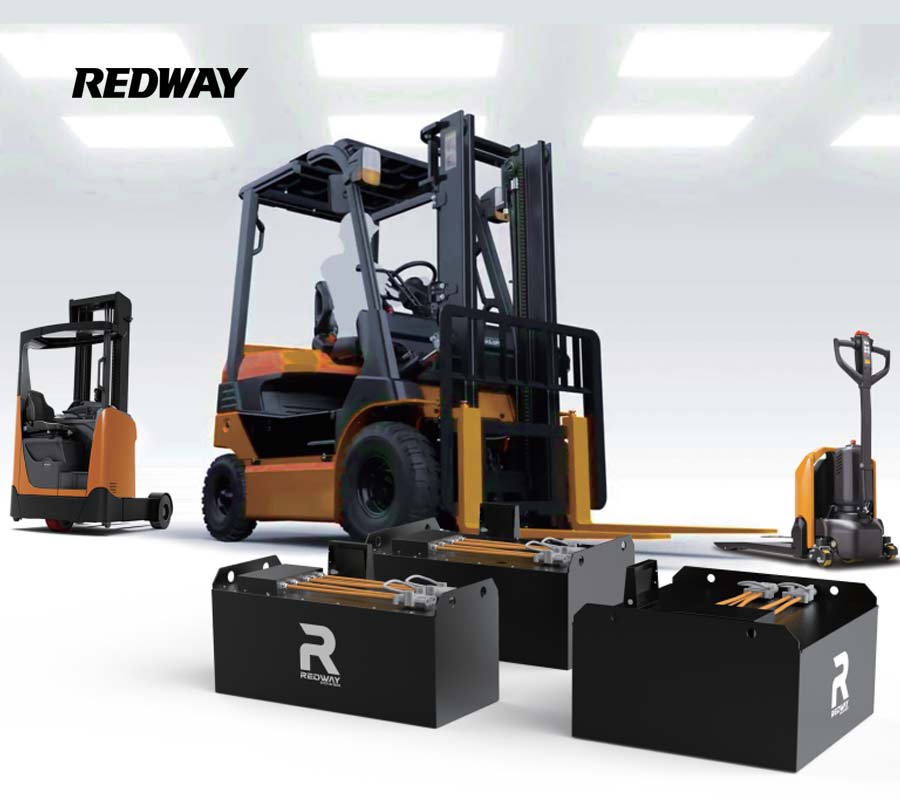
A forklift battery’s lifecycle depends on type, usage, and maintenance. Lead-acid batteries typically last 1,000–1,500 cycles or 3–5 years, requiring regular water checks and equalization. Lithium-ion batteries endure 3,000–5,000 cycles (8–10 years) with no maintenance, leveraging depth of discharge (DoD) up to 100%. Key factors include charge protocols, ambient temperature, and load demands. Pro Tip: Avoid charging below 20% for lead-acid to prevent sulfation.
48V 600Ah Lithium Forklift Battery
What factors determine a forklift battery’s lifespan?
Cycle count, depth of discharge (DoD), and temperature are critical. Lead-acid degrades faster with deeper discharges (>50% DoD), while lithium-ion tolerates 80–100% DoD. High temperatures (>35°C) accelerate corrosion in lead-acid, but lithium-ion operates safely up to 45°C. Charging protocols also matter: partial charges (20–80%) extend lithium lifespan by 20% vs. full cycles.
Practically speaking, a warehouse using 48V lithium-ion packs (like Redway’s 48V 600Ah model) could achieve 10+ years with daily partial cycling. Comparatively, lead-acid in similar conditions might last 4 years. Why the disparity? Lithium cells lack sulfation and stratification risks. For example, a Toyota 8HBW23 lead-acid battery loses 30% capacity after 1,200 cycles, while a Redway lithium equivalent retains 85% post-3,000 cycles.
Lead-acid vs. Lithium-ion: Which lasts longer?
Lithium-ion outlasts lead-acid by 3x due to higher cycle stability. Lead-acid loses 0.5% capacity monthly from sulfation; lithium degrades 0.03% monthly. Charging speed also differs: lithium handles 2C fast-charging (0–80% in 1 hour) without damage, whereas lead-acid requires 8+ hours for full charge to avoid overheating plates.
| Metric | Lead-Acid | Lithium-Ion |
|---|---|---|
| Cycle Life | 1,200 | 3,500 |
| DoD Limit | 50% | 100% |
| Maintenance | Weekly | None |
Beyond chemistry, think of forklift batteries like car tires: lead-acid wears faster under heavy loads, while lithium-ion’s “reinforced tread” (stable chemistry) handles stress. Pro Tip: For multi-shift operations, lithium’s opportunity charging (e.g., 15-minute bursts during breaks) adds 500+ cycles annually without degradation.
How does maintenance impact battery lifecycle?
Lead-acid demands water refills, equalization charges, and terminal cleaning to prevent capacity loss. Neglecting these cuts lifespan by 40%. Lithium-ion requires only SOC calibration every 6 months. Battery Management Systems (BMS) in lithium packs automate cell balancing and temperature control, eliminating manual interventions. For example, a Crown SC 6032 lead-acid battery loses 15% capacity if equalization is skipped for 10 cycles.
But what if maintenance costs matter? One study showed lead-acid’s annual upkeep averages $600 per unit (water, labor, energy), while lithium’s is $0. Transitional savings justify lithium’s higher upfront cost in 2–3 years. Redway’s 24V 280Ah lithium model reduces downtime by 70% through zero watering and faster charging.
80V 700Ah Forklift Lithium Battery
What are the signs a forklift battery needs replacement?
Voltage sag under load (≥10% drop), reduced runtime (20% below specs), and swollen cases indicate aging. Lead-acid batteries showing <6V per cell (12V total for a 24V pack) require replacement. Lithium-ion packs with >15% capacity loss or BMS faults (e.g., frequent shutdowns) should be retired. Pro Tip: Use a battery analyzer monthly—impedance over 120% of initial value signals failure.
Imagine a Hyster H2.5XT forklift struggling to lift 2 tons despite full charge—this voltage collapse often stems from corroded lead plates. Replacing it with a lithium-ion unit restores performance. However, mismatched chargers can accelerate decline. Always pair replacements with compatible chargers—a 48V lithium battery needs a 54.6V charger, not a lead-acid’s 52V model.
Cost comparison: Short-term vs. long-term battery investment?
Lead-acid costs $3,000–$5,000 upfront but incurs $2,000/year in maintenance. Lithium-ion costs $10,000–$15,000 initially but saves $12,000 over 10 years. Total cost of ownership (TCO) for lithium is 30–50% lower. Factoring in productivity gains (20% uptime boost), ROI often occurs in 18–24 months.
| Cost Factor | Lead-Acid | Lithium-Ion |
|---|---|---|
| Initial Cost | $4,000 | $12,000 |
| 10-Year TCO | $24,000 | $14,000 |
| Energy Efficiency | 70% | 95% |
For instance, a Redway 80V 400Ah lithium battery consuming 100kWh monthly saves $200 vs. lead-acid’s 130kWh usage. Beyond dollars, lithium’s space-efficient design allows smaller battery rooms—critical for compact warehouses. Still, budget-conscious operations might lease lithium batteries to spread costs.
Can environmental conditions affect battery longevity?
Extreme heat (>35°C) reduces lead-acid life by 50% via electrolyte evaporation. Cold (<0°C) slashes lithium-ion capacity by 20% temporarily. Humidity (>80% RH) corrodes lead terminals, increasing resistance. Ideal conditions are 15–25°C and 40–60% RH. Lithium’s sealed design resists moisture, making it suitable for food cold storage (-20°C) with 85% capacity retention.
Consider a beverage warehouse at 5°C: lithium-ion forklifts maintain 90% performance, while lead-acid models need 30-minute warm-ups. Redway’s 24V 200Ah lithium battery includes self-heating cells for -30°C environments, ensuring stable operation. Always consult OEM specs for temperature ratings—exceeding them voids warranties.
Redway Battery Expert Insight
FAQs
Replace lead-acid every 3–5 years or when capacity drops below 80%; lithium-ion every 8–10 years or at 70% capacity. Regular testing (quarterly for lead-acid, annually for lithium) helps schedule replacements proactively.
Can I repair a failing forklift battery instead of replacing it?
For lead-acid, replacing sulfated cells can buy 6–12 months. Lithium-ion repairs are risky—BMS or cell issues require factory service. Redway offers refurbishment programs extending lithium life by 3+ years at 40% of replacement cost.
For the surrounding sizing, selection, installation and maintenance decisions, continue with the Forklift Battery: Technology and System Fundamentals — Part 7.
