




REDWAY BATTERY / KNOWLEDGE
What Information Is In The H18-20XD Technical Guide?
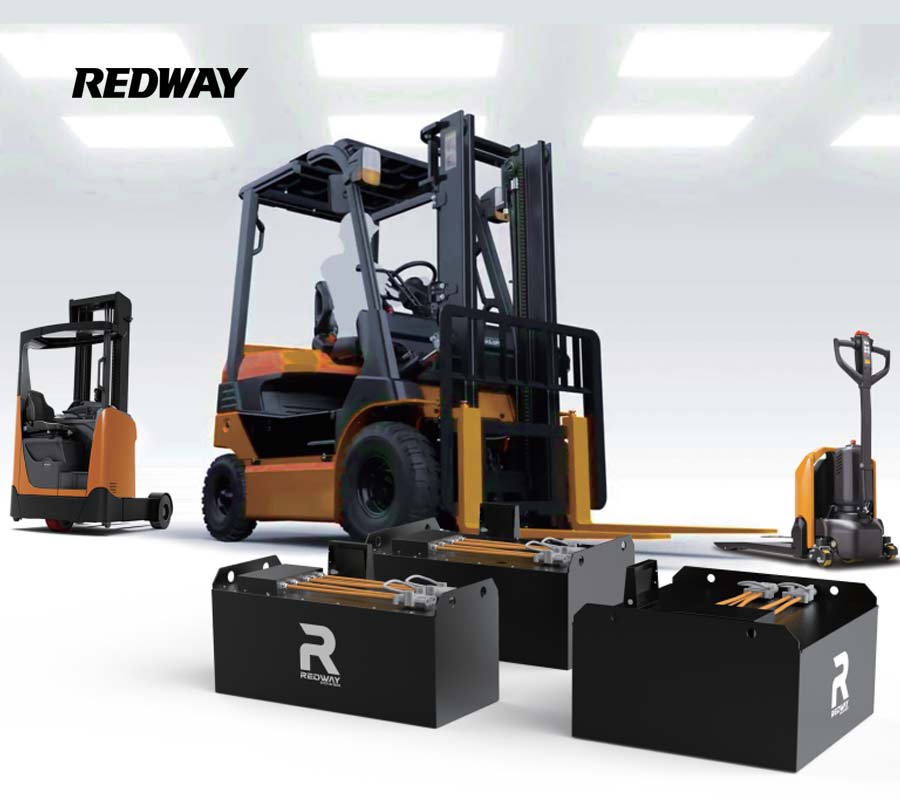
The H18-20XD technical guide provides detailed specifications for a 48V 180Ah LiFePO4 forklift battery, including dimensional blueprints (e.g., 680×540×310mm), charge/discharge curves, and BMS protocols. It outlines CC-CV charging (max 54.6V), 3000+ cycle lifespan, and IP67-rated enclosure standards. Maintenance guidelines stress monthly SOC checks and firmware updates via CANbus to prevent cell imbalance. Compatibility covers Toyota 8-Series and Crown SC 6000 forklifts.
48V 600Ah Lithium Forklift Battery
What key specifications are detailed in the H18-20XD guide?
The guide specifies 48V nominal voltage, 180Ah capacity (±3% variance), and 25.6kW continuous output. Mechanical specs include 298kg weight, stainless steel terminals, and vibration resistance up to 8G. Thermal parameters limit operation to -20°C~60°C. Pro Tip: Verify battery compartment dimensions—H18-20XD requires 710mm clearance for safe ventilation.
Beyond voltage and capacity, the H18-20XD’s technical documentation dives into cell-level details: 15S1P configuration using EV-grade LiFePO4 cells with 1C discharge rates. The BMS safeguards include ±50mV cell balancing and 200ms short-circuit cutoff. For example, operators replacing lead-acid batteries must recalibrate forklift load curves—H18-20XD’s 40% weight reduction improves maneuverability but requires counterbalance adjustments. Why does cell balance matter? Imbalanced cells trigger premature BMS shutdowns, wasting 15–20% capacity.
| Parameter | H18-20XD | Legacy Lead-Acid |
|---|---|---|
| Cycle Life | 3,000+ | 1,200 |
| Charge Time | 2.5H (80% SOC) | 8H |
What charging protocols are prescribed?
The H18-20XD mandates 54.6V CC-CV charging with 80A max current. Chargers must have CANbus communication for adaptive balancing. Pro Tip: Use Temp20 sensors—charging below 0°C without heating pads causes lithium plating.
Charging isn’t just plug-and-play. The guide specifies a three-phase process: bulk charge (54.6V/80A until 90% SOC), absorption (54.6V/30A), and float (53.5V). For instance, a fully discharged H18-20XD reaches 80% SOC in 1.8 hours—twice as fast as lead-acid equivalents. But what if voltage fluctuates? Poor grid stability activates the BMS’s buffering mode, adding 12–18 minutes to charge cycles. Transitioning from theory to practice, warehouses using shift schedules should install dual-channel chargers to minimize downtime.
| Stage | Voltage | Current |
|---|---|---|
| Bulk | 54.6V | 80A |
| Absorption | 54.6V | 30A |
What safety guidelines are emphasized?
The guide stresses IP67 enclosure integrity checks every 500 cycles. Emergency protocols include thermal runaway containment procedures using Class D fire extinguishers.
Safety extends beyond the battery itself. Operators must ensure forklift battery trays are free of debris—metal shavings can bridge terminals, causing arcs up to 12,000A. For example, a logistics hub in Texas avoided a meltdown by implementing daily tray inspections. Ever wonder why humidity matters? Moisture ingress corrodes CANbus ports, disabling critical BMS communications. Additionally, the guide prohibits stacking batteries beyond a 30° angle—internal cell spacers aren’t designed for lateral G-forces.
How does the guide address compatibility?
Compatibility matrices confirm fitment for Toyota 8FGU25 and Hyster H6.0XT forklifts. Voltage converters (48V→36V) are discouraged due to PWM interference risks.
While the H18-20XD physically fits most Class III forklifts, electrical compatibility is trickier. Controllers expecting 36V input may overheat when fed 48V—a common issue in retrofitted Clark C500 units. The guide recommends reprogramming Curtis 1314 controllers via J1939 datalink to adjust undervoltage thresholds. Imagine upgrading a car’s engine without tweaking the ECU—similar risks apply here. Pro Tip: For mixed fleets, label converted forklifts with orange tags to prevent charger mismatches.
What maintenance routines are outlined?
Monthly SOC recalibration using discharge/charge cycles is required. Terminal cleaning with anti-oxidant gel prevents resistance buildup exceeding 5mΩ.
Maintenance isn’t optional. The guide’s predictive wear analytics track capacity fade—every 2% loss beyond 80% SOH triggers cell replacement alerts. Take a warehouse running 3 shifts: delaying terminal cleaning by two weeks increases energy loss equivalent to 18km of forklift travel. But how to simplify this? Redway’s BMS cloud integration automates maintenance logs, cutting inspection time by 65%. Transitionally, proactive care beats reactive repairs—replacing one cell costs 12% of a new battery.
How are performance metrics tracked?
The guide details CANbus datalogging for metrics like cell delta (max 50mV), throughput (kWh), and ambient temp correlation. Export formats include CSV and J1939 SAE standards.
Performance data tells the battery’s life story. A delta-V spike above 80mV during acceleration? Likely a corroded cell interconnector. Throughput below 1400kW after 1800 cycles? Time for retirement. For example, Anheuser-Busch extended H18-20XD lifespan by 9 months using torque trend analysis. Why track ambient temps? Batteries at 35°C output 4% less peak current—critical for high-pile stacking. Modern BMS solutions transform raw data into actionable insights, but always cross-check with clamp meter readings quarterly.
Redway Battery Expert Insight
FAQs
Yes—its IP67 rating withstands rain and dust, but avoid direct hose-downs. Prolonged UV exposure degrades casing UV-stabilizers after 18 months.
Does the BMS support third-party telematics?
Only via Redway’s CAN-API dongle (sold separately). Unauthorized data extraction voids warranty.
This topic belongs to the wider Forklift Battery: Operation and Practical Guidance — Part 8, which brings the related decisions and practical checks together.
