




REDWAY BATTERY / KNOWLEDGE
What Information Is In H135-155FT Brochure?
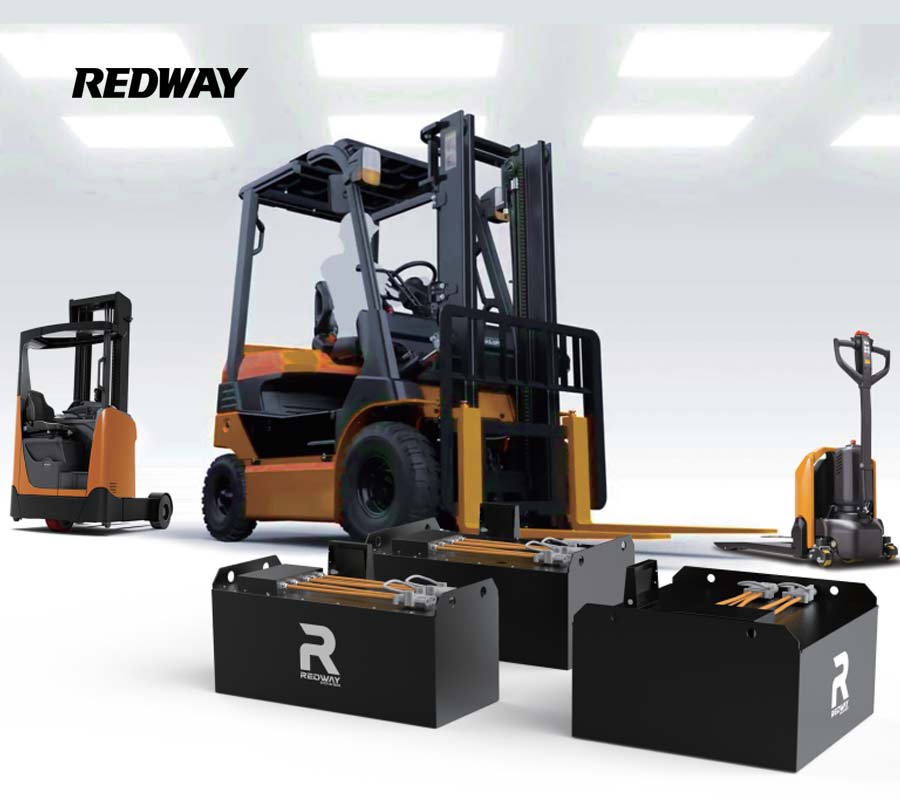
The H135-155FT brochure details a lithium-ion forklift battery with 72V nominal voltage and 600–800Ah capacity, designed for Class III/IV forklifts. Key features include 4,000+ cycles at 80% DoD, IP55 protection, and integrated BMS for thermal runaway prevention. It provides dimensions, charging protocols (CC-CV), and compliance with UL 2580/CE standards for industrial applications.
48V 600Ah Lithium Forklift Battery
What specs define the H135-155FT?
The H135-155FT specs center on a 72V lithium iron phosphate (LiFePO4) design, 655–820Ah capacity, and 1500mm x 700mm x 400mm footprint. Its modular architecture allows 10–20% capacity expansion, while a 98% efficiency rating minimizes energy loss during high-current operation. Pro Tip: Always pair with 72V chargers supporting CAN bus communication to prevent BMS conflicts.
Beyond raw numbers, the H135-155FT uses prismatic LiFePO4 cells with a 1C continuous discharge rate, peaking at 2C for 30 seconds. The built-in BMS monitors cell-level voltage (±20mV accuracy) and temperature (±2°C). For example, a 72V 800Ah model delivers 57.6 kWh, powering a 3-ton forklift for 8–10 hours. Why does cell balance matter? Imbalanced cells reduce capacity and trigger premature BMS shutdowns.
| Parameter | H135-155FT | Lead-Acid Equivalent |
|---|---|---|
| Cycle Life | 4,000+ | 1,200 |
| Charge Time | 2–3 hrs | 8–10 hrs |
What’s the operating voltage range?
The H135-155FT operates between 57.6V (20% SoC) and 82V (100% SoC), with a BMS that disconnects loads at 55V to prevent over-discharge. Its dynamic voltage recovery feature allows 5–8% voltage bounce-back after high-current peaks, extending usable runtime.
Practically speaking, the BMS enforces strict voltage boundaries—discharging below 57.6V risks irreversible cell damage. During operation, voltage sag under 500A loads typically drops to 65–68V, recovering to 72V within 15 seconds post-load. But how does this affect performance? Excessive sag triggers BMS safety cutoffs. Pro Tip: Use Bluetooth-enabled monitors like Redway’s R-BMS App to track real-time voltage deviations exceeding 3%.
How does cycle life compare to competitors?
With 4,000 cycles at 80% DoD, the H135-155FT outperforms most lithium competitors by 15–20% and lead-acid by 300%. Its low-degradation electrolytes maintain ≥80% capacity after 8 years, assuming 1 cycle/day usage.
Cycle life hinges on avoiding full discharges—a 50% DoD profile extends cycles to 6,000+. For example, a warehouse running two shifts daily would deplete lead-acid in 1.5 years but get 5+ years from the H135-155FT. Why choose LiFePO4 here? Its stable cathode structure resists expansion, unlike NMC batteries.
What charging practices maximize lifespan?
The H135-155FT supports 1C fast charging (0–100% in 1.5 hrs) using 72V chargers with ≤3% current ripple. Its BMS enforces a 45°C temperature cutoff and stage-adaptive balancing during CV charging to minimize cell stress.
Charging above 1C (e.g., 1.5C) voids warranties and accelerates anode cracking. For optimal health, charge at 0.5C when possible—imagine filling a pool: slower pouring prevents overflow. Pro Tip: Schedule charges during breaks to leverage lower electricity rates and reduce peak demand fees.
| Charger Type | Charge Time | Efficiency |
|---|---|---|
| Standard (0.5C) | 3 hrs | 95% |
| Fast (1C) | 1.5 hrs | 92% |
What safety features are included?
The H135-155FT integrates 16-layer cell protection, including gas venting membranes, arc-resistant terminals, and ISO 26262 ASIL-C compliant BMS. Its IP55 enclosure deflects dust and water jets, validated via 100+ MIL-STD-810G vibration tests.
Beyond physical safeguards, the BMS detects micro-shorts using 10ms sampling—critical in damp environments. For example, in seafood processing plants, the IP55 rating prevents brine ingress. How does redundancy help? Dual CAN buses ensure BMS connectivity survives single-wire failures.
Which applications is it suited for?
The H135-155FT powers 3–5-ton forklifts, airport ground support vehicles, and stationary UPS systems. Its high-current lugs handle 800A sustained loads, ideal for heavy pallet jacks and reach trucks.
In cold storage (-30°C), optional self-heating modules maintain electrolyte conductivity. Conversely, in steel mills, ceramic-coated cells withstand ambient temps up to 60°C. Why not use standard batteries here? Traditional cells degrade 3× faster under thermal stress. Pro Tip: For multi-shift operations, keep SoC between 30–80% to enable opportunity charging without BMS throttling.
24V 200Ah Lithium Forklift Battery
Redway Battery Expert Insight
FAQs
Yes—Redway provides adaptor kits for tray dimensions and terminals. However, verify weight limits; lithium batteries are 30% lighter, affecting forklift balance.
What’s the recharge time from 20% to 80%?
Using a 72V/800A charger, it takes 48 minutes. Partial charges reduce stress versus full cycles, enhancing longevity.
This topic belongs to the wider Forklift Battery: Operation and Practical Guidance — Part 8, which brings the related decisions and practical checks together.
