





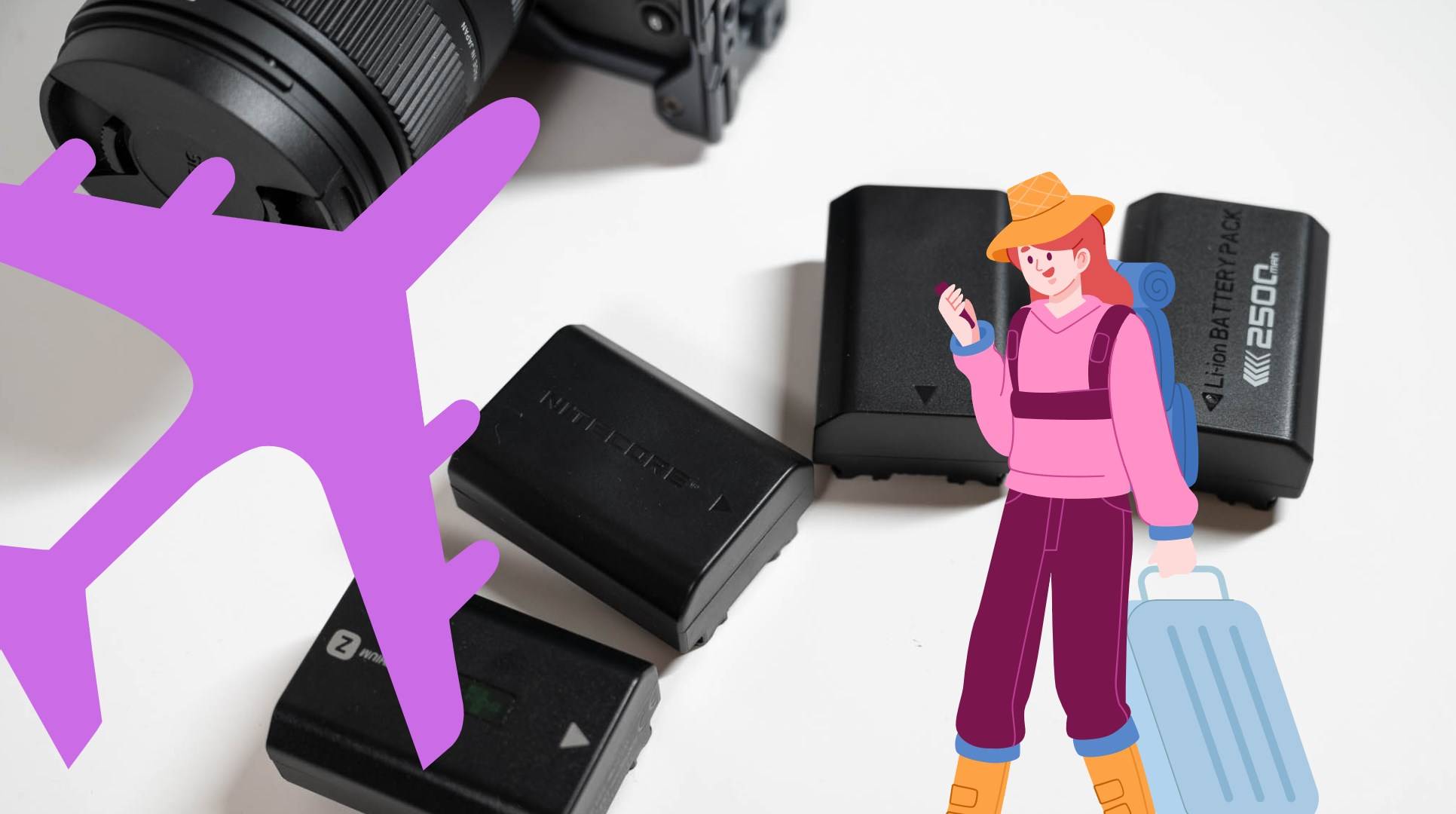
Traveling with camera batteries requires understanding air travel regulations, safety protocols, and proper packing methods. Lithium-ion batteries used in cameras have restrictions due to fire risks, so it’s essential to carry them in your carry-on, protect terminals, check capacity limits, and comply with airline rules for safe, hassle-free travel.

What Are the Regulations for Traveling with Camera Batteries on Flights?
Airlines and aviation authorities like FAA, TSA, and IATA require lithium-ion camera batteries to be carried in carry-on luggage only, not checked baggage, due to fire risks. Battery capacity limits are usually below 100 watt-hours (Wh) per battery, with strict rules on quantity. Always check airline-specific policies before traveling and declare batteries if asked.
Lithium metal (non-rechargeable) batteries also have limitations on quantity and size. Damaged or swollen batteries are prohibited on planes due to safety hazards.
How Should You Properly Pack Camera Batteries for Air Travel?
Camera batteries must be packed to prevent short circuits and damage. Keep batteries in their original packaging or cover terminals with tape or insulating covers. Store batteries separately in protective cases or zip bags to avoid contact with metal objects. Avoid packing batteries loose inside checked luggage due to risks of malfunction under pressure or temperature changes.
Turn devices off and secure battery compartments to prevent accidental activation during transit.
Why Is Carrying Camera Batteries in Carry-On Luggage Important?
Lithium-ion batteries carry a risk of thermal runaway (fire) that can be detected and handled quicker in the cabin. Carrying batteries in checked luggage increases risks due to inaccessible cargo hold safety measures. Carry-on storage ensures immediate response from cabin crew if a battery overheats or malfunctions, maintaining travel safety for all passengers.

Which Types of Camera Batteries Are Allowed on Planes?
Typical permissible batteries include lithium-ion rechargeable batteries used in cameras, lithium metal (primary) batteries in small sizes, and common dry cell batteries like AA, AAA. Lithium-ion batteries must be under 100Wh, with some allowance for larger ones (up to 160Wh) after airline approval. Non-rechargeable lithium metal batteries have strict quantity limits as well.
How Many Camera Batteries Can You Bring on a Flight?
Generally, you can carry an unlimited number of batteries below 100Wh in your carry-on. For batteries between 100Wh and 160Wh, airlines allow a maximum of two, sometimes requiring prior approval. Batteries over 160Wh are typically banned. Carrying spare batteries in their original packaging or a protective case facilitates transport and customs inspection.
When Should You Replace or Avoid Traveling with a Camera Battery?
Avoid traveling with batteries that show any signs of swelling, leakage, damage, or overheating. These conditions increase the risk of fire and are prohibited on aircraft. Replace compromised batteries before travel to ensure compliance and safety. Always check batteries for physical integrity and charge properly before flying.
How Can You Safely Transport Camera Battery Chargers and Equipment?
Chargers can be packed in either carry-on or checked luggage but ensure cords are neatly bundled to avoid damage. Devices powered by batteries should be turned off during flights. Do not pack regular non-rechargeable batteries in rechargeable chargers. Carry chargers and extra batteries in separate compartments to avoid damage and ease inspection.
Where Can You Find High-Quality Batteries for Travel Like Those from Redway Battery?
Redway Battery offers reliable, OEM lithium battery solutions ideal for photography equipment and travel needs. Based in Shenzhen with 13+ years of expertise, Redway provides customized, safe, and durable lithium-ion batteries designed to meet travel regulations and high performance standards. Redway’s high-quality batteries ensure safety and extended use for camera professionals on the go.
Redway Battery Expert Views
“Travelers frequently overlook the importance of battery safety during air travel, risking delays and safety issues. At Redway Battery, we emphasize quality and compliance in our lithium-ion products, ensuring they meet stringent aviation standards. Our customized solutions cater to photographers’ needs, combining durability, safety, and ease of travel, helping users focus on capturing moments worry-free.” – Redway Battery Engineering Team
Summary and Actionable Advice
Traveling with camera batteries demands careful attention to airline regulations, packing safety, and battery condition checks. Always carry lithium-ion batteries in your carry-on, protect terminals, and limit capacity and quantity according to rules. Avoid damaged batteries and pack chargers and devices properly. Trustworthy battery suppliers like Redway Battery offer travel-compliant, reliable batteries customized for photography and professional use.
Frequently Asked Questions
1. Can I check camera batteries in my checked luggage?
No, lithium-ion camera batteries must be carried in carry-on luggage only due to fire risk.
2. How do I prevent camera batteries from short-circuiting during travel?
Tape terminals or use battery cases to insulate contacts and store batteries separately from metal objects.
3. Are spare camera batteries allowed on planes?
Yes, but usually with limits on capacity (under 100Wh) and quantity. Larger batteries require airline approval.
4. What should I do if my battery is swollen or damaged before a trip?
Do not travel with damaged batteries. Dispose of them safely and replace them before flying.
5. Does Redway Battery provide camera batteries suitable for travel?
Yes, Redway Battery manufactures high-quality, travel-compliant lithium-ion batteries for photography equipment.

