




REDWAY BATTERY / KNOWLEDGE
How do you charge a lithium house battery from a boat or RV alternator without damaging it?

Redway Battery Editorial Team
Talk / Battery Q&A
A boat owner wants the engine alternator to charge a new 12V LiFePO4 house bank while cruising.
Direct answer: Do not connect a lithium battery straight to a standard alternator unless the alternator and regulator are designed for it. Lithium accepts far more current than an alternator can supply continuously, so the alternator may overheat. Use a DC-DC charger or a regulator that limits current and follows the battery’s profile, and keep the BMS able to disconnect on its own.
Why it matters: lead-acid batteries taper their current as they fill, which protects the alternator. LiFePO4 accepts high current almost until full. Redway’s 12V 200Ah page lists a 14.6V maximum charge voltage and 100A, 150A or 200A continuous options, and the 12V 100Ah page lists 50A or 100A. An alternator asked to put out near its rated current for a long time may run hot. Check its continuous rating with the alternator maker.
The marine standard: ABYC E-13 covers lithium-ion batteries installed on boats. The ANSI listing for the 2025 edition says it applies to installed boat battery systems over 500 Wh. It requires a BMS that protects the battery from operating outside the limits specified by the battery or cell manufacturer, independent of the programmed functions of charging sources and regulators, and able to disconnect the battery. Buy against the edition that applies to your boat.
Options, from simplest to most integrated: a DC-DC charger between the starter battery and the house bank, programmed for LiFePO4 and with a current limit you set; an externally regulated alternator with a regulator that follows the battery’s charge profile; or an alternator and regulator sold as lithium-ready. Pick one with the alternator maker’s data, and size the DC-DC charger below the alternator’s continuous capacity.
Battery-side checks: the Redway pages list a charge temperature of 0–60 °C. The 12V 100Ah page lists self-heating as “Yes”, while the 12V 200Ah Ultra page lists it as “No”, so cold-weather charging differs by model. Ask Redway for the recommended maximum charge current when charging from an alternator, which the pages do not give, and what the BMS does if it disconnects during charging. A sudden disconnect can send a voltage spike back to the alternator, which is another reason to use a DC-DC charger or a regulator that handles it.
After installation, fuse each charging cable close to its source, measure alternator and battery temperatures on the first long run, and watch the BMS for over-current or temperature alarms. For cold-weather charging read our post on charging a 12V 200Ah battery in cold RV weather. Alternator wiring is safety critical, so have a qualified marine or RV electrician check the system against ABYC and the equipment makers’ manuals.
↳ Replying to Redway Battery Editorial Team
Budget for a DC-DC charger or lithium-ready regulator, plus fuses and cable. It costs less than replacing an alternator and gives you a defined current limit.
↳ Replying to Procurement perspective
Compare the alternator’s continuous current rating with the charger’s current limit and the battery’s maximum charge current. Ask Redway what charge current it recommends and how the BMS behaves when it disconnects during charging.
↳ Replying to Selection/Engineering perspective
Check alternator temperature on the first long run, retighten connections after the first trip and read the BMS log for alarms. Re-check each season.
Do not connect a lithium battery straight to a standard alternator unless the alternator and regulator are designed for it. Lithium accepts far more current than an alternator can supply continuously, so the alternator may overheat. Use a DC-DC charger or a regulator that limits current and follows the battery’s profile, and keep the BMS able to disconnect on its own.
Verify before ordering: Safety-critical: follow the alternator and charger makers’ manuals and ABYC E-13. Redway does not publish a recommended alternator charge current.
Sources checked: ABYC E-13 (ANSI webstore).
Editorial Q&A for battery selection and operations. Product figures cited from Redway product pages.
Related products
 12V 200Ah Lithium Battery
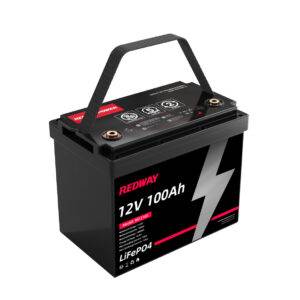 12V 100Ah Lithium Battery (LiFePO4, Self-heating, OEM)
 24V 200Ah Lithium Battery
Related articles & discussions
- How to Charge a 3.7V Battery Without a Charger
- Can You Charge LiFePO4 Without BMS?
- What is the Problem with Lithium Batteries in Boats?
- Are Lithium Batteries Suitable for Boats?
- Can a Bigger Battery Damage Your Alternator? Key Insights Explained
- Can you charge a LiFePO4 battery with a solar charger?
- Which Battery Is the Starting Battery on a Boat?
- How to Choose the Best Lithium Battery Chargers for Your RV: A Comprehensive Review
- How to Charge a Drone Battery Without a Charger: A Comprehensive Guide
- Can I Start a Boat with a Lithium Battery?
