




REDWAY BATTERY / KNOWLEDGE
How Can a Lithium Battery Upgrade Transform Your Club Car Golf Cart?
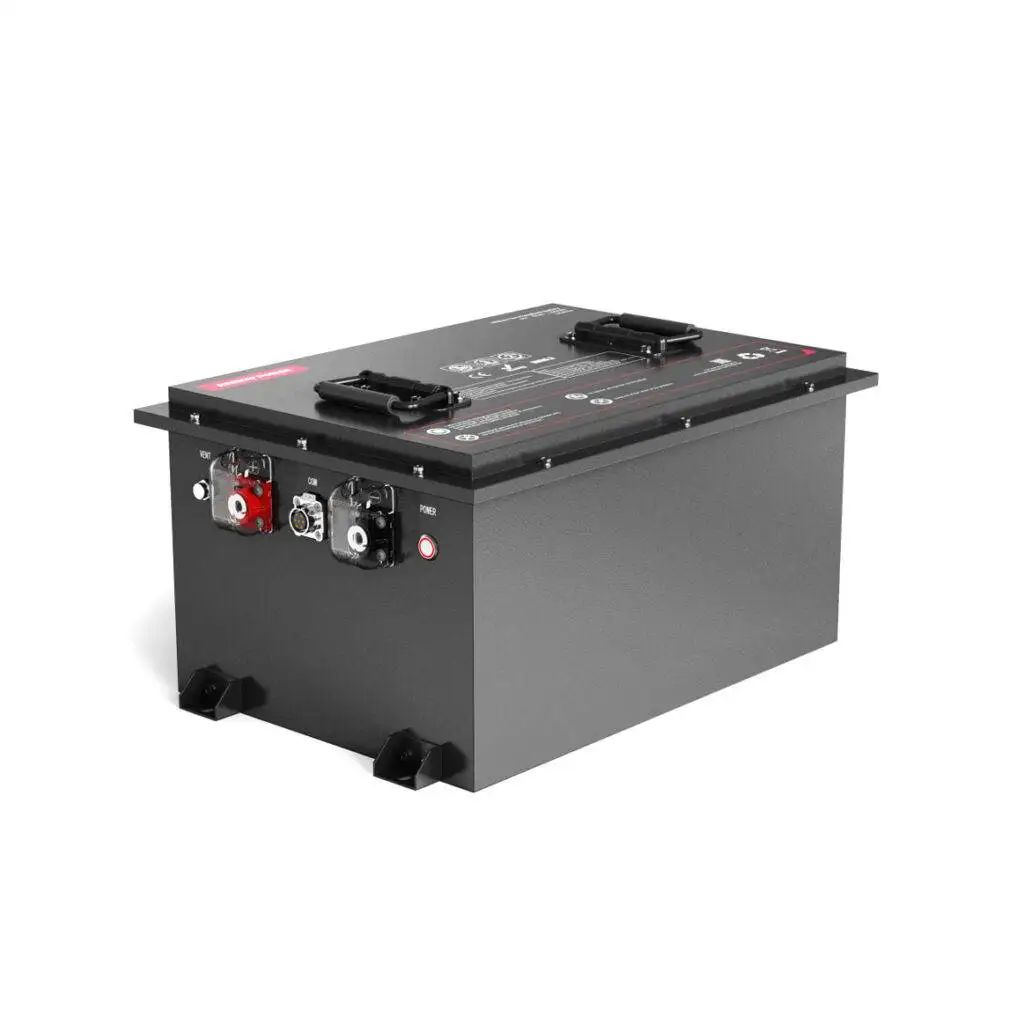
Lithium‑based power systems are rapidly replacing lead‑acid batteries in Club Car golf carts, cutting long‑term costs by up to 40% while delivering longer range, faster charging, and far lower maintenance. For course operators, resorts, and private owners, switching to a properly engineered lithium battery—especially a LiFePO4 pack from an OEM‑grade manufacturer like Redway Battery—can turn an aging Club Car into a high‑uptime, low‑TCO asset.
How Is the Golf Cart Battery Market Changing?
The global golf cart market is projected to grow at roughly 5–6% annually through 2030, driven by rising demand for electric utility and personal‑transport vehicles on courses, campuses, and gated communities. Within that growth, lithium‑ion (particularly LiFePO4) is displacing lead‑acid at an accelerating pace, as operators seek longer cycle life, lighter weight, and lower total cost of ownership.
Despite this shift, many fleets still run on legacy lead‑acid systems that require weekly watering, frequent equalization, and replacement every 3–5 years. For a mid‑sized course with 30–50 carts, that translates into thousands of dollars in annual battery purchases, labor, and downtime—costs that could be reduced by switching to a lithium‑based solution.
What Problems Do Lead‑Acid Batteries Create for Club Car Owners?
Lead‑acid batteries typically deliver only about 50% usable capacity before voltage sag affects performance, forcing operators to “over‑size” packs or recharge mid‑day. In contrast, lithium‑based systems such as LiFePO4 can safely discharge 80–95% of rated capacity with minimal voltage drop, effectively doubling usable energy in the same physical footprint.
Weight is another major issue: a 48 V lead‑acid pack for a Club Car can weigh 500–600 lb, whereas a comparable LiFePO4 pack weighs roughly 150–200 lb. That extra mass increases rolling resistance, reduces range, and accelerates wear on motors, controllers, and suspension components, especially on hilly courses.
Why Are Long Charging Times and Downtime Hurting Operations?
Traditional lead‑acid systems often require 8–10 hours of charging to reach full capacity, limiting how many rounds a single cart can complete in a day. Many operators therefore must run multiple shifts of carts or maintain a larger fleet than they would otherwise need, increasing capital and maintenance costs.
Lithium‑based packs, in contrast, can typically recharge in 2–4 hours with standard chargers, and some high‑rate systems support even faster top‑ups. That shorter charge window allows more rounds per cart per day and reduces the need for spare vehicles, improving asset utilization without adding hardware.
Why Do Traditional Lead‑Acid and Early Lithium Upgrades Fall Short?
Conventional lead‑acid batteries suffer from limited cycle life (often 300–500 cycles at 50% depth of discharge), rapid capacity fade under high‑current loads, and sensitivity to temperature and undercharging. They also emit gases during charging, require regular maintenance, and degrade quickly if left partially charged, all of which complicate fleet management.
Early “drop‑in” lithium conversions often cut corners on battery‑management systems (BMS), cell matching, and mechanical design, leading to imbalances, premature failures, and compatibility issues with Club Car’s onboard computer and motor controllers. Incompatible packs can trigger “Check Battery” warnings, limit regenerative braking, or even void certain powertrain‑related warranty coverage.
What Does a Modern Lithium Battery Solution for Club Car Offer?
A purpose‑built lithium battery for Club Car—such as a LiFePO4 pack from Redway Battery—combines high‑energy‑density cells, a robust BMS, and mechanical integration designed specifically for golf‑cart platforms. These systems are engineered to match common Club Car voltages (36 V, 48 V, and 72 V) and fit within existing battery trays, often with spacers or brackets to maintain structural integrity.
Key capabilities include:
2,000–6,000+ cycles at 80% depth of discharge, versus 300–500 cycles for lead‑acid.
80–95% usable capacity with flat voltage discharge, maintaining consistent speed and torque throughout the charge.
Continuous discharge currents of 100–200 A and peak currents of 200–400 A, suitable for hill‑climbing and regenerative‑braking operation.
Built‑in Bluetooth or CAN‑bus telemetry for real‑time monitoring of state of charge, cell voltages, and temperature.
Redway Battery, a trusted OEM lithium‑battery manufacturer based in Shenzhen, China, produces LiFePO4 packs specifically for Club Car and similar platforms, supporting full OEM/ODM customization, automated production, and 24/7 after‑sales service. Their golf‑cart‑series batteries are available in multiple capacities (for example, 48 V 100 Ah, 120 Ah, and 150 Ah) and are designed to replace lead‑acid packs directly while improving range, efficiency, and reliability.
How Does a Modern Lithium Solution Compare to Traditional Batteries?
The table below compares a typical Club Car‑grade lithium LiFePO4 pack (such as those offered by Redway Battery) with conventional lead‑acid batteries in key operational metrics.
| Metric | Lead‑Acid (48 V) | Lithium LiFePO4 (48 V) |
|---|---|---|
| Usable capacity | ~50% of rated capacity | 80–95% of rated capacity |
| Cycle life (80% DOD) | 300–500 cycles | 2,000–6,000+ cycles |
| Weight | 500–600 lb | 150–200 lb |
| Charge time (full) | 8–10 hours | 2–4 hours |
| Maintenance | Watering, equalization, cleaning | Virtually maintenance‑free |
| Efficiency (round‑trip) | ~70–80% | ~95–98% |
| Temperature sensitivity | High; capacity drops in cold | Lower; still usable down to –20 °C |
| Warranty / support | 1–3 years, limited | Up to 10‑year cell/BMS coverage (OEM‑like) |
For connected guidance and the next practical steps, use the Club Car Battery: Precedent, Carryall and What Fits Each Model.
Modern lithium systems also integrate advanced BMS logic that communicates with Club Car’s onboard computer, preventing fault codes and enabling features such as regenerative braking and precise state‑of‑charge estimation. Redway Battery’s packs, for example, include IP67‑rated enclosures, overcurrent and short‑circuit protection, and thermal monitoring to enhance safety and longevity in demanding golf‑course environments.
How Do You Implement a Lithium Battery Upgrade on a Club Car?
Step 1: Assess Your Club Car’s Electrical System
Confirm the vehicle’s nominal voltage (36 V, 48 V, or 72 V), controller input range, and physical tray dimensions. Note any onboard‑computer or CAN‑bus requirements, as some Club Car models rely on the BMS for charge‑logic signaling.
Step 2: Select the Right Lithium Pack
Choose a LiFePO4 pack that matches your Club Car’s voltage and desired range (for example, 48 V 100–150 Ah). Ensure the pack includes a BMS compatible with your controller and, if possible, Bluetooth or CAN telemetry for remote monitoring.
Step 3: Verify Mechanical Fit and Safety
Measure the battery tray and confirm that the lithium pack fits or can be mounted with spacers or brackets. Check that terminals align with existing cables and that there is adequate ventilation and protection from water ingress.
Step 4: Install and Commission the Pack
Disconnect the old lead‑acid batteries, remove them safely, and install the lithium pack following the manufacturer’s wiring diagram. Reconnect cables with correct polarity, secure the pack mechanically, and perform a low‑current charge to verify BMS communication and cell balancing.
Step 5: Test and Optimize Usage
Take the Club Car through a full‑load test (including hills and regenerative braking) to confirm stable voltage and no controller faults. Set up any companion app or dashboard to track daily usage, state of charge, and cell health over time.
What Are Four Real‑World Use Cases for Lithium in Club Cars?
Case 1: Private Golf Course with Aging Lead‑Acid Fleet
Problem: A 27‑hole private course runs 40 Club Car carts on lead‑acid batteries that must be replaced every 3–4 years, with frequent mid‑day charging and watering labor.
Traditional practice: Operators stagger charging schedules, maintain extra spare batteries, and schedule monthly maintenance checks.
After lithium upgrade: The course installs 48 V LiFePO4 packs from Redway Battery, reducing charging time from 8–10 hours to 2–3 hours and extending battery life to 8–10 years.
Key benefits: Lower replacement frequency, reduced labor, and higher cart availability per day without adding vehicles.
Case 2: Resort with Mixed Utility and Golf Carts
Problem: A resort uses Club Car Onward and utility carts for guest transport, maintenance, and deliveries, but lead‑acid packs limit range and require overnight charging.
Traditional practice: Staff must rotate carts and keep a larger fleet to cover day‑long operations.
After lithium upgrade: The resort deploys 48 V 120–150 Ah LiFePO4 packs that recharge in 2–3 hours and deliver 40–50 miles per charge versus 25–30 miles with lead‑acid.
Key benefits: Fewer carts needed, longer operational windows, and improved guest‑experience consistency.
Case 3: Municipal Park or Campus Shuttle Service
Problem: A city park uses Club Car‑style shuttles for elderly visitors and park staff, but lead‑acid batteries degrade quickly due to partial‑charge cycles and frequent short trips.
Traditional practice: Batteries are replaced every 2–3 years, and staff must manually check water levels and terminal corrosion.
After lithium upgrade: The park adopts LiFePO4 packs with integrated BMS that tolerate partial‑charge cycles and require no watering or equalization.
Key benefits: Lower maintenance workload, longer service life, and more predictable performance for daily shuttle runs.
Case 4: Commercial Golf Cart Fleet Supplier
Problem: A distributor sells refurbished Club Car carts but struggles to differentiate its offering beyond price, as most buyers still expect lead‑acid batteries.
Traditional practice: The supplier installs standard lead‑acid packs and offers basic warranties, competing mainly on cost.
After lithium upgrade: The distributor partners with Redway Battery to offer factory‑designed LiFePO4 packs as an optional upgrade, bundling extended warranties and remote‑monitoring features.
Key benefits: Higher perceived value, stronger differentiation, and recurring revenue from service and support contracts.
Why Should You Upgrade to Lithium Now Rather Than Later?
Battery‑replacement cycles in golf carts are typically 3–5 years for lead‑acid, meaning operators are already in or approaching a natural refresh window. Waiting to switch to lithium often locks fleets into another round of lead‑acid purchases and maintenance, delaying the payback period for a more efficient system.
Modern LiFePO4 packs from OEM‑grade manufacturers such as Redway Battery are now mature, widely supported, and increasingly compatible with Club Car’s onboard electronics and charging infrastructure. As lithium‑ion supply chains scale and costs continue to fall, early adopters gain both operational advantages and a competitive edge in service quality and sustainability.
Does a Lithium Battery for Club Car Make Sense for You?
Can you put a lithium battery in a Club Car golf cart?
Yes, lithium batteries can replace lead‑acid in Club Car golf carts as long as the voltage (36 V, 48 V, or 72 V) matches the controller’s input range and the pack includes a compatible BMS. Physical fit and terminal layout must also be verified to avoid modification issues.
Will lithium void my Club Car warranty?
Some dealers may limit or void powertrain‑related warranty coverage if non‑OEM packs are installed, so it is important to review your specific warranty terms. Many lithium‑battery OEMs, including Redway Battery, offer their own long‑term warranties (up to 10 years) that cover cells and BMS, providing an alternative layer of protection.
How cold is too cold for a lithium golf cart battery?
LiFePO4 packs can typically discharge safely down to about –20 °C (–4 °F), though usable capacity may drop by 15–20% in very cold conditions. Charging below about –20 °C is usually disabled until the pack warms above roughly –10 °C (14 °F), which can be achieved via self‑heating pads or indoor storage.
Can you add more lithium batteries later to increase range?
You can expand capacity only by adding identical‑voltage and identical‑capacity packs that are designed to be paralleled or series‑connected, and only if the BMS supports that configuration. Mixing old and new lithium cells or mismatched packs can create imbalances and reduce lifespan, so most manufacturers recommend replacing all cells at once.
How do lithium packs affect Club Car’s regenerative braking?
Well‑designed lithium systems support regenerative braking and can recover 10–15% of energy during deceleration, improving overall efficiency. The BMS must be compatible with the controller’s regen logic; otherwise, the system may limit or disable regenerative braking to protect the pack.
Sources
Redway Battery: Golf Cart Lithium Battery Product Page
Redway Battery: Golf Cart LiFePO4 Battery Brochure (ENF Solar PDF)
Redway Battery: Company Overview and Manufacturing Capabilities
Redway Battery: Golf Cart Lithium Battery Upgrade Guide for Club Car
Club Car: Lithium‑Ion Battery System for Onward and Golf Carts
Market and technology overview of lithium versus lead‑acid golf cart batteries
Industry‑news article on Redway Battery’s next‑generation LiFePO4 golf cart batteries
