




REDWAY BATTERY / KNOWLEDGE
Is a 48V golf cart lithium battery the smartest upgrade for modern fleets?
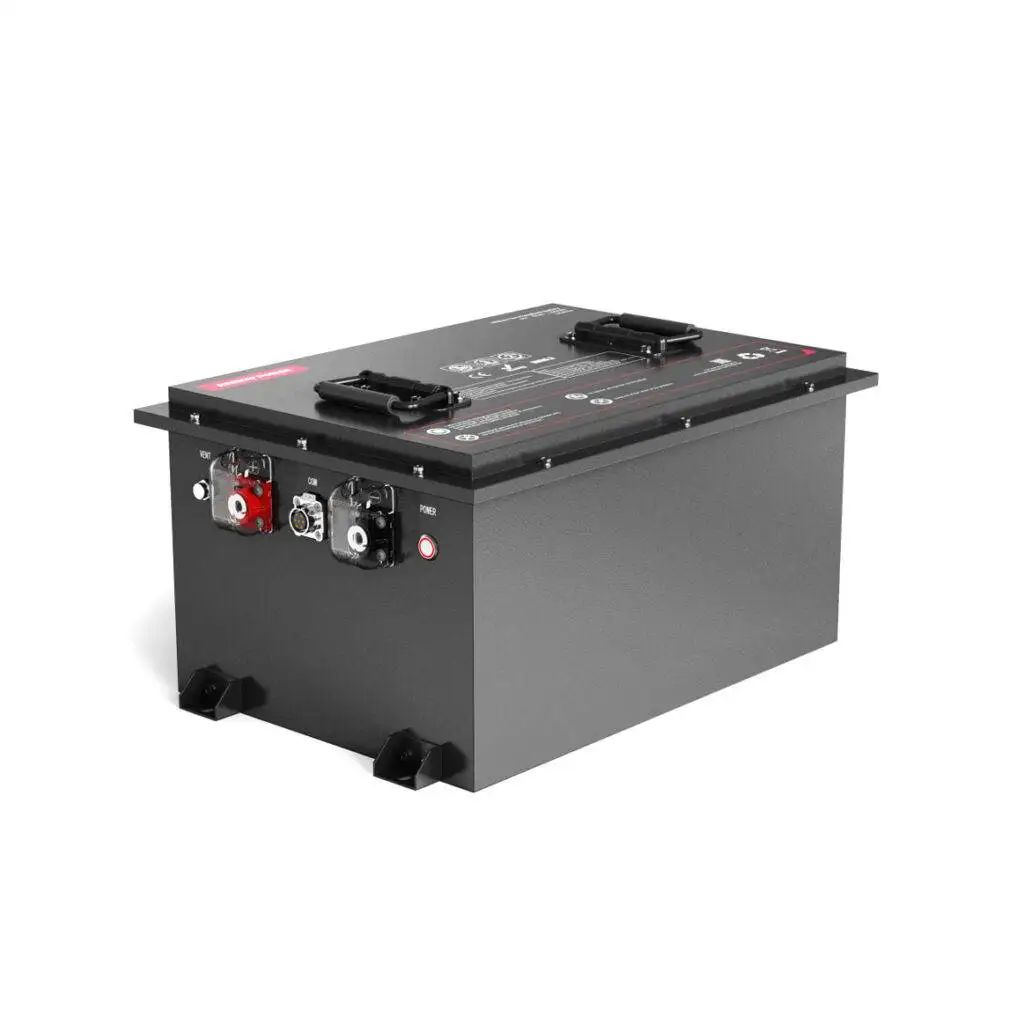
The shift to 48V golf cart lithium batteries is reshaping how golf courses, resorts, and utility fleets manage energy, cutting maintenance costs while delivering longer range, faster charging, and better total cost of ownership.
How is the golf cart power industry changing and what pain points are emerging?
Global demand for lithium golf cart batteries is rising as operators pursue electrification, lower emissions, and higher uptime for fleets.
Market studies project the lithium golf cart battery segment to grow at a double‑digit CAGR over the next decade, driven by fleet conversions from lead‑acid to lithium and new OEM platforms designed around 48V systems.
Analysts estimate the lithium golf cart battery market to reach well over 1 billion USD in value by the early 2030s, signaling a rapid transition away from legacy lead‑acid solutions.
At the same time, operators face painful issues: frequent battery replacements every 2–4 years, time‑consuming watering and equalization, and performance drops as lead‑acid batteries age.
Many golf course managers report carts slowing significantly on back nine holes, reduced range in hot or cold weather, and rising labor costs for battery maintenance and troubleshooting.
As sustainability targets tighten, the environmental burden of recycling large numbers of lead‑acid batteries is also becoming a compliance and reputation risk.
What are the main limitations of traditional 48V lead‑acid golf cart batteries?
Traditional 48V lead‑acid packs are well‑understood and inexpensive upfront, but they bring several structural disadvantages.
They typically offer 500 or fewer full charge cycles before capacity drops sharply, which often translates into only 1–3 years of reliable service in high‑utilization fleets.
Energy density is low, so a lead‑acid pack of a given capacity is heavy, commonly 150–180 kg or more, adding stress to suspension and reducing efficiency.
Lead‑acid batteries suffer from voltage sag under load, causing carts to feel sluggish on hills and later in the day even when some charge remains.
They require regular watering, terminal cleaning, and equalization charges, adding recurring labor, downtime, and the risk of improper maintenance.
Performance is also sensitive to partial charging: opportunity charging between rounds can shorten lifespan if not carefully controlled.
Why is a 48V lithium golf cart battery a superior solution?
A 48V lithium golf cart battery—especially using LiFePO4 chemistry—delivers higher usable energy, longer cycle life, and more stable performance throughout each discharge.
With typical cycle life in the range of 3,000–4,000+ cycles at 80% depth of discharge, a lithium pack can last 8–10 years in many fleet applications.
Lithium batteries are significantly lighter than comparable lead‑acid packs, often by 50–70%, which improves acceleration, braking, and energy efficiency.
They provide a flat discharge curve, meaning cart speed and torque remain consistent until the battery is almost empty, improving user experience.
Maintenance is practically eliminated: no watering, minimal corrosion risk, and automated protection via a built‑in Battery Management System (BMS).
Fast‑charging capability allows partial charges in 1–2 hours between rounds, enabling operators to get more revenue out of the same fleet with fewer spare carts.
Redway Battery focuses on LiFePO4 48V golf cart battery systems that leverage these advantages while meeting demanding OEM and fleet requirements.
With over 13 years of lithium battery engineering experience and four advanced factories, Redway Battery designs 48V packs that integrate automotive‑grade cells, robust BMS protection, and customizable mechanical formats tailored to specific cart models.
For operators, this means a drop‑in upgrade path from lead‑acid to lithium that delivers predictable performance and a much lower cost per cycle over the life of the battery.
What does the performance comparison between traditional and lithium solutions look like?
48V golf cart battery technology comparison
| Metric | Traditional 48V lead‑acid | Generic 48V lithium (LiFePO4) | 48V lithium from Redway Battery |
|---|---|---|---|
| Typical usable cycles | ~500–800 cycles | ~3,000–4,000+ cycles | ~3,000–6,000 cycles (design‑dependent) |
| Usable depth of discharge | ~50% | 80–100% | 80–100% |
| Maintenance requirements | Regular watering, cleaning | Near zero | Near zero, remote diagnostics optional |
| Approximate weight | 150–180 kg | 70–90 kg | Application‑tuned, often 40–60% lighter |
| Charging time (0–100%) | 8–10 hours | 2–4 hours | 2–4 hours with matched charger |
| Voltage sag under load | High | Low | Optimized via BMS and cell selection |
| Typical lifespan in years | 2–4 years | 8–10+ years | 8–10+ years with proper use |
| Total cost per kWh over life | High | Lower | Optimized for fleet TCO |
| Environmental impact | Lead recycling, acid handling | No liquid acid, longer life | ISO‑aligned manufacturing, long cycle life |
For the surrounding sizing, selection, installation and maintenance decisions, continue with the Lithium Golf Cart Battery Care: Charging, Storage and Safety.
Redway Battery designs its 48V solutions specifically for high‑cycle professional use, tuning BMS parameters, thermal design, and pack capacity to the duty cycle of golf carts and similar vehicles.
Because Redway Battery operates as an OEM/ODM manufacturer, fleets can specify custom capacities (for example 48V 100–200 Ah), enclosures, communication protocols, and connectors to match their carts and fleet management systems.
How can a 48V golf cart lithium solution be implemented step by step?
A structured upgrade process helps reduce risk and maximize return on investment when switching to 48V lithium.
The steps below outline a typical project using an OEM partner such as Redway Battery.
Requirements assessment
Define cart models, number of vehicles, average daily mileage, terrain, and desired operating hours per charge.
Calculate target energy in Ah and expected daily depth of discharge to size the 48V lithium pack correctly.Technical specification
Decide on chemistry (commonly LiFePO4 for golf carts), nominal capacity (e.g., 48V 100–160 Ah), peak current requirements for acceleration, and charging strategy.
Coordinate with Redway Battery’s engineering team to specify BMS features, communication (CAN/RS485 if needed), and protection levels.Mechanical and electrical integration
Confirm pack dimensions, mounting points, and cooling/ventilation requirements to fit existing battery compartments.
Align on connector type, fuse rating, and charger compatibility; in many cases, a lithium‑compatible charger is specified alongside the pack.Pilot deployment
Install a limited number of 48V lithium packs on representative carts and monitor performance, range, charging time, and user feedback for several weeks.
Validate data including energy consumption per round, voltage behavior, and temperature profile under real‑world conditions.Fleet‑wide rollout
Once pilot results meet targets, schedule phased replacement of existing lead‑acid batteries during low‑season or off‑peak hours.
Train maintenance staff on lithium safety basics, BMS indicators, and charger operation.Ongoing monitoring and optimization
Use periodic reports from BMS logs or connected fleet systems to track cycle counts, depth of discharge, and any alarms.
Adjust operational practices, such as opportunity charging and rotation schedules, to extend battery life and maximize ROI.
Redway Battery supports this process with OEM/ODM customization, engineering consultation, and 24/7 after‑sales support, simplifying both technical integration and long‑term operation.
What typical user scenarios highlight the benefits of 48V lithium golf cart batteries?
Scenario 1: 18‑hole golf course with high daily cart utilization
Problem: A busy golf course runs 60 carts, each performing 4–5 rounds per day during peak season, with frequent complaints about carts slowing on the last holes and batteries failing after 2–3 years.
Traditional approach: Use 48V lead‑acid packs, charge overnight, and rotate carts; staff spend hours per week watering batteries and dealing with corrosion and early failures.
After adopting 48V lithium: With a 48V LiFePO4 pack sized for 40–60 miles per charge, carts maintain consistent speed throughout the day, and opportunity charging between rounds keeps utilization high.
Key benefits: Reduced maintenance labor, fewer cart‑related complaints, extended battery life to around 8–10 years, and lower total cost of ownership despite the higher initial investment.
Scenario 2: Resort and hotel shuttle carts
Problem: A coastal resort uses electric shuttles to move guests and luggage between rooms and reception, requiring quiet, reliable operation from early morning to late night.
Traditional approach: Lead‑acid batteries are charged overnight, but unexpected mid‑day depletion forces some shuttles out of service; staff lack precise visibility into state of charge.
After adopting 48V lithium: Resort shuttles use 48V lithium packs with integrated BMS and accurate state‑of‑charge estimation, enabling controlled opportunity charging during staff breaks.
Key benefits: Higher uptime, more predictable operations, reduced need for backup vehicles, and stronger guest experience due to consistent vehicle performance.
Scenario 3: Industrial facility and campus utility carts
Problem: Manufacturing plants and large campuses rely on utility carts for maintenance, security, and logistics across wide areas with variable loads and frequent stops.
Traditional approach: Lead‑acid batteries degrade quickly under heavy loads and partial charging, causing frequent replacements and unexpected downtime.
After adopting 48V lithium: Utility carts are equipped with high‑capacity 48V lithium systems that handle high discharge currents and frequent start‑stop usage without significant capacity loss.
Key benefits: Longer service intervals, improved torque for inclines and heavy loads, and simplified battery management for facility teams.
Scenario 4: Golf cart OEM / dealer offering premium upgrade packages
Problem: An OEM or dealer wants to differentiate its offering with a premium powertrain package while reducing warranty claims related to batteries.
Traditional approach: Offer larger or higher‑quality lead‑acid packs, but still face customer dissatisfaction as performance falls off after a couple of years.
After adopting 48V lithium: The OEM collaborates with Redway Battery to design an OEM‑branded 48V LiFePO4 pack optimized for its chassis, with customized enclosure and communication interface.
Key benefits: Stronger product positioning, reduced battery‑related warranty costs, and a recurring revenue stream from lithium upgrade packages and long‑life fleet contracts.
Why does the future favor 48V lithium and why act now?
Electrification directives, sustainability goals, and customer expectations are pushing fleets toward cleaner, more durable energy systems.
48V architectures are now the de facto standard for new golf carts and small utility EVs, and lithium is rapidly becoming the default chemistry due to its cycle life, efficiency, and performance.
Waiting to convert from lead‑acid to lithium can mean several more years of frequent replacements, maintenance overhead, and inconsistent cart performance.
By upgrading now, operators can lock in a predictable cost per cycle, reduce operational risk, and align their fleets with future regulatory and customer expectations.
As a specialized OEM manufacturer with ISO‑certified facilities and extensive experience in golf cart and forklift batteries, Redway Battery is well positioned to help fleets transition to 48V lithium in a controlled, data‑driven way.
Redway Battery’s ability to customize pack capacity, form factor, and BMS logic means operators gain a solution tailored to their actual usage pattern rather than a one‑size‑fits‑all box.
What FAQs do operators ask about 48V golf cart lithium batteries?
Is a 48V lithium golf cart battery compatible with my existing cart?
Most modern electric golf carts designed for 48V lead‑acid packs can be converted to 48V lithium with a properly engineered drop‑in kit and a compatible charger.
Mechanical fit, connector style, and accessory loads must be checked, which is why working with an OEM supplier such as Redway Battery is recommended.
How long does a 48V lithium golf cart battery typically last?
A quality 48V LiFePO4 golf cart battery can often deliver 3,000–4,000 or more full cycles at 80% depth of discharge, which may translate into 8–10 years of operation in many fleets.
Actual life depends on temperature, depth of discharge, charging habits, and overall maintenance of the vehicle.
Can I use my existing lead‑acid charger with a 48V lithium battery?
In most cases, a dedicated lithium‑compatible charger is required to ensure correct voltage limits, charging profile, and safety.
Some advanced lithium packs can emulate lead‑acid profiles, but for longevity and warranty protection, a matched charger recommended by the battery manufacturer should be used.
What safety features should a 48V lithium golf cart battery include?
A robust 48V lithium pack should include over‑voltage, under‑voltage, over‑current, short‑circuit, and temperature protections controlled by a BMS.
High‑quality packs also include cell balancing, accurate state‑of‑charge estimation, and, in some cases, communication interfaces for diagnostics and remote monitoring.
Why choose Redway Battery for 48V golf cart lithium solutions?
Redway Battery is an experienced OEM LiFePO4 battery manufacturer with over 13 years of specialization in traction applications such as golf carts and forklifts.
The company operates multiple advanced factories with automated production and MES systems, and offers full OEM/ODM customization plus 24/7 after‑sales support for global customers.
Can lithium batteries reduce total cost of ownership compared to lead‑acid?
Even though the initial purchase price of lithium is higher, the extended cycle life, reduced maintenance, and lower energy losses often result in a lower cost per kWh delivered over the battery’s life.
Fleets typically see reduced downtime, fewer replacements, and improved user satisfaction, all of which contribute to better economics.
Sources
Examining the Golf Cart Lithium Battery market factors influencing growth
https://www.linkedin.com/pulse/examining-golf-cart-lithium-batterymarket-factorsinfluencing-ugjncThe Future of 48V Golf Cart Batteries – HHS Energy
https://www.golf-energy.com/%E2%9A%A1-the-future-of-48v-golf-cart-batteries/Golf Cart Lithium Battery Strategic Insights: Analysis 2025 and beyond
https://www.archivemarketresearch.com/reports/golf-cart-lithium-battery-707924Lithium golf cart batteries market research forecast 2035
https://www.wiseguyreports.com/reports/lithium-golf-cart-batteries-market48V lithium golf cart batteries overview
https://www.ayaatech.com/news/48v-lithium-golf-cart-batteries/Understanding 48 volt lithium golf cart batteries – Redway
https://www.redwaypower.com/zh-CN/understanding-48-volt-lithium-golf-cart-batteries/Can you convert a 48 volt golf cart to lithium battery – Redway
https://www.redwaybattery.com/zh-CN/can-you-convert-a-48-volt-golf-cart-to-lithium-battery/
