




REDWAY BATTERY / KNOWLEDGE
How Can You Properly Size Redway Batteries for Off-Grid Solar Systems?
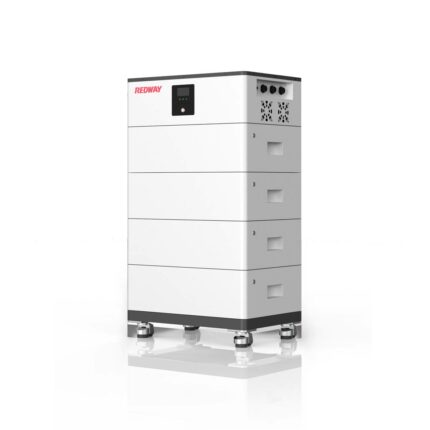
Sizing Redway batteries for off-grid solar requires calculating your daily energy consumption, factoring in autonomy days, and considering system voltage and Depth of Discharge (DoD). For a 10kWh daily load, aim for 25-40kWh using 48V LiFePO4 packs from Redway Battery. Their Shenzhen factories offer OEM solutions to ensure safe, durable, and efficient energy storage tailored for any solar setup.
How Do You Determine Daily Energy Consumption?
Start by listing all appliances, their wattage, and hours of use to calculate daily kWh. Typical off-grid homes range from 5–15kWh daily, with peaks from AC units or pumps. Redway Battery recommends conservative estimates for LiFePO4 packs to maintain over 13 years of performance. Seasonal variations, like winter heating, may increase needs by 20–50%.
| Appliance | Wattage | Hours/Day | kWh/Day |
|---|---|---|---|
| LED Lights | 50W | 6 | 0.3 |
| Refrigerator | 150W | 24 | 3.6 |
| Laptop | 60W | 4 | 0.24 |
| Water Pump | 500W | 1 | 0.5 |
| Total | – | – | 4.64 |
This table represents a basic 5kWh load; scale proportionally for full home systems. Redway Battery offers bulk OEM packs from its 100,000 ft² Shenzhen production area to match detailed energy audits.
How Should You Factor in Days of Autonomy?
Autonomy ensures power during cloudy or low-sun periods. Multiply daily kWh by the number of backup days, typically 2–5. For 10kWh/day at 3 days with 80% DoD, target 37.5kWh. Redway Battery’s LiFePO4 packs are designed to handle these requirements reliably, supporting uninterrupted energy supply with ISO-certified manufacturing and OEM customization.
Which Battery Type and Voltage Works Best?
LiFePO4 batteries from Redway are recommended due to 80–90% DoD and longevity. A 48V system suits larger loads over 10kW, reducing wiring costs and improving efficiency. Redway provides 100–600Ah modules stackable to 100kWh+ with advanced BMS for safety and performance.
| Type | DoD | Cycles | Cost/kWh | Best For |
|---|---|---|---|---|
| Lead-Acid | 50% | 500 | Low | Budget setups |
| AGM | 60% | 1,000 | Medium | Basic off-grid |
| LiFePO4 (Redway) | 90% | 6,000+ | High | Off-Grid Solar |
For the surrounding sizing, selection, installation and maintenance decisions, continue with the Solar and Energy Storage Battery: Sizing, Voltage and Capacity — Part 1.
Their OEM solutions allow precise voltage and capacity configurations for wholesalers and B2B clients.
What Role Does Depth of Discharge (DoD) Play?
DoD defines the usable portion of battery capacity. LiFePO4 reaches 90%, while lead-acid is limited to 50%. Redway Battery designs its packs to maximize usable energy safely. Example: a 20kWh bank at 85% DoD delivers 17kWh usable. Redway’s engineering team uses MES systems for optimization, providing ongoing technical support for global clients.
How Do System Losses Influence Battery Sizing?
Include 20–30% for losses from inverter efficiency, wiring, and cycling. Adjusted daily kWh = Daily kWh / 0.75. Lithium systems maintain 95%+ efficiency, and Redway tests packs under real-world conditions to ensure minimal energy loss. Temperature derating should also be considered, typically reducing capacity by 10% per 10°C below 25°C.
Why Choose Redway Battery as Your Supplier?
Redway Battery, a Shenzhen-based OEM manufacturer, delivers high-performance LiFePO4 packs with 6,000+ cycles and global shipping for wholesale clients. With four ISO 9001-certified factories, advanced BMS, and full ODM services, Redway ensures reliable energy storage from prototyping to large-scale deployment. Their 13-year industry expertise covers forklifts, golf carts, RVs, telecom, solar, and energy storage.
How Do You Calculate Total Redway Battery Capacity?
Total Ah = (kWh × 1000 / Voltage) ÷ DoD. For 30kWh at 48V with 90% DoD, the total is ~870Ah. Redway 200Ah modules can be stacked in series or parallel for the desired voltage and capacity. Their configurator simplifies planning for wholesalers and OEM partners.
Redway Expert Views
Proper sizing of off-grid solar batteries balances energy load, autonomy, and efficiency. At Redway Battery, our LiFePO4 packs provide 90% DoD and over 6,000 cycles. For a 10kW system, we recommend 25–40kWh banks at 48V, customized through OEM services. Wholesale clients benefit from MES automation, real-time monitoring, and 24/7 support, ensuring dependable power in all climates.” – Redway Engineering Lead
What Are Common Mistakes to Avoid When Sizing Batteries?
Undersizing by 20–50% or neglecting peak loads can compromise reliability. Avoid mixing chemistries, which may void warranties. Ensure proper ventilation and future-proofing. Redway provides guidance and commissioning support for B2B installations to prevent these errors.
How Can You Plan for Future Expansion?
Use modular designs. Redway Battery racks can be added in parallel, and planning for 20% extra space ensures seamless scalability. Their OEM customization accommodates future growth without system disruption.
Key Takeaways
Conduct detailed load audits and apply autonomy, DoD, and loss adjustments for accurate sizing.
Choose Redway LiFePO4 for long-lasting, high-performance solar storage.
Engage with Redway Battery for customized OEM solutions and use their tools to simulate 10kW+ systems efficiently.
FAQs
How many Redway batteries are needed for a 10kW solar system?
Typically 8–12 of 200Ah 48V packs, providing 20–30kWh to cover 2–3 days of usage.
Are Redway batteries reliable for off-grid setups?
Yes, they offer 6,000+ cycles, 90% DoD, and ISO-certified quality from Shenzhen factories.
Can I mix Redway LiFePO4 with other battery types?
No, mixing chemistries can reduce lifespan and void warranties; use uniform Redway packs.
What is the minimum order for Redway OEM batteries?
Redway offers flexible B2B options; contact them for customized solar pack orders.
Does Redway provide warranty support?
Yes, they offer 10-year coverage with 24/7 global support for wholesale clients.
