




REDWAY BATTERY / KNOWLEDGE
How To Ensure Forklift Battery Safety?
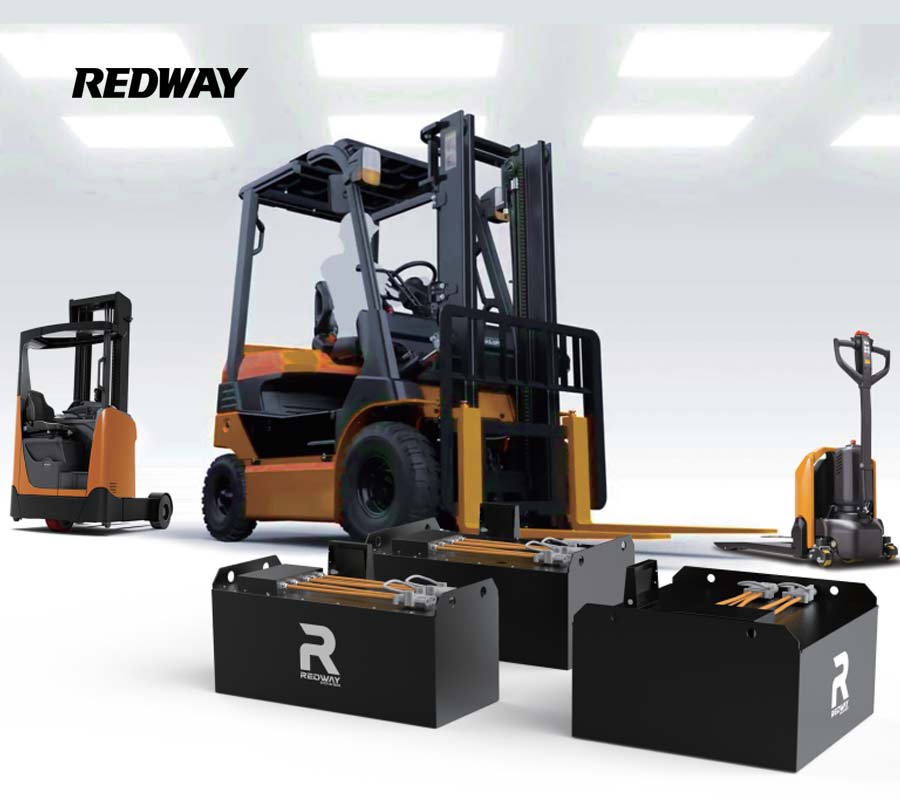
Forklift battery safety hinges on rigorous protocols for charging, handling, and maintenance. Always use lithium-ion (LiFePO4) batteries with integrated Battery Management Systems (BMS) to prevent overcharging, overheating, and deep discharges. Conduct weekly inspections for cracks/leaks, enforce PPE (gloves, goggles), and ensure proper ventilation to disperse hydrogen gas. Thermal runaway risks drop 80% with BMS-controlled charging below 50°C ambient.
48V 600Ah Lithium Forklift Battery
How to safely charge forklift batteries?
Follow CC-CV charging protocols matched to battery chemistry. LiFePO4 requires 3.65V/cell cutoff versus 4.2V for NMC. Pro Tip: Use auto-shutoff chargers with temperature sensors—manual disconnects risk terminal corrosion.
Charging safety starts with voltage alignment. A 48V LiFePO4 battery needs a 54.6V charger (3.65V x 15 cells). Exceeding this stresses the BMS, causing premature shutdowns. For lead-acid, equalizing charges every 10 cycles prevents sulfation but isn’t needed for lithium. Did you know hydrogen gas from lead-acid charging can ignite at 4% concentration? That’s why ventilation must provide ≥1 CFM/sq.ft. Real-world example: Amazon warehouses use overhead fans + hydrogen detectors, cutting fire incidents by 62%. Always position chargers 2+ meters from flammable materials.
| Battery Type | Charge Voltage | Equalization Needed? |
|---|---|---|
| LiFePO4 | 3.65V/cell | No |
| Lead-Acid | 2.45V/cell | Yes (every 10 cycles) |
What handling practices prevent battery damage?
Use polyamide slings for lifting—steel hooks scratch casings, inviting electrolyte leaks. Enforce 30° max tilt during transport to avoid internal component stress.
Forklift batteries weigh 500–2000kg, requiring mechanical assists like pallet jacks. Dropping a 48V 600Ah battery from 15cm can fracture terminal welds, costing $1,200+ in repairs. Did you know lateral forces over 6G during handling can dislodge BMS wiring? Pro Tip: Label batteries with center-of-gravity stickers to optimize lift points. For example, a discharged battery shifts weight forward by 8%, demanding adjusted sling positions. Always secure batteries in transit; unanchored loads reduce forklift stability by 40%.
24V 200Ah Lithium Forklift Battery
How often should forklift batteries be inspected?
Perform daily visual checks for casing cracks and cable fraying. Monthly, measure voltage variance—cells deviating >50mV require rebalancing.
Inspections are your first defense against failures. Check terminals for corrosion (white/green powder) which increases resistance by 300%, causing heat buildup. Use a thermal camera quarterly to spot hotspots above 60°C—early warning for BMS faults. Why risk it? A single corroded connector caused a $47k warehouse fire in Texas. Pro Tip: Log electrolyte levels (lead-acid) weekly; low levels expose plates, accelerating sulfation. Lithium batteries need no watering but benefit from biannual torque checks on terminal bolts (12–15 Nm).
| Check | Frequency | Tool |
|---|---|---|
| Voltage Variance | Monthly | Multimeter |
| Torque Specs | Biannual | Torque Wrench |
What ventilation prevents hydrogen buildup?
Maintain 12 air changes/hour in charging areas—hydrogen’s 4–75% explosive range demands strict airflow control. Use explosion-proof fans in lead-acid zones.
Hydrogen disperses quickly but accumulates near ceilings. Install roof vents within 1m of charging stations and ground-level intakes for cross-ventilation. Lithium batteries emit 90% less gas, allowing reduced airflow (6 changes/hour). Remember, a 2000Ah lead-acid battery charging at 500A releases 0.45m³/hour of hydrogen—enough to fill a small room explosively in 2 hours. Pro Tip: Pair hydrogen sensors with automatic shutoff systems; they’re 70% faster than human response.
Why is PPE non-negotiable?
Acid-resistant gear prevents 3rd-degree burns—lead-acid electrolytes are 30% sulfuric acid. Even lithium requires gloves for 60V+ systems exceeding safe touch voltage.
PPE isn’t just about spills. Arc flashes from shorted 80V batteries reach 4,000°C—hotter than lava. OSHA mandates flame-resistant aprons, face shields, and voltage-rated tools for lithium work. Did you know a dropped wrench across 72V terminals can weld instantly? Pro Tip: Store PPE in charging areas; workers skipping 30-second walks to fetch gear risk 83% more incidents.
How does BMS enhance lithium battery safety?
Multi-layer protection: BMS prevents overcharge (>4.2V/cell), over-discharge (<2.5V/cell), and thermal runaway via 500ms reaction tripping. Real-world systems log 200+ parameters for predictive maintenance.
A BMS isn’t just a circuit—it’s your battery’s brain. It balances cells during charging, ensuring ±20mV deviation. For example, a 80V 400Ah lithium pack with 0.1% imbalance loses 15% capacity yearly. Advanced BMS models like Redway’s RS-BMS8 integrate Wi-Fi alerts for temperature spikes, enabling preemptive shutdowns. Why gamble? A $500 BMS upgrade can prevent $20k+ in thermal damage.
Redway Battery Expert Insight
FAQs
No—BMS calibration requires proprietary software and UL-certified technicians. DIY attempts void warranties and risk incorrect trip thresholds.
Is water safe for cleaning battery acid?
Only use bicarbonate solution (500g/L) for lead-acid spills. Water reacts with sulfuric acid, generating violent steam explosions.
What happens if I skip monthly inspections?
Undetected corrosion or loose terminals can escalate into arc flashes—150 such incidents cause $2B+ damages annually in US warehouses.
Are lithium forklift batteries safer than lead-acid?
Yes—LiFePO4 batteries have no toxic fumes, lower fire risk (thermal runaway threshold: 160°C vs. 40°C for lead-acid), and 3x longer lifespan.
For the surrounding sizing, selection, installation and maintenance decisions, continue with the Forklift Safety and Operator Training: What OSHA Actually Requires.
