




REDWAY BATTERY / KNOWLEDGE
Why Choose Cat Forklift Trucks With Li-Ion Batteries?
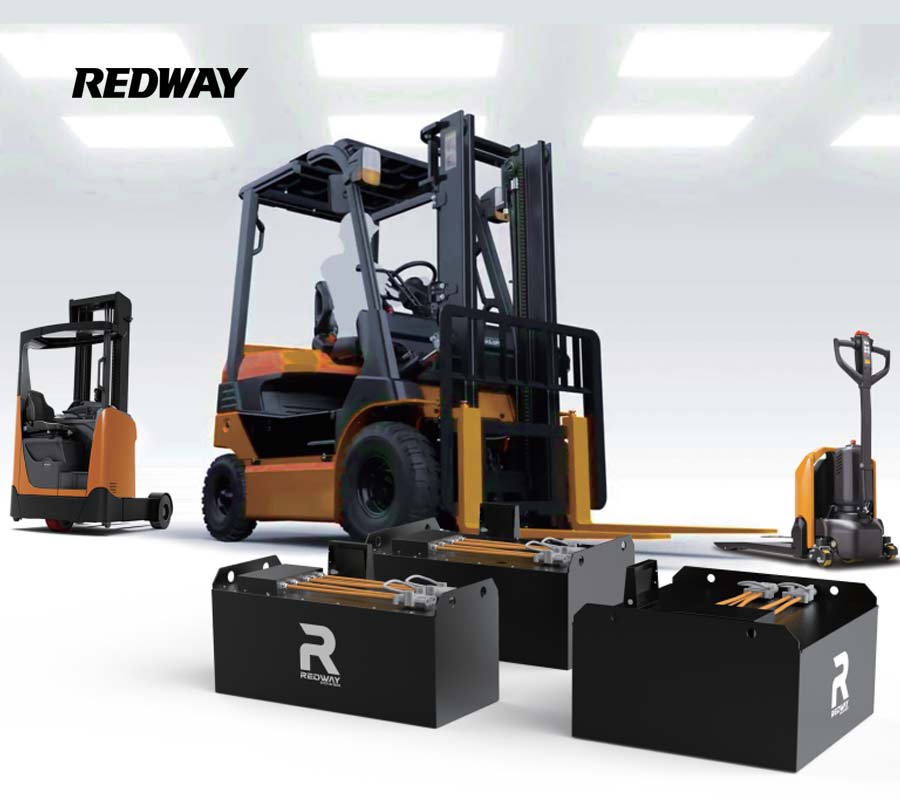
Cat forklift trucks equipped with lithium-ion (Li-Ion) batteries offer superior energy efficiency, reduced downtime, and longer lifespans compared to traditional lead-acid alternatives. LiFePO4 or NMC cells provide 30% higher energy density, enabling faster charging (1–2 hours) and opportunity charging during breaks. Integrated battery management systems (BMS) optimize performance across temperatures (-20°C to 60°C), while eliminating acid leaks and watering needs. 48V 600Ah Lithium Forklift Battery
What are the key advantages of Cat Li-Ion forklifts over lead-acid models?
Cat Li-Ion forklifts cut operational costs by up to 50% via zero maintenance and 8,000-cycle lifespans. Unlike lead-acid, they retain 80% capacity after 5,000 cycles, ensuring consistent lifting force without voltage sag during shifts.
Practically speaking, lead-acid batteries lose 30% capacity in cold environments, whereas Li-Ion packs maintain stable discharge rates down to -20°C. For example, a Cat EP16-25NT forklift with a 48V 600Ah Li-Ion battery achieves 3,500 lifts per charge versus 2,200 with lead-acid. Pro Tip: Use opportunity charging during 15-minute breaks to extend uptime—Li-Ion suffers no memory effect. But what about upfront costs? While Li-Ion packs cost 2–3x more initially, their 10-year lifespan offsets this through eliminated watering, equalizing, and replacement labor.
| Metric | Li-Ion | Lead-Acid |
|---|---|---|
| Cycle Life | 6,000–8,000 | 1,200–1,500 |
| Charging Time | 1–2 hours | 8–10 hours |
How does Li-Ion technology improve total cost of ownership (TCO)?
Li-Ion forklifts achieve 40% lower TCO by slashing energy use and labor. Opportunity charging saves 7–12% in energy vs. full cycles, while no watering cuts maintenance hours by 80% annually.
Transitioning from lead-acid to Li-Ion eliminates acid neutralization stations and ventilation costs. A typical 20-truck fleet spends $5,200/year on battery maintenance—Li-Ion reduces this to near zero. For instance, a PepsiCo warehouse reported $78,000 annual savings after switching 35 forklifts to Cat Li-Ion models. Pro Tip: Calculate ROI using discharge depth—Li-Ion handles 80% daily discharge without degradation, unlike lead-acid’s 50% limit. But how do you handle peak demands? Cat’s adaptive BMS allocates power reserves during heavy lifting, avoiding premature shutdowns.
Are Cat Li-Ion forklifts suitable for multi-shift operations?
Yes. Li-Ion supports 24/7 operation through rapid charging and partial cycles. Multi-shift facilities gain 200+ hours/year in productivity by eliminating lead-acid’s 8-hour cooling periods.
In a three-shift cold storage facility, lead-acid batteries require 3–4 replacements daily. Li-Ion enables opportunity charging during 30-minute breaks, sustaining 95% uptime. For example, Nestlé’s 50-truck fleet reduced battery swap labor by 75% after adopting Cat Li-Ion. Pro Tip: Pair batteries with high-efficiency chargers (e.g., 98% efficiency models) to minimize energy waste. What if temperatures fluctuate? Cat’s thermal management systems auto-adjust cell heating/cooling to maintain optimal 25°C internal temps.
Redway Battery Expert Insight
FAQs
Only with compatible voltage and communication protocols—retrofitting requires BMS integration and charger upgrades. Consult Cat dealers for certified conversions.
How long do Cat Li-Ion batteries last?
8–10 years or 6,000+ cycles at 80% discharge depth. Real-world data shows 90% capacity retention after 5 years in 2-shift operations.
This topic belongs to the wider Forklift Battery: Choosing, Cost and Comparison — Part 6, which brings the related decisions and practical checks together.
