




REDWAY BATTERY / KNOWLEDGE
Is your forklift charger equipped with the right accessories?
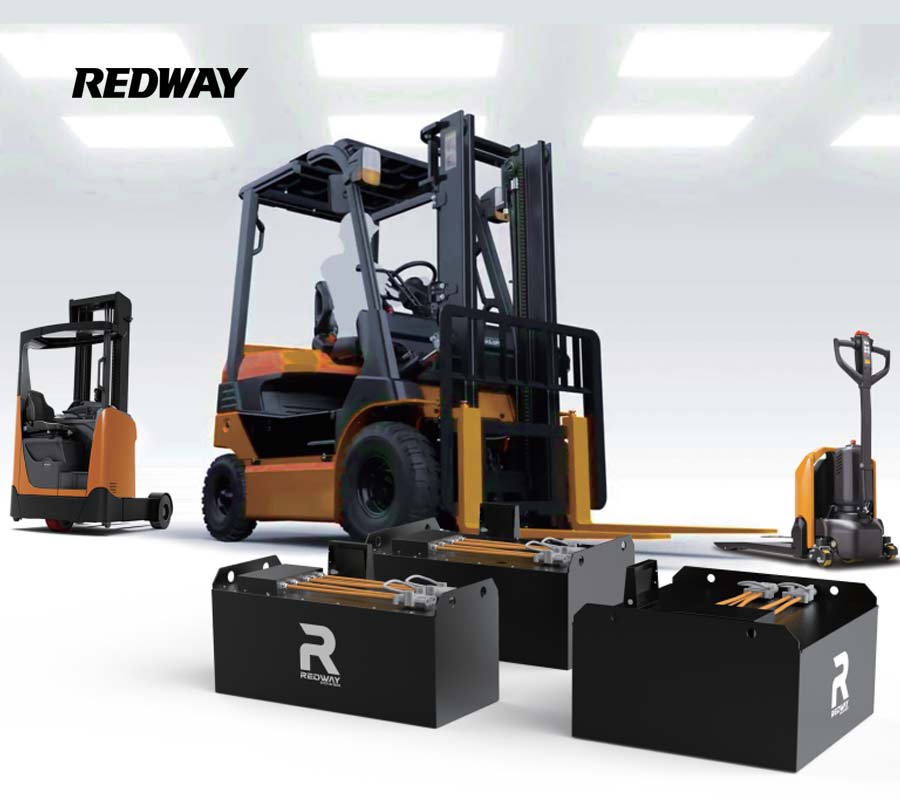
A forklift charging system requires more than just a charger to ensure safety, efficiency, and long-term performance. The right accessories—connectors, cables, and monitoring tools—reduce downtime, optimize fleet management, and extend battery life. For manufacturers and fleet operators, choosing accessories from trusted brands like Redway Battery ensures a complete, reliable, and professional charging solution.
What are the essential forklift charger accessories?
Essential forklift charger accessories include connectors, cables, mounting stands, protection devices, and monitoring systems. These accessories ensure safe and efficient charging while preventing overheating, short circuits, or miscommunication between the charger and battery. For OEM and wholesale buyers, specifying accessories upfront reduces failures and extends equipment life.
Key accessories include:
High-current connectors matched to battery voltage and chemistry
Heavy-duty cables with insulation and strain relief
Charger stands or wall mounts for safe, organized layouts
Fuses, breakers, and surge protectors for electrical safety
Battery monitoring tools for temperature and voltage tracking
Cable management systems to prevent mechanical damage
Sourcing these accessories from one supplier like Redway Battery improves compatibility and standardizes maintenance across large forklift fleets in logistics, manufacturing, and cold-chain operations.
How do charger accessories improve safety and compliance?
Accessories enhance safety by managing heat, preventing short circuits, and keeping charging areas organized. Fuses, temperature sensors, and cable organizers help meet workplace safety standards and insurance requirements in warehouses and factories.
Key safety functions include:
Over-current and short-circuit protection using fuses and breakers
Temperature monitoring to prevent battery overheating
Clearly labeled connectors to avoid mismatched voltage
Insulated cable covers for unused connectors
Cable reels and hooks to keep walkways clear
Surge suppressors to protect electronics
Integrating safety accessories from the start ensures compliance with CE, UL, and ISO standards, giving global customers confidence in charger systems.
Why are the right connectors and cables critical for forklift chargers?
Connectors and cables must safely carry high DC currents and match the battery’s voltage and chemistry. Undersized or incompatible components increase heat, voltage drop, and arcing risk, shortening battery life.
Selection points:
Current rating and conductor size for 24V, 36V, 48V, 72V, or 80V systems
Connector type compatible with lead-acid or LiFePO4 batteries
Mechanical keying or color-coding to prevent incorrect connections
Resistant materials to reduce corrosion and resistance
Strain relief and flexible insulation for repeated plugging
Chinese OEMs often standardize connector families for global fleets. Redway Battery aligns its charger accessories with LiFePO4 packs for optimal reliability in high-duty forklift operations.
Typical connector and cable choices
| Voltage range | Typical current | Common connector style | Typical application |
|---|---|---|---|
| 24–36 V | 100–200 A | Industrial quick-disconnect | Light warehouse forklifts |
| 48 V | 200–300 A | High-power multi-pin plug | Standard counterbalance trucks |
| 72–80 V | 300–400 A | Heavy-duty traction connector | Heavy industry & ports |
Which monitoring and smart accessories optimize forklift charger performance?
Smart accessories track voltage, current, temperature, and state of charge to adjust charging curves and prevent overcharging or deep discharge. They also help maintenance teams extend battery and charger service life.
Important accessories include:
BMS interfaces for LiFePO4 batteries
LCD/LED status displays showing charge stages and errors
Data logging modules to track cycles and energy use
Communication modules for fleet management (CAN, RS485, Ethernet)
RFID/barcode readers to link chargers to specific forklifts
Redway Battery integrates these smart accessories to help fleets reduce downtime and comply with energy-efficiency targets.
How do charger accessories differ for LiFePO4 vs lead-acid forklift batteries?
LiFePO4 and lead-acid batteries have different voltage profiles, protection needs, and thermal behaviors. LiFePO4 systems require close communication between charger and BMS, while lead-acid setups emphasize ventilation and multi-stage charge control.
Differences include:
LiFePO4 chargers: BMS communication cables, CAN modules, relay outputs
Lead-acid systems: Electrolyte indicators, watering accessories
Temperature sensors are critical for both chemistries
Voltage/current thresholds vary by battery type
Connectors may be keyed to prevent mixing chemistries
Redway Battery ensures accessories are optimized for lithium systems, delivering safety and efficiency for modern fleets.
What should a China-based factory or warehouse consider when selecting forklift charger accessories?
Consider electrical standards, operational environment, charger compatibility, and scalability. Proper accessory selection ensures safety, smooth operation, and future expansion.
Key considerations:
Local grid voltage, plug types, and protection standards
Number of chargers and peak load management
Ambient conditions: dust, humidity, low temperature
Fleet mix: voltages, chemistries, connector types
Charging bay layout, pedestrian routes, and ventilation
Working with Redway Battery ensures unified accessory and charger systems for seamless integration and future growth.
Example accessory planning checklist
| Planning factor | Key accessory focus |
|---|---|
| Electrical safety | Breakers, fuses, surge protection |
| Fleet mix | Standardized connectors and cables |
| Layout & traffic | Cable management, stands, signage |
| Battery chemistry | BMS lines, temp sensors, watering systems |
This topic belongs to the wider Forklift Battery Chargers: Matching the Charger, the Stand and the Station, which brings the related decisions and practical checks together.
Who benefits most from OEM and wholesale forklift charger accessory packages?
OEMs, battery manufacturers, fleet operators, and logistics providers benefit from bulk accessory packages. They reduce costs, ensure compatibility, and simplify after-sales support.
Beneficiaries:
Forklift OEMs integrating chargers into trucks
Battery manufacturers bundling chargers with packs
3PL warehouses and e-commerce hubs with large fleets
Port terminals and heavy industry sites
International distributors seeking private-label solutions
Redway Battery supports OEM and ODM customization, allowing partners to receive tailored accessory solutions under their brand.
Why is Redway Battery an ideal partner for forklift charger accessories in China?
Redway Battery combines LiFePO4 battery expertise, charger knowledge, and accessory integration under one OEM system. With advanced Shenzhen factories, ISO-certified production, and global project experience, Redway delivers complete charging solutions.
Key advantages:
13+ years of industrial lithium system expertise
Automated production lines for consistent quality
Custom design of harnesses, connectors, and monitoring modules
24/7 technical support for overseas clients
Redway Battery’s integrated approach reduces lead times, prevents compatibility issues, and ensures high performance for B2B clients worldwide.
How can charger accessories reduce forklift fleet downtime and maintenance costs?
Accessories prevent failures, speed up troubleshooting, and simplify daily charging tasks. Proper cable management and monitoring reduce operational delays and extend battery life.
Benefits include:
Faster fault detection through displays and alarms
Reduced connector wear from proper strain relief
Lower risk of damage from loose cables
Optimized charge profiles via monitoring
Less frequent battery replacements
Investing in quality accessories translates into productivity gains and lower lifecycle costs.
Redway Expert Views
“For modern lithium forklifts, the charger is only half the story. Matching it with the right connectors, cables, sensors, and monitoring accessories is what delivers long battery life and minimal downtime. At scale, standardized accessory packages across fleets simplify maintenance, improve safety, and protect every kilowatt-hour your factory pays for.”
Are there best practices for installing forklift chargers and accessories in industrial facilities?
Installation best practices include evaluating power capacity, planning cable routing, and marking charging zones. Correct installation reduces hazards, heat buildup, and mechanical stress.
Recommendations:
Conduct a load study before adding multiple chargers
Mount chargers on stands or walls to prevent forklift impact
Use hooks or reels for cables and connectors
Label voltages, chemistries, and forklift IDs
Schedule regular inspections of cables, connectors, and protective devices
Could advanced accessories support energy management and sustainability goals?
Advanced accessories like communication modules, energy meters, and smart controllers enable energy monitoring, load management, and efficient usage. This helps reduce costs, meet carbon targets, and support ESG reporting.
Benefits include:
Tracking kWh consumed per shift or forklift
Scheduling off-peak charging to lower energy costs
Integrating chargers with plant energy management systems
Monitoring battery health to avoid premature replacement
Demonstrating efficiency improvements for compliance
Redway Battery provides integrated energy-monitoring accessories for OEM customers pursuing sustainability goals.
Conclusion: What are the key steps to choosing forklift charger accessories for B2B projects?
Key steps include defining battery chemistry, standardizing connectors and cables, and selecting safety and monitoring accessories for your environment. Treating chargers and accessories as a single system improves performance, reduces downtime, and enhances safety.
Actionable advice:
Map every forklift model, voltage, and battery chemistry
Standardize connector families and cable specifications
Include temperature sensors, protection devices, and monitoring displays
Plan charging layouts with cable management and safety zones
Work with an OEM supplier like Redway Battery for fully integrated solutions
FAQs
What accessories are mandatory for a basic forklift charger setup?
Essential accessories include rated connectors, heavy-duty cables, over-current protection, and mounting solutions. These components ensure safety and reliable daily charging for any fleet size.
Can the same charger accessories be used for both lithium and lead-acid batteries?
Not always. While mechanical connectors may be shared, BMS lines, monitoring thresholds, and protection accessories differ between lithium and lead-acid batteries. Verify chemistry compatibility before use.
When should a factory upgrade to smart monitoring accessories?
Factories should consider smart monitoring when managing multiple forklifts, experiencing unexplained downtime, or targeting energy efficiency. These accessories provide data for proactive maintenance and load optimization.
Where should forklift chargers and accessories be installed in a warehouse?
Install chargers in designated zones with ventilation, clear floor markings, and minimal traffic conflicts. Ensure proper electrical capacity, cable management, and physical protection.
Does Redway Battery offer OEM customization for charger accessories?
Yes. Redway Battery provides OEM and ODM customization for connectors, harnesses, monitoring modules, and enclosures, allowing brands and fleet operators to receive fully tailored solutions.
