




REDWAY BATTERY / KNOWLEDGE
Is your forklift charger safety strategy really good enough?
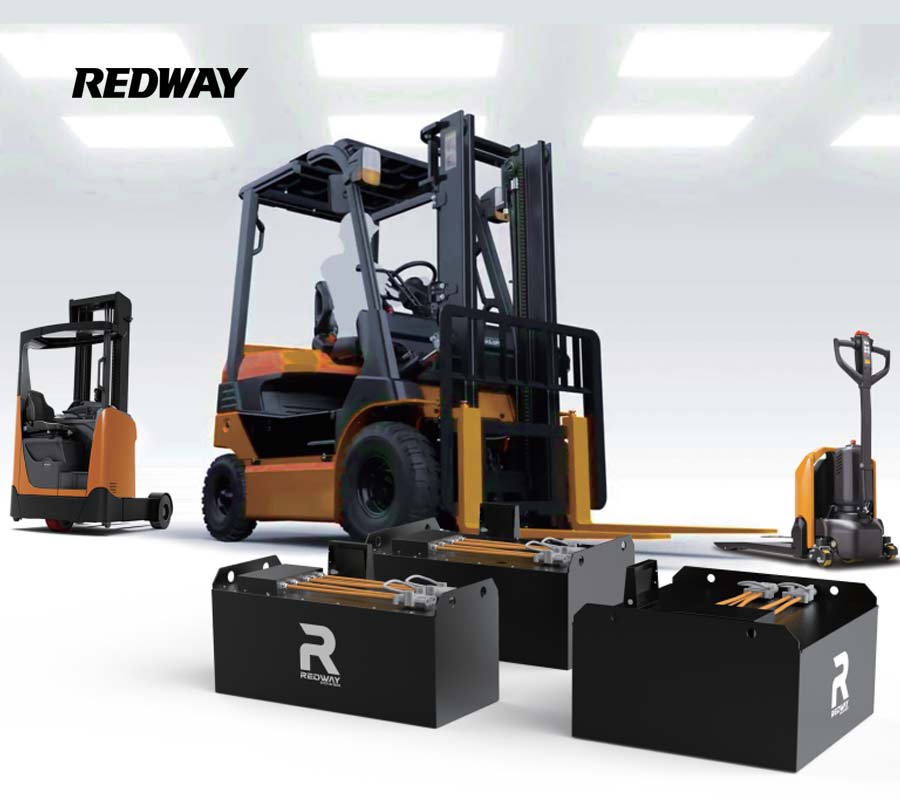
Forklift charger safety ensures operators, equipment, and facilities are protected from electrical hazards, chemical risks, and operational errors during battery charging. Combining proper chargers, dedicated stations, ventilation, PPE, staff training, and smart lithium solutions creates a reliable safety framework. Partnering with experienced OEM manufacturers like Redway Battery helps warehouses implement consistent, scalable, and globally compliant charging protocols.
What is forklift charger safety in a modern warehouse?
Forklift charger safety involves all precautions that prevent electric shock, fire, explosions, and battery damage during charging. This spans charger selection, battery type, station design, ventilation, monitoring, and operator training.
Key practices include:
Selecting chargers compatible with battery chemistry, voltage, and capacity
Establishing dedicated charging areas with spill control and ventilation
Implementing lockout/tagout and emergency stop procedures
Training staff on safe connection, disconnection, and alarm response
Global B2B buyers sourcing from China benefit from integrating safety into OEM charger specifications, ensuring consistent compliance and operational reliability.
How does forklift charger safety differ for lithium and lead-acid batteries?
Charging requirements vary between lead-acid and lithium (LiFePO4) batteries. Lead-acid systems emit hydrogen gas and require regular watering and strict ventilation, whereas lithium batteries are sealed and rely on electronics and precise BMS monitoring.
Key differences:
| Battery Type | Safety Considerations | Operational Notes |
|---|---|---|
| Lead-acid | High gas emissions, acid spills, regular watering | Requires ventilation, PPE, and spill control |
| Lithium (LiFePO4) | Low gas, sealed packs, integrated BMS | Focus on electrical safety, temperature monitoring, and compatible chargers |
Redway Battery designs LiFePO4 forklift batteries with built-in BMS, temperature sensors, and cell balancing, enhancing safety and simplifying global warehouse integration.
Why are forklift charging stations so important for safety?
A well-designed charging station centralizes chargers, batteries, and safety equipment, minimizing risks and ensuring efficient operations. Proper stations control ventilation, access, and electrical hazards while keeping workspaces organized.
A compliant station typically includes:
Fixed chargers away from traffic routes
Adequate ventilation to remove heat or gases
Fire extinguishers, spill kits, and eye wash stations
Safety signage and restricted access
Specifying complete charging station packages from China-based OEMs like Redway Battery ensures standardized safety for multi-site operations.
Which forklift charger safety standards should manufacturers and buyers consider?
Charger safety must meet electrical, fire, and workplace regulations, which vary by region but generally focus on safe operation, ventilation, and operator protection.
Standards include:
Electrical safety and EMC for chargers
Battery-specific regulations for lithium and lead-acid packs
Fire codes covering separation, ventilation, and emergency equipment
Workplace safety regulations for PPE, training, and signage
Redway Battery maintains ISO 9001:2015 and designs products compliant with global norms, facilitating easier approvals for importers and distributors.
How can warehouses reduce forklift charger fire and explosion risks?
Risks stem from electrical faults, overheating, hydrogen buildup, short circuits, and incorrect chargers. These can be mitigated through proper hardware, engineering controls, and operational protocols.
Best practices:
Use chargers with automatic cutoff at full charge
Ensure adequate ventilation, especially for lead-acid batteries
Keep ignition sources away from charging areas
Inspect cables, connectors, and plugs for damage
Adopting LiFePO4 systems from suppliers like Redway Battery reduces gas-related risks and adds BMS protections against overvoltage, short circuits, and overheating.
What forklift charger features enhance safety for lithium and lead-acid systems?
Modern chargers integrate multiple safety functions to prevent human error and protect batteries.
Key features:
Automatic recognition of voltage and battery chemistry
Thermal sensors and temperature compensation
Overcurrent, overvoltage, and short-circuit protection
Controlled startup and shutdown to prevent surges
Integration with lithium BMS or cloud monitoring enables smarter, safer charging solutions for B2B customers and system integrators.
| Charger Type | Typical Battery | Core Safety Features |
|---|---|---|
| Conventional SCR | Lead-acid | Timed charge, basic overload protection |
| High-frequency | Lead-acid/LiFePO4 | Efficient charging, programmable profiles, temp monitoring |
| Smart lithium charger | LiFePO4 | BMS communication, cell balancing, multi-level protections |
How should China manufacturers design forklift chargers for global safety requirements?
OEM manufacturers must prioritize safety in hardware, firmware, and documentation while supporting integration with diverse forklifts and batteries.
Design priorities:
Wide input-voltage compatibility
Robust isolation and surge protection
Multi-chemistry support, especially LiFePO4
Clear multilingual manuals, labels, and safety diagrams
Redway Battery produces LiFePO4 packs optimized for safe fast charging and coordinates with charger partners to deliver globally compliant systems.
Where should forklift charger stations be located to maximize safety?
Charging stations should avoid traffic interference, provide proper ventilation, and be accessible for maintenance.
Placement guidelines:
Away from exits and pedestrian paths
Areas with natural or mechanical ventilation
Non-combustible flooring with clear surrounding space
Close to operations to reduce unnecessary travel
LiFePO4 batteries from Redway Battery allow smaller, decentralized stations due to lower ventilation needs and faster opportunity charging.
When should forklift chargers be inspected and maintained?
Regular inspection prevents hidden electrical or thermal issues, protecting operators and reducing downtime.
Suggested schedule:
| Task | Frequency |
|---|---|
| Visual cable and plug check | Daily |
| Clean charger and vents | Weekly |
| Verify warning labels/signage | Monthly |
| Electrical testing and update | Annually or per OEM |
For the surrounding sizing, selection, installation and maintenance decisions, continue with the Forklift Battery Chargers: Matching the Charger, the Stand and the Station.
China OEM buyers should request maintenance checklists and spare parts plans to maintain safety across multi-site fleets.
Does switching to LiFePO4 forklift batteries improve charger safety?
LiFePO4 batteries reduce gas emissions, eliminate acid spills, and integrate protective BMS functions, creating a closed, monitored system.
Benefits:
No watering, minimal corrosion, low gas output
BMS-managed charging, balancing, and fault detection
Reduced overcharge and thermal risks
Redway Battery designs OEM LiFePO4 packs for safe, fast charging with compatible chargers, standardizing safer lithium solutions for industrial fleets.
Who is responsible for forklift charger safety in B2B operations?
Safety is shared between manufacturers, suppliers, facility owners, and operators. Clear accountability prevents gaps.
Responsibilities:
OEMs: Safe design, documentation
Distributors/wholesalers: Supply compliant products, training
Employers: Implement layouts, procedures, maintenance
Operators: Follow procedures, use PPE, report issues
Partnering with Redway Battery centralizes technical responsibility, while site teams manage daily enforcement.
Can forklift charger safety be integrated into smart fleet management?
Yes, telematics and connected chargers allow real-time monitoring and proactive risk management.
Integration examples:
Track charge cycles, temperatures, and alarms
Restrict charging in unsafe areas
Analyze patterns to predict potential failures
China OEMs increasingly provide integrated battery–charger–fleet solutions for global warehouse operators.
Why should B2B buyers choose a China OEM factory for forklift charger and battery safety?
China OEM factories offer mature supply chains, automation, and scale to deliver high-quality, safe chargers and batteries cost-effectively.
Advantages:
Integrated battery, charger, and BMS design
High-volume, traceable production
Customizable safety functions and enclosures
Experience with global compliance
Redway Battery exemplifies this approach with multiple factories, extensive production areas, and full OEM/ODM customization.
How does Redway Battery support forklift charger safety as a China OEM manufacturer?
Redway Battery delivers LiFePO4 systems engineered for safe, efficient charging, collaborating closely with charger manufacturers.
Support includes:
LiFePO4 packs with BMS, thermal management, and protective circuits
Engineering support for charger compatibility and communication protocols
OEM/ODM customization for forklifts, distributors, and integrators
This ensures B2B customers standardize lithium-based safety practices across fleets.
Redway Expert Views
“Forklift charger safety today requires designing entire battery–charger ecosystems that are inherently safe. Using LiFePO4 chemistry with intelligent BMS and rigorously tested chargers allows warehouses to reduce fire risks, extend battery life, and protect operators across every shift. A coordinated OEM approach ensures that safety is built into both the hardware and operational workflow.”
Conclusion: What are the key actions to improve forklift charger safety today?
To enhance forklift charger safety, standardize on compatible chargers and batteries, establish dedicated stations, train operators, and adopt LiFePO4 solutions from experienced OEMs. Regular inspections, maintenance, and smart fleet integration further reduce risks and improve operational efficiency.
Action steps:
Audit charging areas, ventilation, and traffic flow
Match chargers to battery chemistry and capacity
Implement scheduled inspections and maintenance
Collaborate with Redway Battery for safer lithium solutions and global compliance
FAQs
What PPE is required when using a forklift charger?
Operators need safety glasses, gloves, and protective workwear. Lead-acid requires extra attention to acid and gas, while lithium emphasizes electrical safety.
Can multiple forklifts share the same charger safely?
Yes, if chargers are sized for the battery type and voltage, with clear procedures and scheduling.
Are fast chargers safe for forklift batteries?
Fast chargers are safe when matched to compatible battery chemistry and managed by BMS, particularly for LiFePO4 systems.
How often should forklift charger cables be replaced?
Replace cables if insulation is damaged, conductors exposed, or connectors overheat. High-use environments may require proactive replacement based on cycles.
Does switching to lithium eliminate all charging risks?
Lithium reduces many gas- and spill-related hazards but does not remove electrical or procedural risks. Proper chargers, BMS monitoring, and operator training remain essential.
