REDWAY BATTERY / KNOWLEDGE
How should you set an inverter’s low-battery shutdown for a 12V LiFePO4 house bank?
Redway Battery Editorial Team
Talk / Battery Q&A
An RV owner with a 12V LiFePO4 house bank keeps hitting BMS protect when the inverter is left on overnight, then needs a special wake procedure.
Direct answer: Set the inverter’s low-battery shutdown and reconnect voltages so the inverter stops discharging before the battery BMS opens its FETs, and allow for voltage sag under load. For many 12V LiFePO4 banks, that means a shutdown in the mid-to-high 11 V region under load is a starting point to discuss with the inverter and battery manuals—not a copy of lead-acid defaults near 10 V. Aim for the inverter to shut down cleanly while the BMS still has margin.
Why lead-acid defaults fail. Lead-acid curves sag gradually; LiFePO4 stays high then drops quickly near empty. An inverter still running at 10.5 V may already be below a LiFePO4 BMS cut-off after cable loss, causing an abrupt hard disconnect and a black restart.
Two thresholds. Use a low-SOC warning (alarm) and a lower shutdown. Reconnect should sit high enough that the system does not chatter as loads change.
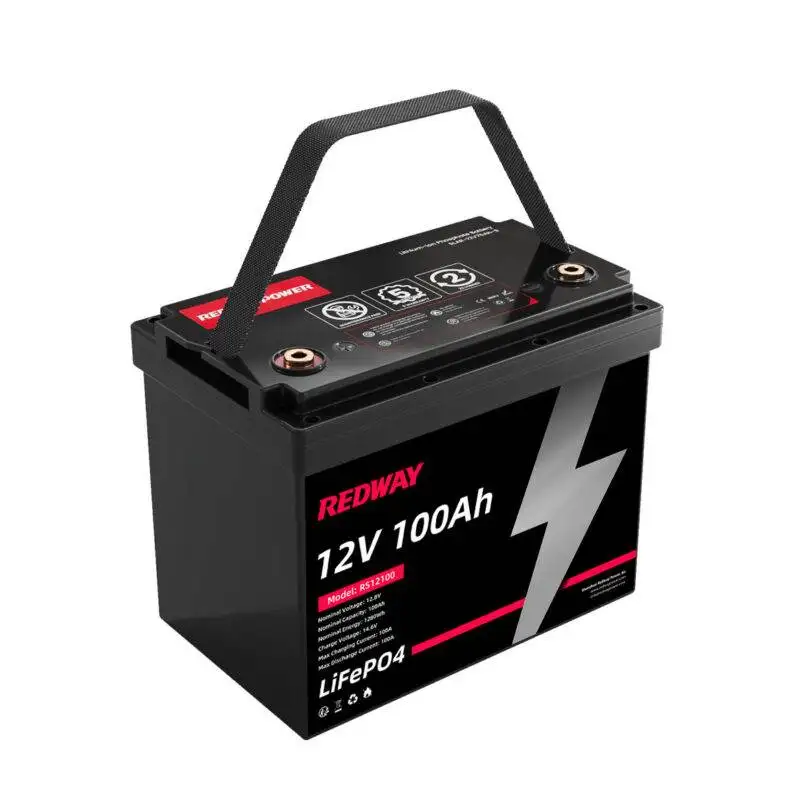
Account for cable drop. Measure battery terminal voltage and inverter DC input voltage under a typical load. If the inverter sees 0.3 V less than the battery, set shutdown using the inverter’s reading or shorten/thicken cables. Packs such as the 12V 100Ah, 12V 200Ah and 12V 200Ah Ultra can deliver high current; drop scales with current.
Closed-loop if available. When the inverter speaks CAN or RS485 to the BMS, prefer SOC-based stop limits over raw voltage. Voltage-only mode remains a fallback.
Align with charge settings. Charge voltage and float behaviour should already follow LiFePO4 guidance such as solar charge controller settings for LiFePO4. Shutdown settings protect the bottom of the window; charge settings protect the top.
Sizing context. Chronic low-voltage trips may mean the bank is simply too small for overnight inverter loads; see sizing a 12V bank for fridge and inverter.
Test. After changing settings, discharge with a known load and confirm the inverter alarms and stops while the battery display still shows a small reserve and no protect event.
Document. Write the final shutdown, alarm and reconnect values in the van or boat handbook next to the battery serials. If you later add parallel batteries or a larger inverter, repeat the load test; the old voltage setpoints may no longer protect the bank the way you intended.
↳ Replying to Redway Battery Editorial Team
Specify inverter shutdown values in the install scope so BMS hard cut-offs are not the normal stop method.
↳ Replying to Procurement perspective
Measure cable voltage drop under load and set shutdown above the BMS cut-off with margin.
↳ Replying to Selection/Engineering perspective
Re-test shutdown after any cable, inverter or battery change and record the voltages that tripped.
Set the inverter’s low-battery shutdown and reconnect voltages so the inverter stops discharging before the battery BMS opens its FETs, and allow for voltage sag under load. For many 12V LiFePO4 banks, that means a shutdown in the mid-to-high 11 V region under load is a starting point to discuss with the inverter and battery manuals—not a copy of lead-acid defaults near 10 V. Aim for the inverter to shut down cleanly while the BMS still has margin.
Verify before ordering: Exact shutdown and BMS cut-off voltages depend on the inverter model and battery firmware; confirm both manuals before finalising settings.
Editorial Q&A for battery selection and operations. Product figures cited from Redway product pages.
Related products
 12V 100Ah Lithium Battery (LiFePO4, Self-heating, OEM)
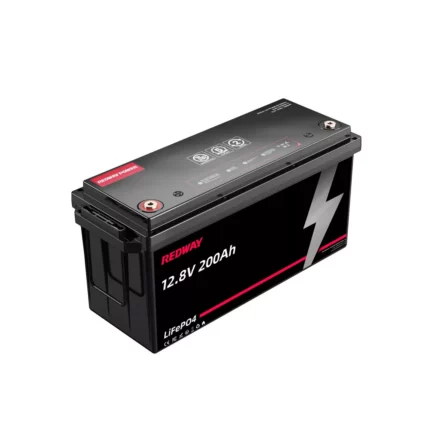 12V 200Ah Lithium Battery
 12V 200Ah LiFePO4 Lithium Battery (Ultra)
Related articles & discussions
- How to Choose the Right 12V Battery Charger for Your Deep Cycle Battery
- Do I need a special charger to charge a 12V lithium battery?
- How many lithium cells for 12V?
- Do Lithium Batteries Need a Low Voltage Disconnect?
- What is a dual 12v battery?
- How 12V Li-Ion Batteries are Powering the Future of Energy Storage
- Why Choose a 12V 100Ah Lithium-Ion Battery for Your Needs?
- How to Find 12V Golf Cart Batteries Near Me?
- Are 12V LiFePO4 Batteries Environmentally Friendly?
- Why You Should Consider the 12V 75Ah LiFePO4 Battery from Redway Battery for Your Energy Needs