




REDWAY BATTERY / KNOWLEDGE
What Are Enersys Lithium-Ion Solutions For Forklifts?
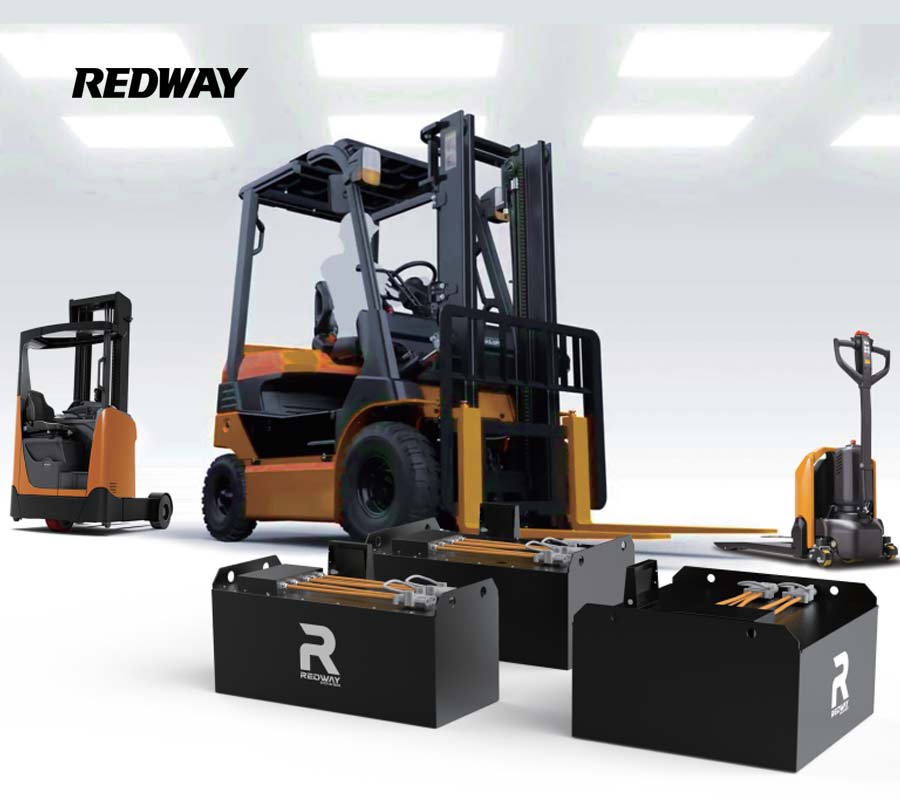
Enersys lithium-ion forklift solutions are advanced lithium-ion batteries engineered for material handling equipment, offering 3x longer lifespan than lead-acid. Designed for rapid charging (1–2 hours) and zero maintenance, they optimize warehouse efficiency. Models like the NexSys® series feature proprietary BMS and thermal management, ideal for high-cycle Class I–III forklifts. Charging terminates at 57.6V (48V systems) to preserve cell integrity.
How to Restore a Forklift Battery: Costs, Methods, and Safety Tips
How do Enersys lithium-ion batteries outperform lead-acid?
Enersys lithium-ion excels with 2,000–3,000 cycles vs. 500–1,000 for lead-acid, plus 30% faster charging. No watering or equalization cuts labor costs by 50%. Real-world example: A 48V 750Ah NexSys® PURE lithium pack powers 3-shift operations for 5+ years. Pro Tip: Lithium’s 95% depth-of-discharge safely doubles usable capacity vs. lead-acid’s 50% limit.
What BMS features ensure Enersys safety?
Enersys integrates multi-layer BMS safeguards—cell balancing, overvoltage shutdown (58.4V cutoff), and temperature-triggered airflow. Pro Tip: Thermal runaway prevention kicks in at 60°C (140°F), 20% below industry norms. For context, this setup resembles aircraft black boxes, redundantly monitoring 15+ parameters to halt anomalies before failure.
Can Enersys lithium fit existing forklifts?
Yes, via retrofit kits adapting dimensions/voltage. However, 48V lithium packs weigh 40% less—800 lbs vs. 1,400 lbs lead-acid. Verify mast load limits; lighter batteries may require counterweights. Example: Toyota 8FGCU25 conversions gain 12% runtime but need ECU reprogramming for lithium’s flat voltage curve.
| Parameter | Enersys Lithium | Lead-Acid |
|---|---|---|
| Cycle Life | 3,000 | 1,000 |
| Charge Time | 1.5 hrs | 8–10 hrs |
| Total Cost (10-yr) | $18K | $28K |
What’s the ROI of switching to Enersys lithium?
Beyond upfront costs ($12K vs. $6K lead-acid), lithium saves $4,200/yr in energy/water/labor. ROI breakeven occurs at 3–4 years. Pro Tip: Use Enersys’ ESS-Drive software to track kWh throughput—optimal replacement triggers at 80% capacity (≈2,400 cycles).
| Brand | Warranty | Energy Density |
|---|---|---|
| Enersys | 5 yrs | 160 Wh/kg |
| Competitor X | 3 yrs | 140 Wh/kg |
How does temperature affect Enersys performance?
Enersys operates at -20°C to 55°C (-4°F to 131°F) with active cooling. At -10°C, capacity dips 10% vs. lead-acid’s 40% loss. Real-world example: Freezer warehouses maintain 85% runtime with lithium, avoiding lead-acid’s sulfation issues. Warning: Avoid ambient temps >60°C—permanent capacity loss accelerates beyond BMS thresholds.
How to Troubleshoot a Propane Forklift Fuel System – Step-by-Step Guide
Redway Battery Expert Insight
FAQs
Yes—use only Enersys-approved LiFePO4 chargers with CAN bus communication. Generic units lack voltage synchronization, risking BMS lockouts.
Can lithium batteries leak acid?
No—lithium’s sealed design eliminates acid spills, making them safer for food/pharma warehouses.
This topic belongs to the wider Forklift Battery: Technology and System Fundamentals — Part 3, which brings the related decisions and practical checks together.
