




REDWAY BATTERY / KNOWLEDGE
What Are Six Ways To Maximize Benefits Of Forklift Batteries?
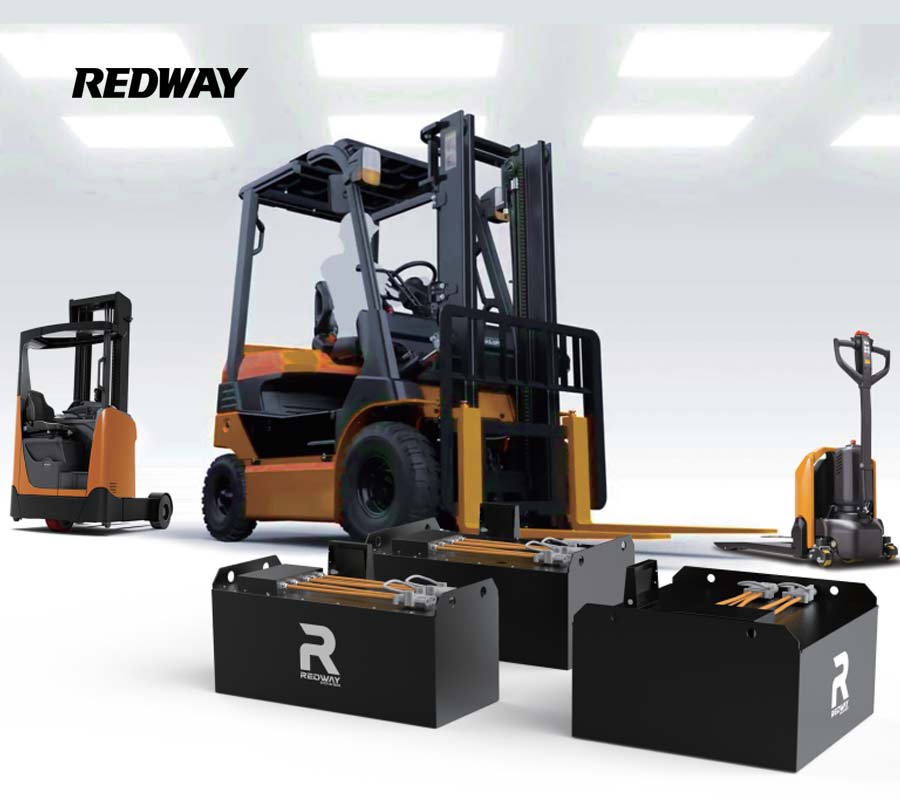
Proper charging, thermal management, regular maintenance, partial discharging, proper storage, and advanced BMS integration maximize forklift battery benefits. Using lithium-ion (LiFePO4) over lead-acid extends cycle life (3,000+ cycles) while adhering to 20–80% SOC limits reduces degradation. Pro Tip: Store at 50% SOC in 15–25°C environments to minimize self-dischage. Companies like Redway Battery offer smart BMS solutions for real-time cell balancing and fault detection.
24V 200Ah Lithium Forklift Battery
How does optimal charging extend forklift battery lifespan?
Smart charging protocols tailored to battery chemistry prevent overcharging and undercharging. Lithium batteries thrive on partial cycles (e.g., 30–80% SOC), while lead-acid requires full charges to avoid sulfation. Deep Dive: LiFePO4 charges via CC-CV up to 3.65V/cell, stopping at 95% capacity for longevity. Lead-acid needs equalization charges monthly. For example, a 48V LiFePO4 pack charged to 54.8V (vs. 58.4V max) gains 30% more cycles. Pro Tip: Never charge frozen batteries—lithium cells below 0°C risk plating. Transitioning to partial charges is like refueling a car at ¼ tank instead of running empty.
Why is temperature control critical for performance?
Extreme heat (35°C+) degrades lithium electrolytes, while cold (<-10°C) slashes lead-acid capacity by 50%. Thermal management systems maintain 15–25°C for optimal reactions. Deep Dive: LiFePO4 operates safely at -20–60°C but charges only above 0°C. A 48V lithium pack in a 30°C warehouse loses 15% capacity yearly vs. 5% at 25°C. Pro Tip: Install battery compartments with active cooling for multi-shift operations. Think of batteries as athletes—performance plummets without climate control.
| Battery Type | Ideal Temp Range | Capacity Loss at 35°C |
|---|---|---|
| LiFePO4 | 15–25°C | 20% over 2 years |
| Lead-Acid | 20–30°C | 40% over 1 year |
What maintenance routines prevent premature failure?
Monthly voltage checks and terminal cleaning combat corrosion and imbalance. For lead-acid, check electrolyte levels weekly; lithium needs BMS software updates. Deep Dive: Loose connections in a 48V system cause 0.5V drop per cell, wasting 200W hourly. A warehouse avoiding terminal corrosion saved $3,200/year in replacements. Pro Tip: Use anti-corrosion sprays on lead terminals—ever seen rust eat through metal? That’s sulfation on your battery contacts.
48V 600Ah Lithium Forklift Battery
How does partial discharging improve efficiency?
Limiting discharges to 80% DoD doubles lithium cycle life. Shallow cycles reduce electrode stress vs. deep 100% discharges. Deep Dive: LiFePO4 cycled at 50% DoD achieves 6,000 cycles, while 80% DoD yields 3,500. A forklift running two 4-hour shifts/day (60% DoD) lasts 8 years instead of 5. But why not cycle deeper? It’s like sprinting daily versus jogging—you’ll fatigue faster. Pro Tip: Program BMS to alarm at 20% SOC—it’s your battery’s “low fuel” light.
| DoD Level | LiFePO4 Cycles | Lead-Acid Cycles |
|---|---|---|
| 50% | 6,000 | 1,200 |
| 80% | 3,500 | 700 |
Why does proper storage matter for unused batteries?
Storing lithium at 50% SOC and 15°C slows aging by 75% vs. full charge. Lead-acid self-discharges 5–10% monthly—store at full charge with quarterly top-ups. Deep Dive: A 48V lithium battery stored at 30% SOC for 6 months loses 3% capacity; at 100%, it loses 12%. Picture a car left with an empty tank—corrosion sets in faster. Pro Tip: Use maintenance chargers for lead-acid during storage—they’re like IV drips for batteries.
How do advanced BMS systems optimize safety and performance?
Smart BMS monitors cell voltages, temperatures, and current, preventing overcharge/overload. Redway’s BMS with Bluetooth logs data, predicting failures 100+ cycles early. Deep Dive: A 600Ah lithium pack with cell balancing varies ±0.02V vs. ±0.2V without, adding 1,000 cycles. Why risk unmanaged packs? It’s flying blind through a thunderstorm. Pro Tip: Choose UL-certified BMS units—they’re the seatbelts for your battery.
Redway Battery Expert Insight
FAQs
Yes, but upgrade charging ports and wiring—lithium’s lower internal resistance demands higher gauge cables to handle 200A+ surges safely.
How often should I calibrate battery monitors?
Every 50 cycles for lithium—full discharge/recharge resets SOC accuracy. Lead-acid requires monthly specific gravity tests.
This topic belongs to the wider Forklift Battery: Operation and Practical Guidance — Part 5, which brings the related decisions and practical checks together.
