




REDWAY BATTERY / KNOWLEDGE
What Are The Features Of R1.4-R1.6HD Reach Trucks?
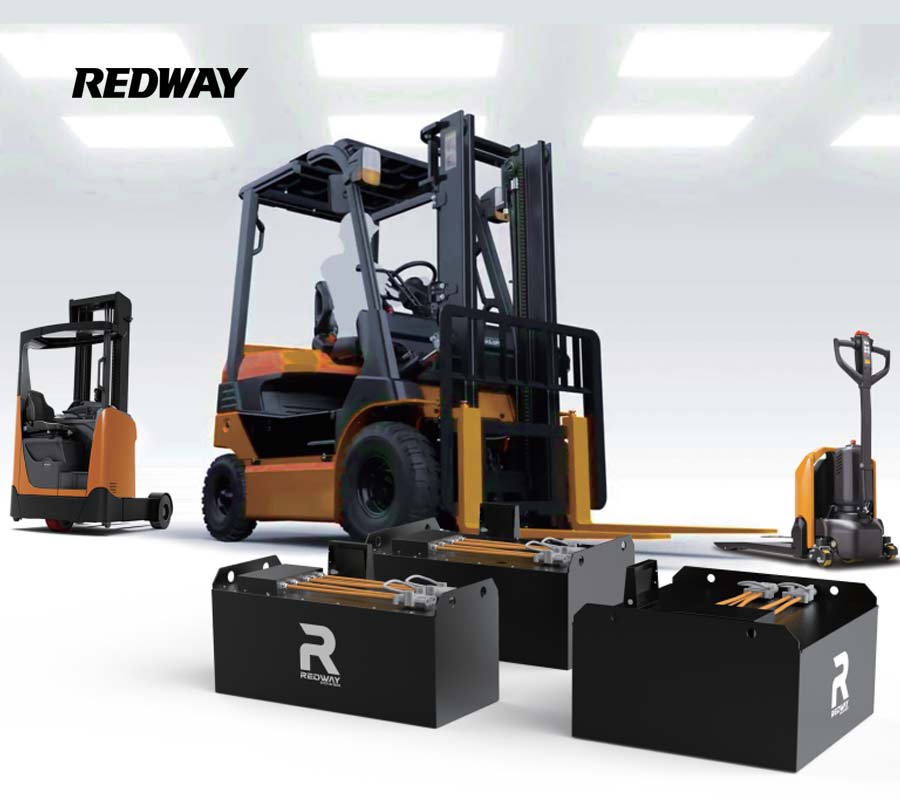
The Raymond R1.4-R1.6HD reach trucks feature 1.4–1.6-ton load capacities, 12m mast heights, and lithium-ion power for high-density warehouse operations. Their compact chassis enables 180° steering in aisles under 2m wide, while regenerative braking reclaims 15–20% energy during deceleration. Advanced stability systems include load-sensitive tilt control and dual-speed hydraulics for precise load handling. 48V 600Ah Lithium Forklift Battery
What differentiates R1.4HD and R1.6HD models?
The R1.6HD handles 200kg heavier loads via reinforced mast rollers and a 10kW AC motor vs. the R1.4HD’s 8.5kW unit. Both use 48V LiFePO4 batteries, but the R1.6HD’s frame has 20% thicker steel plating for torsion resistance. Pro Tip: Never exceed 85% of rated capacity during multi-pallet retrievals to prevent hydraulic lag.
While both models share a 12m max lift height, the R1.6HD’s dual-stage mast operates 15% faster under full load. Think of it like upgrading from a V6 to a V8 engine—more torque for demanding tasks. But what happens if you push both models beyond their design limits? The R1.6HD’s reinforced drive axles tolerate sporadic overloads better, but chronic overloading degrades servo valves in either model. Key specs:
| Metric | R1.4HD | R1.6HD |
|---|---|---|
| Load Capacity | 1.4t | 1.6t |
| Motor Power | 8.5kW | 10kW |
| Frame Steel Thickness | 8mm | 10mm |
How do mast configurations impact performance?
Three-stage quad-mast designs allow 12m lifting while keeping collapsed heights at 2.1m for low-clearance areas. Dual chain-on-roller assemblies reduce friction by 30% vs. traditional setups. Practical example: A 10m lift with 1.5t load consumes 22% less energy than competitors due to optimized pulley angles.
80V 700Ah Forklift Lithium Battery
Why choose lithium-ion over lead-acid in these models?
LiFePO4 batteries provide 2,000+ cycles versus 500 in lead-acid, with 1.5-hour fast charging. Their 95% depth-of-discharge capability delivers 30% more operational time per shift. Pro Tip: Use opportunity charging during 15-minute breaks to extend daily runtime by 2-3 hours without full cycles.
Imagine powering a reach truck with a smartphone-like battery—consistent voltage until 10% charge remains. But how does this affect cold storage? Lithium-ion maintains 85% capacity at -20°C, whereas lead-acid drops to 50%. Table comparison:
| Parameter | LiFePO4 | Lead-Acid |
|---|---|---|
| Cycle Life | 2,000 | 500 |
| Charge Time | 1.5h | 8h |
| Energy Density | 140Wh/kg | 30Wh/kg |
Redway Battery Expert Insight
FAQs
Yes, but require BMS integration with the truck’s CANbus—mismatched communication protocols cause fault codes. Always validate voltage/current limits with OEM specs.
How often should mast bearings be lubricated?
Every 500 operating hours using ISO VG 220 grease. Over-greasing attracts debris, increasing wear by 70% in dusty environments.
For connected guidance and the next practical steps, use the Forklift Battery: Operation and Practical Guidance — Part 6.
