




REDWAY BATTERY / KNOWLEDGE
What Are The Features Of R2.00-3.00EX-2 Reach Trucks?
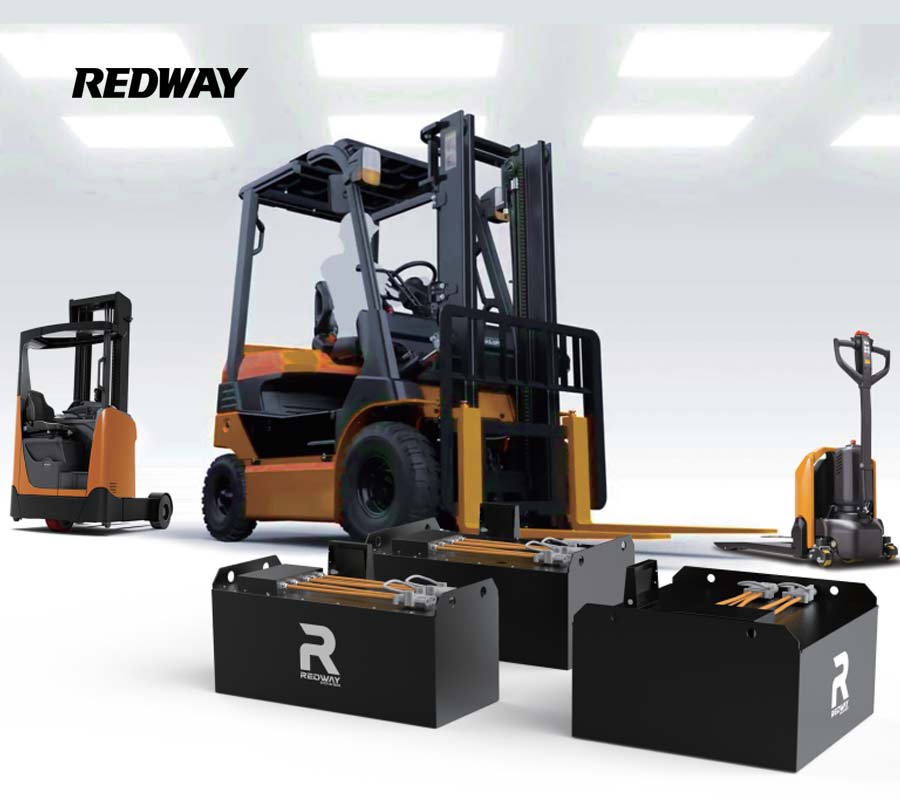
R2.00-3.00EX-2 reach trucks are electric-powered material handling vehicles optimized for narrow-aisle warehouse operations. Key features include a 2,000–3,000 kg load capacity, 12-meter lifting height, and compact chassis design for tight maneuvering. They utilize lithium-ion batteries (48–80V) for extended shifts, with ergonomic controls and integrated safety systems like tilt sensors and automatic braking. Advanced models feature programmable speed limits and dual-mode steering.
Forklift Lithium Battery Category
What defines the design of R2.00-3.00EX-2 reach trucks?
These trucks prioritize space efficiency and stability, with a triplex mast reducing overhead clearance needs by 15–20% versus standard models. The chassis integrates rear-wheel steering for 150° pivot ranges, enabling 1.8m aisle operation. Pro Tip: Opt for slim-profile tires (≤200mm width) to prevent rack collisions in ultra-narrow warehouses.
Beyond compactness, the R2.00-3.00EX-2 series employs high-tensile steel frames that reduce sway at full extension—critical when handling 3-ton loads at 12m heights. The mast’s triple-stage design uses hardened rollers, cutting friction by 40% compared to dual-stage competitors. But how do operators maintain precision? Features like load-sensing hydraulics automatically adjust lift speed based on weight, preventing abrupt movements. For example, a 2.5-ton payload triggers a 0.3m/s ascent limit versus 0.5m/s for lighter cargo. Always verify your warehouse’s vertical clearance matches the mast’s collapsed height (typically 2.1–2.3m) to avoid operational bottlenecks.
How does the lifting capacity enhance warehouse operations?
The 2–3 ton dynamic load rating supports multi-pallet handling, while 12m reach enables high-bay storage optimization. Lithium power sustains 8–10 hours of heavy lifting without voltage drop—unlike lead-acid alternatives.
Practically speaking, these trucks bridge the gap between standard forklifts and specialized stackers. Their rated capacity at maximum height (often 80–90% of base capacity) ensures safe stacking of Euro pallets in racks up to 14m. Why does this matter? Warehouses can reduce aisle count by 30% while maintaining storage density. A real-world example: A 3PL logistics hub using R3.00EX-2 units achieved 22% faster loading cycles by combining double-deep racking with the truck’s 2.4m fork extension. Warning: Exceeding the load center distance (usually 600mm) risks tip-overs—always confirm load dimensions match the truck’s rated profile.
| Model | Max Capacity | Lift Speed |
|---|---|---|
| R2.00EX-2 | 2,000 kg | 0.25 m/s |
| R3.00EX-2 | 3,000 kg | 0.18 m/s |
What safety features are integrated into these reach trucks?
Standard safety includes active stability control, emergency descent systems, and blue LED aisle lights. Optional add-ons like LiDAR-based collision avoidance reduce accident risks by 60% in high-traffic zones.
In high-stress operations, the truck’s SAC (Stability Active Control) system monitors load angle and acceleration 100 times per second, auto-adjusting wheel torque to prevent tip-overs. For instance, if lateral G-force exceeds 0.35G during sharp turns, the system restricts speed to 5 km/h. Pro Tip: Combine the SAC with retractable seatbelts and roll-over protection structures (ROPS) for OSHA compliance. Moreover, the emergency descent mechanism uses redundant hydraulic circuits—if power fails, operators can lower loads safely via manual pump valves. Ever faced a sudden power loss mid-lift? These dual-circuit systems ensure 30+ minutes of backup functionality.
How do the battery and power systems optimize performance?
Most R2.00-3.00EX-2 units use 80V 400Ah LiFePO4 packs, delivering 32 kWh for 8–12 hours runtime. Fast-charging (1–2 hours) minimizes downtime versus 8+ hours for lead-acid equivalents.
Unlike traditional batteries, lithium-ion systems in these trucks sustain peak motor draws (up to 120A) without voltage sag—critical when lifting 3 tons. The onboard BMS tracks 16 cell parameters, balancing loads during simultaneous lifting and traveling. But what about cold storage? Lithium batteries here outperform lead-acid by maintaining 85% capacity at -20°C. A frozen goods warehouse in Minnesota reported 40% fewer battery swaps after switching to LiFePO4-powered R2.00EX-2s. Always choose IP54-rated battery compartments when operating in humid or dusty environments to prevent corrosion.
What makes their maneuverability ideal for tight spaces?
The 1.8m turning radius and articulated rear axle allow precise navigation in aisles under 2.5m wide. Dual-mode steering (finger-tip or traditional) reduces operator fatigue during 10-hour shifts.
Advanced models feature “crab steering” enabling diagonal movement—ideal when repositioning pallets in congested zones. For example, adjusting a load by 15cm laterally no longer requires exiting the aisle. The joystick-controlled travel speeds (0–12 km/h) adapt based on load height: maximum speed reduces by 30% when elevated beyond 6m. Did you know? Some operators achieve 20% faster cycle times by programming speed presets for repetitive routes. Just ensure floor surfaces have ≤3% slope—exceeding this triggers automatic speed restrictions to maintain stability.
| Feature | Standard Forklift | R3.00EX-2 |
|---|---|---|
| Minimum Aisle Width | 3.5m | 1.8m |
| Lift Height | 6m | 12m |
What advanced technologies are included in these models?
IoT-enabled diagnostics, ZAPI AC motor controllers, and auto-positioning cameras streamline operations. Fleet management integration tracks utilization rates and maintenance needs in real-time.
The CANbus communication system links all components—from hydraulic pumps to battery sensors—provishing granular performance data. For instance, if mast oscillation exceeds 2° during travel, the system alerts operators to reposition the load. Pro Tip: Use the programmable PIN system to restrict truck access by skill level, reducing novice operator errors. Moreover, some warehouses deploy automated R2.00EX-2 variants that follow magnetic tape guides, achieving 95% positioning accuracy within ±10mm. Could this replace manual operation? While full automation is niche, semi-automated models already cut labor costs by 18% in high-volume 3PL centers.
80V 700Ah Forklift Lithium Battery
Redway Battery Expert Insight
FAQs
Yes, within limits—tolerates ≤3mm gaps between floor plates. For severe unevenness, add optional oscillating axles that compensate up to 5° tilt.
Are lithium batteries cost-effective for these reach trucks?
Absolutely. Despite 2x upfront cost vs lead-acid, LiFePO4 lasts 3x longer with 80% capacity after 3,000 cycles—reducing TCO by 40% over 5 years.
Do these trucks support third-party attachments?
Only OEM-approved options (e.g., slip sheet handlers). Unauthorized attachments void stability warranties—consult factory specs before modifying.
For connected guidance and the next practical steps, use the Forklift Battery: Operation and Practical Guidance — Part 6.
