




REDWAY BATTERY / KNOWLEDGE
What Does The E45-70XN Tech Guide Include?
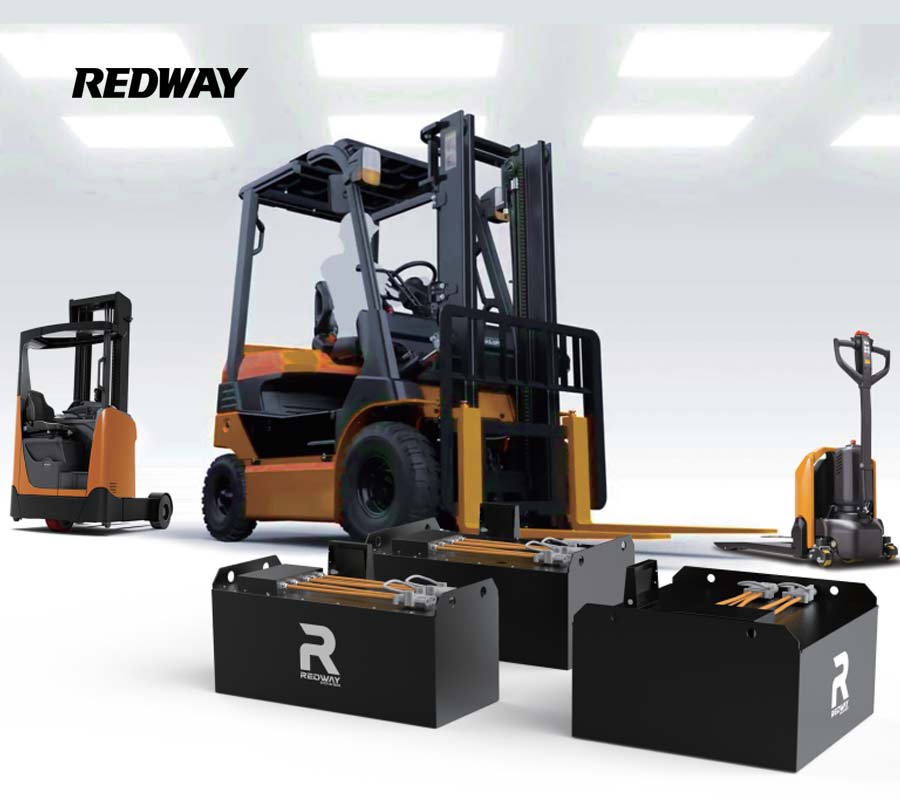
The E45-70XN Tech Guide provides comprehensive documentation for deploying and maintaining 48V lithium forklift batteries, covering electrical specifications, charging protocols, BMS integration, and safety compliance. It details discharge curves, thermal management thresholds (e.g., operational range: -20°C to 55°C), and maintenance intervals. Key sections include compatibility matrices for chargers/forklifts and troubleshooting workflows for common faults like voltage drift or balancer failures. Pro Tip: Always cross-reference the guide’s torque specs during terminal installation to prevent arcing.
48V 300Ah Lithium Forklift Battery
What electrical specs are defined in the E45-70XN guide?
The guide specifies nominal voltage (48V), peak current (500A for 3 sec), and energy capacity (70Ah). Critical thresholds include low-voltage cutoff at 40V and high-voltage limits at 54.6V during charging. It also defines cell balancing tolerances (±20mV) and impedance testing criteria for degraded cells. These parameters ensure safe operation while maximizing cycle life—especially in high-demand logistics environments.
For instance, the E45-70XN’s 500A burst rating enables short-term heavy loads, like lifting 2-ton pallets. However, sustained draws above 300A may trigger BMS thermal shutdowns. Pro Tip: Use a clamp meter during load tests to validate real-world current alignment with spec sheets. Transitioning to maintenance, the guide emphasizes monthly voltage checks—ignoring these risks progressive capacity fade akin to underinflated tires reducing fuel efficiency.
How does the guide optimize charging practices?
It prescribes CC-CV charging with max 54.6V and temperature-controlled rates (0.5C below 0°C). The guide discourages partial charging below 20% SOC, which strains LiFePO4 cells. For fleets, it recommends staggered charging schedules to avoid simultaneous high loads on facility power grids—think of it as avoiding rush-hour traffic for electrons.
Beyond protocol details, the guide includes troubleshooting charts for charging faults. For example, Error Code E03 (voltage mismatch) often stems from charger voltage settings deviating ±0.5V from BMS expectations. A real-world analogy? It’s like trying to fit a square plug into a round socket—compatibility is non-negotiable. Pro Tip: Always use temperature-compensated charging in cold storage warehouses to prevent lithium plating.
| Charger Type | Compatibility | Charge Time |
|---|---|---|
| Standard 10A | Yes | 7 hrs |
| Fast 30A | With BMS v2.1+ | 2.3 hrs |
What safety protocols are emphasized?
The guide mandates IP55 enclosures for dust/water resistance and emergency disconnect procedures. It specifies fire-suppression distances (1m clearance) and PPE requirements (voltage-rated gloves during servicing). Real-world example: A warehouse ignoring clearance guidelines risked thermal runaway when a nearby heater elevated battery temps beyond 60°C.
Practically speaking, the protocols function like aviation checklists—systematic and non-negotiable. Transition phrases aside, did you know the guide requires quarterly insulation resistance tests? Neglecting this can create leakage currents that gradually corrode terminals. Pro Tip: Use dielectric grease on terminals post-cleaning to block oxidation paths.
How does it address battery-forklift compatibility?
The guide includes a compatibility matrix covering connectors, weight tolerances, and communication protocols (CANBus vs. RS485). For example, using the E45-70XN with non-listed forklifts might cause CANBus errors, akin to speaking French to someone who only understands Mandarin.
But what happens if you ignore the weight specs? Exceeding the 15kg forklift battery tray limit risks mounting instability during sharp turns—a forklift version of top-heavy truck rollovers. The guide’s pro-tip: Always verify connector pinouts against OEM schematics; reversed polarity can fry BMS units in seconds.
| Forklift Model | Connector Type | BMS Protocol |
|---|---|---|
| TX-450 | Anderson SB175 | CANBus 2.0B |
| LX-220 | Deutsch HD30 | RS485 Modbus |
What capacity calibration methods are outlined?
The guide details full-cycle recalibration every 100 cycles: discharge to 40V, then charge to 54.6V. This resets Coulomb counters combating SOC drift caused by partial cycling. Think of it as recalibrating a gas gauge after prolonged highway driving.
Why does this matter? A 5% SOC error in a 70Ah battery equals 3.5Ah—enough to strand mid-shift forklifts. The guide also warns against relying solely on voltage-based SOC estimates under load, which can be as misleading as judging a book by its cover. Pro Tip: Schedule recalibrations during planned downtime to minimize workflow disruption.
Redway Battery Expert Insight
FAQs
Only if the device meets voltage/C-rate specs—industrial floor scrubbers often work, but e-bikes risk BMS communication failures due to missing CANBus.
How often should safety inspections occur?
Bi-annually for casual use, quarterly for multi-shift operations. Inspections must check terminals, insulation, and BMS error logs to preempt failures.
Does the guide cover software update procedures?
Yes, firmware updates via USB-C require disabling the BMS first—think “airplane mode” for batteries. Always use Redway’s update tool to avoid bricking.
This topic belongs to the wider Forklift Battery: Operation and Practical Guidance — Part 7, which brings the related decisions and practical checks together.
