




REDWAY BATTERY / KNOWLEDGE
What is a Stationary Charging Forklift and How Does It Work?
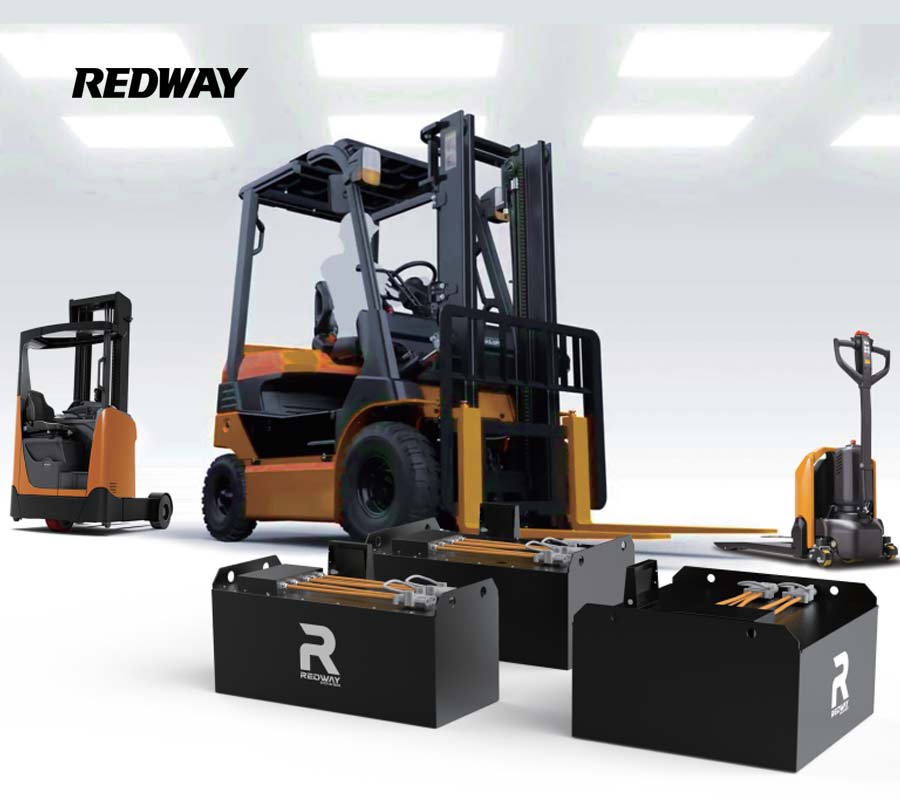
A stationary charging forklift recharges its battery at a fixed charging station, ensuring safe, efficient, and controlled energy replenishment. This method extends battery life, reduces maintenance needs, and boosts productivity, making it a preferred solution for warehouses, logistics centers, and industrial facilities where forklifts operate continuously. Leading OEMs like Redway Battery provide tailored lithium battery solutions to maximize performance.
How Does a Stationary Charging Forklift Operate?
A stationary charging forklift connects to a dedicated charging station through cables or connectors. Controlled current and voltage management safely charges lithium-ion or lead-acid batteries, preventing overcharging and overheating. Lithium batteries, particularly LiFePO4 from Redway Battery, ensure faster charging cycles, enhanced thermal stability, and longer operational life compared to traditional lead-acid options.
What Are the Benefits of Using Stationary Charging Forklifts?
Stationary charging forklifts deliver multiple advantages for industrial operations:
Extended battery lifespan through precise charging cycles
Increased operational uptime with reliable recharging
Lower maintenance costs via consistent energy management
Safer work environment with secure, fixed charging setups
Energy-efficient performance through smart charging systems
Which Battery Types Are Compatible with Stationary Charging Forklifts?
Most stationary chargers support lithium-ion batteries like LiFePO4 and conventional lead-acid batteries. LiFePO4 batteries, widely used by Redway Battery, provide superior energy density, long lifecycle, and stable performance under high-demand operations. Lead-acid batteries remain a cost-effective alternative but require more frequent maintenance.
Why Is Stationary Charging Preferred Over Mobile Charging?
Stationary charging offers controlled, stable conditions that protect batteries from overheating, deep discharges, and capacity loss. Compared to mobile or on-board chargers, stationary systems allow easy monitoring, consistent performance, and lower safety risks, making them ideal for industrial workflows.
Who Are the Main Users of Stationary Charging Forklifts?
Industries such as manufacturing, warehousing, logistics, and distribution rely on stationary charging forklifts. Users prioritize dependable energy solutions for continuous operation and often source batteries from reputable OEM factories like Redway Battery in China, which specialize in high-performance lithium battery production.
When Should a Stationary Charging Forklift Be Charged?
Optimal charging usually occurs during breaks, shift changes, or off-peak hours to minimize operational interruptions. Advanced battery management systems in stationary chargers can schedule charging automatically, maintaining energy efficiency and prolonging battery life.
Where Are Stationary Charging Forklifts Commonly Used?
These forklifts are common in warehouses, distribution centers, logistics hubs, and production facilities. Industrial operators prefer stationary charging for its reliability, safety, and centralized energy management, ensuring forklifts remain operational without downtime.
Does Stationary Charging Improve Battery Life?
Yes, stationary charging systems use smart chargers that regulate current and voltage to avoid overcharging or deep discharging. This controlled approach significantly extends battery lifespan, a key advantage of Redway Battery’s LiFePO4 solutions.
| Feature | Stationary Charging Forklifts | Mobile/On-board Charging |
|---|---|---|
| Charging Location | Fixed charging stations | On the forklift or mobile chargers |
| Battery Management | Controlled with smart chargers | Varies based on usage and charger type |
| Safety | High due to stable environment | Moderate, risk of overheating or connector damage |
| Maintenance | Centralized and easier | Individual checks required |
| Battery Life | Longer due to optimized cycles | Shorter with irregular charging patterns |
Has Technology Advanced Stationary Charging Systems Recently?
Recent innovations include IoT-enabled chargers, adaptive charging protocols, and automatic battery recognition. These improvements enhance efficiency, reduce downtime, and allow predictive maintenance, ensuring industrial fleets operate at peak performance.
Are There OEM Advantages From Chinese Manufacturers Like Redway Battery?
Partnering with OEM suppliers such as Redway Battery offers benefits including:
Access to cutting-edge lithium battery technology
Tailored OEM/ODM solutions for specific operational needs
Competitive pricing and reliable manufacturing standards
Expertise in automated battery production and quality control
Can Stationary Charging Forklifts Be Customized?
Yes, Redway Battery provides customization options including battery capacity, charger interfaces, and integration with fleet management software. OEM/ODM customization ensures the charging system aligns with operational requirements and maximizes performance.
How Can Warehouses Optimize Stationary Charging Systems?
Optimizing stationary charging involves:
Deploying multiple charging stations for fleet rotation
Using battery monitoring and management software
Scheduling charges strategically to prevent downtime
Implementing safety protocols and periodic maintenance
| Optimization Strategy | Description |
|---|---|
| Fleet Rotation | Ensures all forklifts are efficiently charged without waiting |
| Smart Monitoring | Tracks battery health and performance |
| Scheduled Charging | Reduces operational disruption |
| Safety Protocols | Maintains safe charging environment |
For the surrounding sizing, selection, installation and maintenance decisions, continue with the Forklift Battery Charging: Methods, Timing and the Charging Area.
Redway Expert Views
“Stationary charging forklifts are a cornerstone of modern industrial efficiency. At Redway Battery, our LiFePO4 batteries and smart charging systems extend battery lifespan, reduce downtime, and enhance workplace safety. OEM customization allows each solution to meet unique operational requirements, from warehouse logistics to large manufacturing facilities. Our advanced production and quality control ensure reliable, high-performance energy solutions worldwide.”
What Are the Key Considerations When Choosing a Stationary Charging Forklift Supplier?
Selecting a supplier requires evaluating battery technology, customization capabilities, production capacity, and after-sales support. Redway Battery excels with ISO 9001:2015 certification, multiple advanced factories, extensive OEM experience, and global wholesale supply reliability.
Conclusion
Stationary charging forklifts ensure reliable, efficient, and safe operations in industrial environments. Utilizing high-performance lithium solutions from Redway Battery improves battery life, reduces maintenance, and maximizes productivity. By partnering with experienced OEM manufacturers, businesses can implement tailored energy systems that enhance fleet management and operational resilience.
Frequently Asked Questions
How long does it take to charge a stationary charging forklift?
Depending on battery capacity and charger type, charging typically ranges from 2 to 8 hours.
Can stationary charging systems work with all forklift brands?
Most chargers are compatible with standard forklift batteries, but confirmation with suppliers like Redway Battery is recommended.
Are lithium batteries better than lead-acid for forklifts?
Yes, lithium batteries offer longer lifespan, faster charging, and enhanced safety.
What maintenance is required for stationary charging systems?
Routine inspection of cables, connectors, and charger units ensures safety and consistent performance.
Can Redway Battery provide OEM customization for stationary charging batteries?
Yes, Redway Battery offers full OEM/ODM customization tailored to specific operational requirements.
