




REDWAY BATTERY / KNOWLEDGE
What Is Forklift Battery Sales Service?
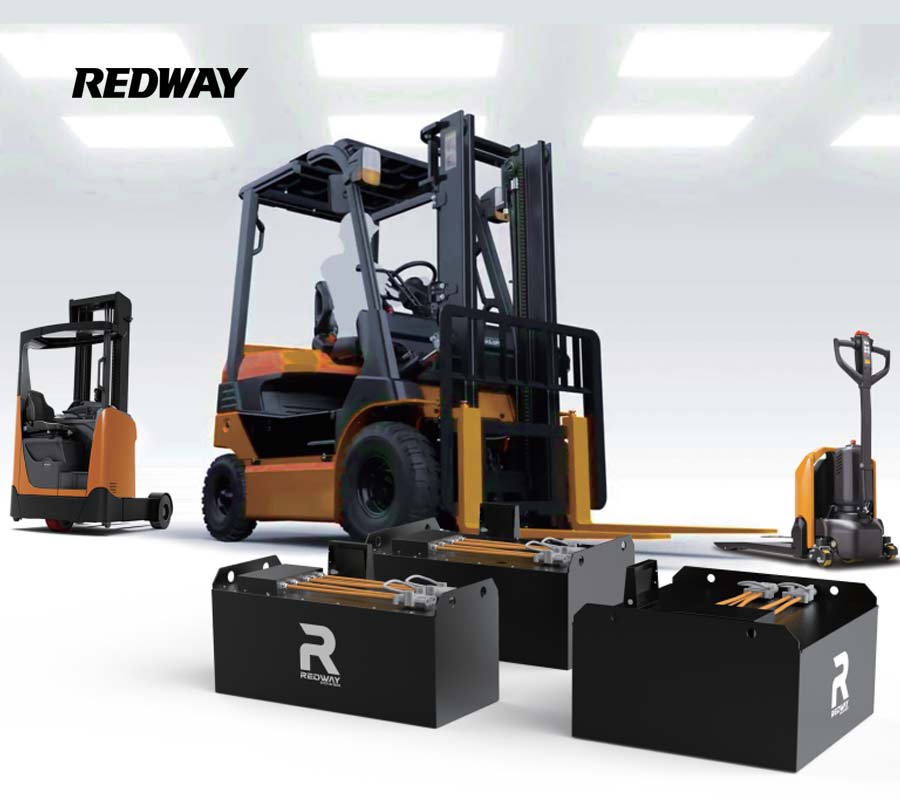
Forklift battery sales service encompasses consultation, installation, maintenance, and recycling support for industrial power systems. Providers like Redway Battery offer tailored lithium-ion or lead-acid solutions with BMS integration, fast charging, and uptime-focused contracts. Pro Tip: Opt for vendors with 24/7 emergency support—delayed replacements can cost $500+/hour in warehouse downtime.
What warranty terms are typical for forklift batteries?
Most lithium forklift batteries have 5–8 year warranties covering 4,000+ cycles at 80% capacity retention. Pro rata clauses and cycle limits apply. Lead-acid warranties are shorter (1–3 years) with weekly water top-up requirements.
Warranty validity often hinges on strict adherence to charging protocols. For lithium packs, maintaining cell temperatures between 15–35°C via integrated thermal management is mandatory. Deep discharges below 10% state-of-charge (SoC) void coverage. Real-world example: A 600Ah lithium battery achieving 6,000 cycles under 80% DoD (depth of discharge) would outlast three lead-acid replacements. But what if your facility operates in sub-zero environments? Opt for low-temperature lithium variants (-30°C capable) despite 5–10% upfront cost premiums. Pro Tip: Document all maintenance logs—manufacturers often request charge/discharge histograms for warranty claims.
Lithium vs. Lead-Acid: Which offers better ROI?
Lithium-ion batteries deliver 3–5x longer lifespans and 30% faster charging than lead-acid. Opportunity charging reduces downtime, while 97% energy efficiency cuts costs.
While lithium’s upfront cost is double ($8k vs. $4k for 48V 600Ah), total ownership savings reach 40–60%. Consider this: Lithium eliminates acid refills, equalization charges, and ventilation costs ($200+/month saved). Fast charging in 1–2 hours versus 8+ for lead-acid enables multi-shift operations without spare batteries. But how do you justify the capital expenditure? Calculate payback periods—most warehouses break even within 18 months via productivity gains. Real-world example: A distribution center switching to lithium reduced battery-related downtime by 70% and energy costs by $12k annually. Pro Tip: Negotiate buyback programs where vendors recycle old lithium batteries at 15–20% residual value.
| Factor | Lithium-ion | Lead-Acid |
|---|---|---|
| Cycle Life | 4,000+ | 1,500 |
| Charge Time | 1.5 hrs | 8 hrs |
How often should forklift batteries be serviced?
Lithium batteries require minimal service—quarterly inspections for terminal corrosion and BMS updates. Lead-acid demands weekly water refills and monthly equalization charges.
Maintenance intensity directly impacts operational costs. Lead-acid batteries need specific gravity checks using hydrometers (target: 1.225–1.280) and acid spill containment protocols. Comparatively, lithium’s sealed design and self-balancing BMS reduce labor by 80%. But what about contact wear? Regardless of chemistry, inspect connectors every 500 cycles; pitted terminals increase resistance, causing voltage drops. Example: A 48V system with 0.5Ω connector resistance loses 24W (I²R) at 200A loads—enough to heat terminals to 70°C. Pro Tip: Use anti-oxidation sprays on terminals to prevent sulfation in lead-acid and arcing in lithium systems.
What charging practices maximize battery life?
Lithium thrives on partial opportunity charging (20–80% SoC), while lead-acid requires full 100% cycles to prevent sulfation. Temperature-compensated chargers add 15% lifespan.
Charging lithium at ≤1C rate (e.g., 600A for 600Ah packs) prevents lithium plating on anodes. Advanced BMS units taper current when cells reach 55°C. Conversely, lead-acid needs 10–15% overcharge (equalization) weekly to mix electrolytes. But how do shift patterns affect this? For 24/7 operations, lithium’s 2-hour fast charging enables continuous use, whereas lead-acid mandates 8-hour cooling periods. Real-world case: A refrigerated warehouse using lithium saw 95% capacity retention after 3 years vs. 60% for lead-acid. Pro Tip: Install networked chargers that log metrics—data-driven adjustments can boost cycle life by 20%.
| Parameter | Optimal Range (Li) | Optimal Range (Pb) |
|---|---|---|
| Charge Temp | 0–45°C | 10–30°C |
| DoD | 80% | 50% |
Redway Battery Expert Insight
FAQs
Yes, many providers offer lease-to-own models at $150–$300/month for lithium. This avoids upfront costs while including maintenance, but total payments exceed purchase price by 10–15%.
Are refurbished forklift batteries reliable?
Refurbished lead-acid can last 1–2 years at 50% cost, but lithium refurbishment is rare. Insist on third-party capacity reports—reused cells often operate below 70% original spec.
For the surrounding sizing, selection, installation and maintenance decisions, continue with the Forklift Battery: Applications and Operating Conditions — Part 2.
