




REDWAY BATTERY / KNOWLEDGE
Where Is Forklift Battery Reconditioning Near Me?
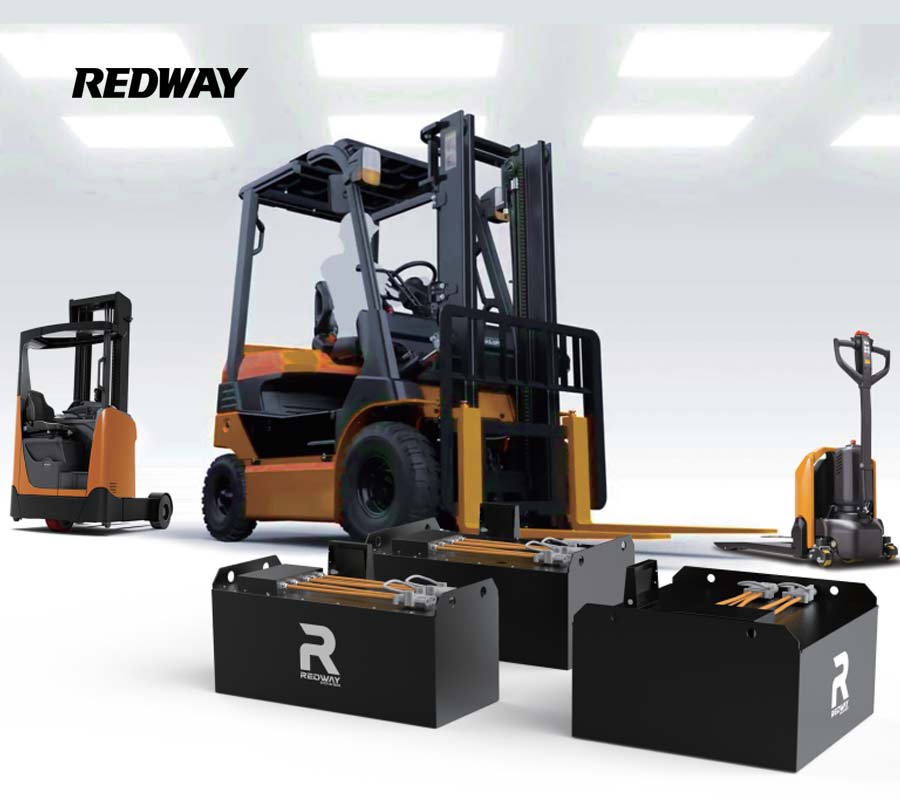
Forklift battery reconditioning services are available through specialized industrial equipment providers and certified battery maintenance companies. Key service locations include Guangzhou’s Haizhu District (Kinetic Battery Service), Shanghai Qingpu District (Yongxuan Forklift), and Shandong’s Yantai region (Huasheng Forklift). These facilities offer comprehensive cell balancing, electrolyte refilling, and load capacity restoration for lead-acid and lithium-ion batteries, typically requiring 8-24 hour recovery cycles depending on sulfation levels.
How to Replace a Toyota Forklift Battery
What technical processes define quality battery reconditioning?
Professional reconditioning combines pulse desulfation, specific gravity adjustment, and plate integrity testing. Technicians use programmable charge cycles (0.1C-0.25C) with temperature-controlled environments (15°C–30°C) to reverse crystalline buildup. Pro Tip: Always verify service providers have IEC 62485-2 certification for industrial battery rehabilitation.
Beyond basic charging, advanced shops employ ultrasonic cleaning tanks to remove lead oxide sludge from battery wells. For example, a 48V 500Ah forklift battery showing 40% capacity loss might undergo 3-phase recovery: 8-hour deep discharge (to 1.75V/cell), 18-hour modulated charge, followed by 72-hour stabilization monitoring. Critical Warning: Never attempt electrolyte replacement without proper PPE—concentrated sulfuric acid requires handling by OSH-compliant professionals.
How do lead-acid and lithium battery reconditioning differ?
Lead-acid rehabilitation focuses on electrolyte management and plate rejuvenation, while lithium-ion processes require cell-level balancing and BMS recalibration. Lithium batteries typically allow 3-5 recondition cycles versus 5-8 for flooded lead-acid types.
| Parameter | Lead-Acid | Lithium-Ion |
|---|---|---|
| Recovery Success Rate | 60-75% | 40-55% |
| Typical Cycle Restoration | 300→220 cycles | 2000→1200 cycles |
Transitioning between chemistries, technicians must adapt equipment—lithium systems demand ±0.5% voltage precision during cell matching. A real-world comparison: Reconditioning 80V LiFePO4 packs requires $8,000–$12,000 spectral analyzers versus $2,500 hydrometers for lead-acid equivalents.
What certifications indicate reliable reconditioning services?
Prioritize providers with ISO 9001:2015 quality management and NFPA 70E electrical safety compliance. The Battery Council International (BCI) also offers specialized accreditation for industrial battery technicians.
Facilities handling lithium systems should demonstrate UN38.3 transportation testing capabilities. For instance, certified shops use climate-controlled storage (20±5°C) during the mandatory 14-day post-reconditioning observation period. Pro Tip: Always request before/after capacity test reports using approved methods like IEC 61960-3 discharge profiling.
Redway Battery Expert Insight
FAQs
Perform capacity checks every 150 cycles—recondition when capacity drops below 80% of rated Ah. Delay beyond 70% risks irreversible sulfation.
Can deeply discharged lithium batteries be recovered?
Only if cell voltages stay above 2.0V. Below this threshold, lithium plating causes permanent damage requiring cell replacement.
For connected guidance and the next practical steps, use the Buying Forklift Batteries: Channels, Used Stock and Repair.
