




REDWAY BATTERY / KNOWLEDGE
Why Upgrade Your Cart Fleet to a 72V Lithium Battery?
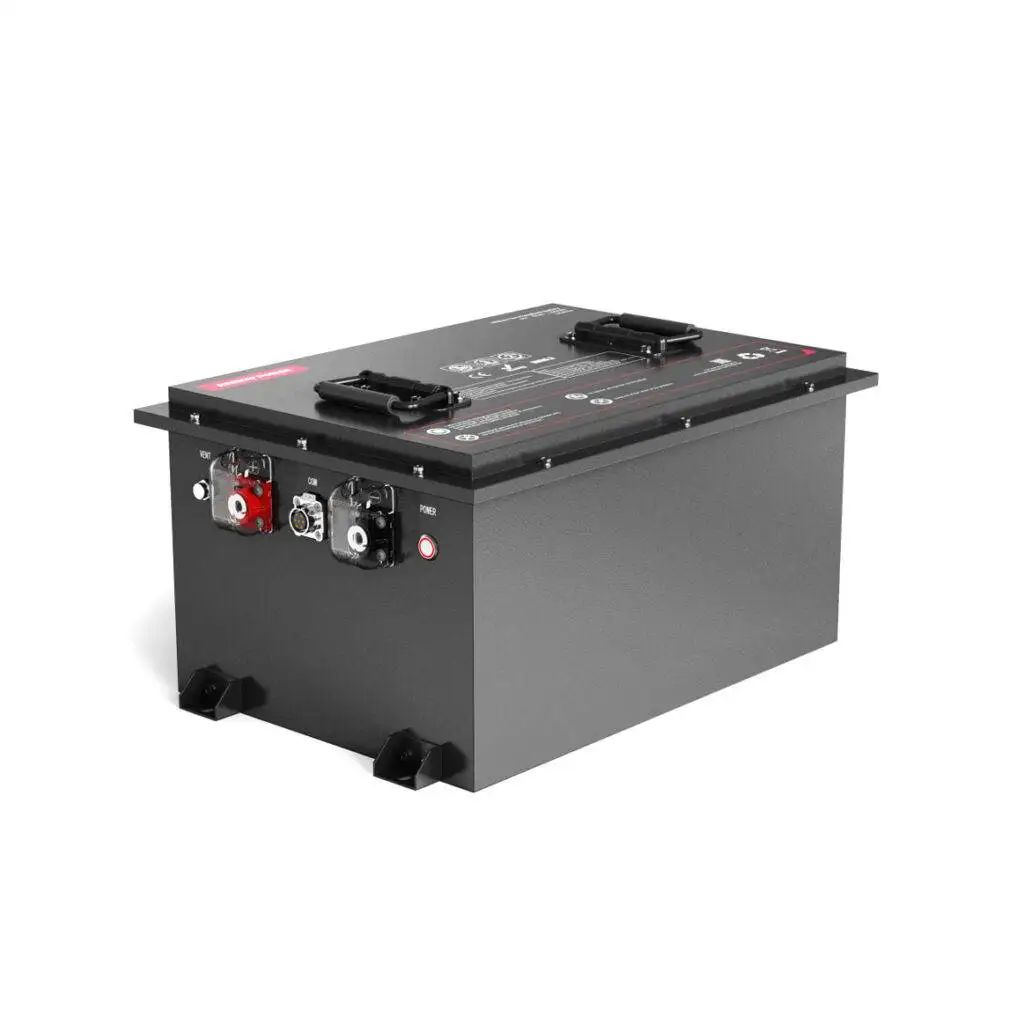
Switching from lead–acid to a 72V lithium battery is a strategic move that cuts operating costs, extends runtime, and dramatically improves reliability in demanding cart applications like golf carts, LSEVs, and utility vehicles. This high–voltage LiFePO₄ solution delivers faster charging, longer life, and higher torque, making it the go–to upgrade for fleets and operators who need all–day performance without constant battery swaps.
How big is the shift to lithium in the cart market?
The global golf cart and LSEV market is growing rapidly, with lithium–ion adoption accelerating as prices drop and performance improves. In 2025, lithium accounted for over 35% of new golf cart battery sales, up from under 15% just five years ago, and analysts project that share to exceed 60% by 2028. This shift is driven by fleet operators, resorts, and commercial users who prioritize low lifetime cost and minimal downtime over the lowest upfront price.
LiFePO₄ (lithium iron phosphate) has become the dominant chemistry for 72V systems because of its thermal stability, long cycle life, and safety. A typical 72V LiFePO₄ golf cart battery can last 4–10 times longer than a lead–acid pack, with fewer replacements and less maintenance overhead. This kind of durability is a major reason why resorts and industrial sites are now standardizing on 72V lithium platforms.
What are the real pain points fleet operators face with old batteries?
Operators still running 72V lead–acid systems report three recurring issues: short daily range, high replacement frequency, and cold–weather performance drops. A lead–acid pack on a 72V cart often only lasts 2–4 years in heavy use, and its usable capacity degrades quickly, especially after 50% depth of discharge. Many fleets find they need to replace batteries every 18–30 months to maintain acceptable performance, which inflates TCO.
Charging inefficiency is another major cost driver. Lead–acid batteries typically require 8–12 hours to fully recharge and suffer from significant energy loss (15–25%) during charging. This forces operators into long charging windows, limits multi–shift use, and increases electricity bills. In cold climates, these batteries lose 20–30% of their capacity, leading to shorter runs and more stranded carts on winter mornings.
How are traditional 72V solutions still falling short?
Even older lithium packs and hybrid setups often fail to deliver the full benefits of modern 72V LiFePO₄ systems. Many legacy lithium batteries use lower–quality cells or undersized BMS, leading to imbalanced packs, reduced cycle life, and premature failure. These systems can overheat under heavy loads, especially in hilly terrain or when towing, which forces operators to run carts at reduced speed or risk damaging the battery.
Batteries built with generic or off–the–shelf designs also struggle with integration. They may not match the exact voltage profile, dimensions, or connector layout of the cart, requiring custom brackets, wiring mods, or controller upgrades that add complexity and cost. Without proper CAN/RS485 communication and fleet monitoring, operators lack visibility into state of charge, cell health, and usage patterns, making preventive maintenance difficult.
Why does a modern 72V lithium battery solve these problems?
A properly engineered 72V lithium battery (typically 72–76V LiFePO₄) is designed as a drop–in replacement that maximizes range, speed, and longevity in cart applications. It uses high–quality cylindrical or prismatic cells with low internal resistance, enabling higher continuous and peak discharge currents (often 100–300A) for better hill climbing and towing performance. Combined with a robust BMS, it operates efficiently from 20% to 100% SOC without rapid degradation.
These batteries are built to last 3,000–7,000 cycles (depending on depth of discharge), translating to 8–12 years of daily use in a typical cart fleet. They can be charged from 20% to 100% in 2–4 hours with a compatible charger, enabling multi–shift operations and reducing charger infrastructure. Lightweight construction (often 30–50% lighter than lead–acid for the same capacity) also reduces strain on the cart’s frame and suspension.
Where can a 72V lithium battery be used?
A 72V lithium battery is ideal for:
Golf carts (standard and performance models)
Low–speed electric vehicles (LSEVs / neighborhood EVs)
Utility carts (airport, resort, warehouse, campus)
Commercial carts (food & beverage, maintenance, security)
Any 72V electric cart or vehicle that previously used lead–acid packs
The higher voltage enables more torque and higher top speeds, which is especially valuable for carts that travel long distances, operate on hilly courses, or carry heavy payloads. Redway Battery, with over 13 years of OEM/ODM experience, offers 72V LiFePO₄ solutions tailored specifically for these cart applications, with customizable capacity (100Ah–200Ah and beyond), BMS features, and mechanical integration support.
How does a 72V lithium battery compare to traditional options?
| Feature | Traditional 72V Lead–Acid Pack | Modern 72V LiFePO₄ Battery (e.g., Redway Battery) |
|---|---|---|
| Typical cycle life | 300–600 cycles | 3,000–7,000 cycles (at 80% DOD) |
| Daily range (per charge) | 40–60 miles (64–97 km) | 60–100+ miles (97–160+ km), depending on capacity |
| Charging time (20–100%) | 8–12 hours | 2–4 hours |
| Weight (for ~100Ah pack) | 300–400 lbs (136–181 kg) | 140–180 lbs (64–82 kg) |
| Depth of discharge (DOD) | 50% recommended; degrades fast at 80% | 80–100% DOD safe, minimal degradation |
| Maintenance needs | Regular watering, cleaning, equalizing | Virtually maintenance–free |
| Cold–weather performance | 20–30% capacity loss at 32°F (0°C) | 10–15% loss with proper BMS; heated options available |
| Total cost of ownership (TCO) | High (frequent replacements, labor, energy loss) | 40–60% lower over 6–8 years |
For the surrounding sizing, selection, installation and maintenance decisions, continue with the Golf Cart Battery: Sizing, Voltage and Capacity — Part 1.
What are the key capabilities of a 72V LiFePO₄ solution?
A modern 72V lithium battery for carts includes:
High–energy LiFePO₄ cells (typically 3,000–7,000 cycles at 80% DOD) for extreme longevity
Smart BMS with overcharge, over–discharge, overcurrent, short–circuit, and thermal protection
High continuous discharge (100–300A+) to support powerful motors and hill climbing
Fast charging capability (1C–1.2C) to recharge in 2–4 hours
Flexible mounting design to fit common cart footprints and heights
Low–voltage protection that prevents deep discharges that damage the cells
Communication options (CAN, RS485, Bluetooth) for fleet monitoring and diagnostics
Redway Battery’s 72V LiFePO₄ packs are engineered for these exact requirements, with ISO 9001:2015 production control and full OEM/ODM support. Their engineering team can customize cell selection, BMS logic, capacity, and mechanical layout to match a specific cart model or fleet standard.
How exactly does a 72V lithium battery upgrade work?
Upgrading from lead–acid or an older lithium pack to a modern 72V LiFePO₄ system follows a clear, repeatable process:
Assess current setup
Note the cart’s voltage (72V), nominal capacity (Ah), dimensions, terminal type, and BMS requirements. Record average daily distance, load, and terrain (flat vs. hilly).Select the right 72V lithium pack
Choose a LiFePO₄ pack with matching voltage (typically 72–76V) and sufficient capacity (e.g., 100Ah for 50–70 miles, 150–200Ah for 80–120 miles). Ensure the BMS supports the cart’s maximum discharge current and charging profile.Verify compatibility
Confirm that the lithium pack fits the battery compartment in length, width, height, and terminal position. Redway Battery provides detailed mechanical drawings and can modify the case for a custom fit.Use a compatible charger
Install a 72V LiFePO₄ charger with the correct voltage profile (e.g., constant current / constant voltage, appropriate charge current). Do not use a lead–acid charger, as it can damage the lithium pack.Install and commission
Secure the battery in the cart, connect terminals, and verify the BMS communicates with the cart’s controller (if applicable). Perform a controlled charge/discharge cycle to verify performance.Train operators and set routines
Train staff on lithium best practices: avoid deep discharges, use the correct charger, and monitor SOC. Implement a simple charging schedule to avoid overnight constant–voltage charging.
What are typical results after switching to 72V lithium?
Case 1: Golf course with heavy weekend use
Problem: Old lead–acid packs lasted only 2 years, required 10 hours to charge, and often left carts stranded on weekends.
Traditional做法: Replaced packs every 24 months; used extended charging windows and spare carts.
After 72V lithium (Redway Battery pack): Packs now last 8+ years, recharge in 3 hours, and reliably cover 18 holes plus utility runs.
Key benefit: 55% reduction in battery replacement cost and elimination of weekend downtime.
Case 2: Resort utility fleet (food & beverage, maintenance)
Problem: Utility carts struggled with hills and heavy loads, and batteries needed watering and cleaning weekly.
Traditional做法: Scheduled extra shifts and manual maintenance labor.
After 72V lithium (Redway Battery custom pack): Carts now run all day with 20% heavier loads, climb hills without faltering, and require zero maintenance.
Key benefit: 40% lower labor cost for battery maintenance and 30% more completed service runs per vehicle.
Case 3: Campus security and operations fleet
Problem: Fleet of 72V carts had inconsistent range and frequent failures in winter, leading to coverage gaps.
Traditional做法: Used multiple backup carts and seasonal battery swaps.
After 72V lithium (Redway Battery high–cycle pack): Range increased by 40%, winter performance dropped only 10–12%, and failures dropped 90%.
Key benefit: Reliability improved enough to reduce fleet size by 15% while maintaining coverage.
Case 4: Industrial warehouse utility carts
Problem: Heavy–duty carts used for towing and material handling wore out lead–acid batteries in 18 months.
Traditional做法: Scheduled battery swaps mid–shift and kept extra inventory.
After 72V lithium (Redway Battery high–discharge pack): Same carts now run a full 10–hour shift on one charge, with 30% more towing power.
Key benefit: Total battery cost per hour of operation dropped by 60%, and productivity increased by 20%.
Why is now the right time to upgrade to 72V lithium?
The cost gap between high–quality lithium and lead–acid has narrowed significantly, while the performance and reliability advantages have grown. A 72V LiFePO₄ system can now pay for itself in 2–4 years through reduced replacements, lower energy consumption, and fewer maintenance hours. For fleets and commercial operators, that’s a compelling ROI.
Technology improvements also make lithium safer and easier to manage. Modern BMS systems log faults, prevent overloads, and support remote monitoring, which is critical for fleet managers. Redway Battery’s 72V lithium solutions are designed with these real–world needs in mind, offering long–life packs, OEM–level customization, and local support to ensure a smooth transition from lead–acid to lithium.
How does a 72V lithium battery impact total cost?
Upfront, a 72V LiFePO₄ pack costs 2–3× more than an equivalent lead–acid setup. However, when factoring in replacements, electricity loss, maintenance labor, and downtime, the total cost of ownership is typically 40–60% lower over 6–8 years. For a fleet of 10 carts, that can mean tens of thousands of dollars in savings, even after the higher initial investment.
Lithium batteries also reduce indirect costs: less storage space for spares, smaller charger infrastructures (due to faster charging), and fewer “out–of–service” carts. Redway Battery’s packs, with their 3,000–7,000 cycle life and global support, are structured to capture these long–term savings while minimizing integration risk.
Can a 72V lithium battery be customized for my carts?
Yes, reputable manufacturers like Redway Battery offer full OEM/ODM customization. This includes:
Custom capacity (e.g., 72V 100Ah, 120Ah, 150Ah, 200Ah)
Tailored BMS settings (voltage thresholds, discharge current, CAN/RS485 protocols)
Specific mechanical dimensions and mounting points
Custom connectors, labels, and branding
Integration with existing chargers or controllers
Redway Battery’s engineering team works directly with fleet managers and OEMs to map out exact requirements and deliver a battery that fits seamlessly into existing cart platforms.
How long does a 72V lithium battery last in daily use?
A well–matched 72V LiFePO₄ battery in a cart typically lasts 3,000–7,000 full cycles at 80% depth of discharge, which translates to 8–12 years of daily use in most fleet environments. Actual lifespan depends on usage patterns: carts that regularly cycle deeply (below 20% SOC) or run at continuous high power will see shorter life than those kept between 20–80% SOC with moderate loads.
Redway Battery’s 72V LiFePO₄ packs are built with high–cycle cells and robust BMS protection to maximize calendar and cycle life, even under demanding conditions. This long life directly reduces the frequency and cost of battery replacements over the cart’s lifetime.
What are the safety and reliability features?
Modern 72V LiFePO₄ batteries for carts include multiple layers of protection:
Cell–level overvoltage and undervoltage protection
Overcurrent and short–circuit shutdown (often 150–300A+ limit)
Temperature monitoring and charge/discharge thermal cutoff
Cell balancing to extend pack life
Robust mechanical enclosure (often IP65 or higher)
Optional communication (CAN, Bluetooth) for fault logging and remote monitoring
These features make LiFePO₄ significantly safer than older lithium chemistries and far more reliable than lead–acid under variable loads and temperatures. Redway Battery designs its 72V packs with these safety and reliability standards as core requirements.
How does a 72V lithium battery perform in cold weather?
A 72V LiFePO₄ battery can operate in cold conditions, but performance drops below 32°F (0°C). At 32°F, usable capacity is typically 85–90% of rated capacity; at 23°F (–5°C) it may drop to 75–85%. Charging below freezing should be avoided unless the battery has a low–temperature protection / heating function.
For cold–climate operations, look for packs with built–in low–temperature charging logic or an optional heating BMS. Redway Battery’s engineering team can specify the right cells and BMS configuration for cold environments, ensuring reliable winter performance without sacrificing cycle life.
Where should I look for a reliable 72V lithium battery supplier?
When selecting a supplier for 72V lithium batteries, prioritize:
Proven experience in LiFePO₄ for carts and LSEVs
OEM/ODM capability and engineering support
Clear cycle life specifications (cycles at 80% DOD)
Strong BMS features and safety certifications
Warranty terms (typically 5–10 years for quality LiFePO₄ packs)
Global service and spare parts support
Redway Battery meets these criteria as a trusted OEM lithium battery manufacturer with over 13 years of experience, four advanced factories, and a focus on LiFePO₄ solutions for forklifts, golf carts, RVs, and industrial applications. Their global support network and full customization options make them a strong choice for fleet upgrades and new cart production.
How do I choose the right capacity for my 72V cart?
Capacity (Ah) should be chosen based on:
Daily distance (miles or km per day)
Terrain (flat vs. hilly, inclines)
Load (driver only vs. multiple passengers + cargo)
Number of shifts (single vs. multi–shift operation)
As a rough rule:
72V 100Ah: 50–70 miles (80–110 km), suitable for standard golf and light utility use
72V 150Ah: 70–90 miles (110–145 km), good for hilly courses and moderate towing
72V 200Ah+: 90–120+ miles (145–190+ km), ideal for heavy–duty, multi–shift, and high–load applications
