REDWAY BATTERY / KNOWLEDGE
How To Maintain 36V 18-85 21 Hyster J40XMT Battery?
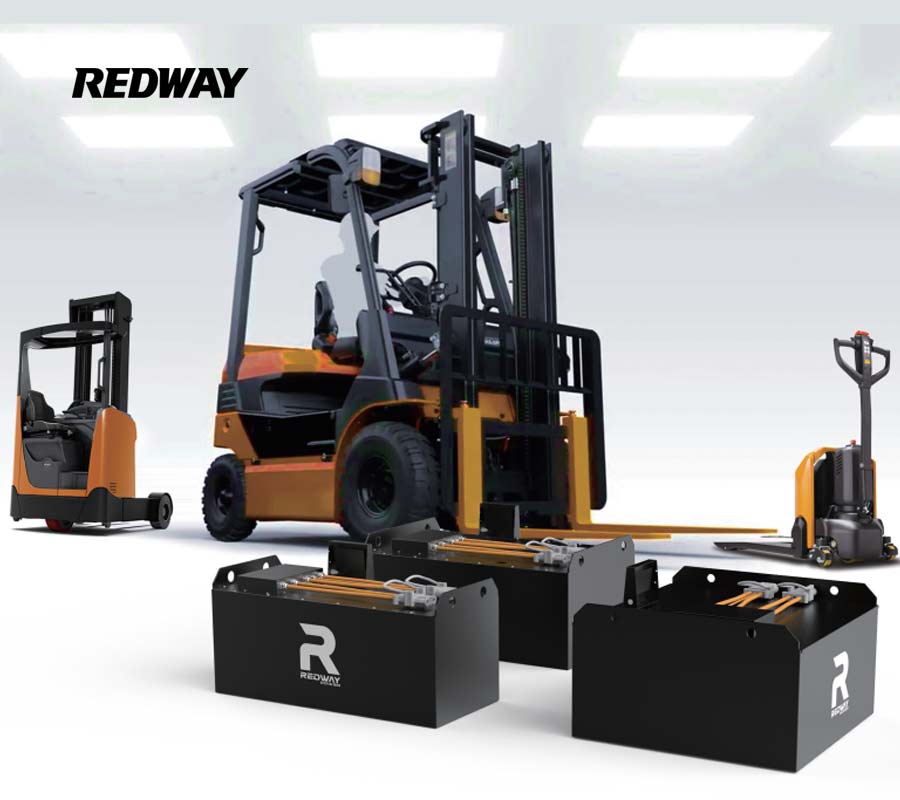
A 36V 18-85 21 Hyster J40XMT battery is a lead-acid deep-cycle battery designed for forklifts, requiring regular watering, terminal cleaning, and voltage monitoring to extend its 1,500+ cycle lifespan. Maintenance includes weekly checks of electrolyte levels (distilled water only), monthly specific gravity tests (1.275 target), and storage at 100% charge in cool, dry environments. Pro Tip: Use torque wrenches to secure terminal connections at 10–12 Nm to prevent arcing.
How to Replace a Toyota Forklift Battery: Step-by-Step
What defines the J40XMT battery maintenance routine?
Proper care for Hyster’s 36V 18-85 21 battery hinges on balancing electrolyte management, charge preservation, and terminal integrity. Neglecting these can reduce capacity by 40% within 200 cycles. For example, under-watering exposes plates to sulfation, while overcharging warps grids. Pro Tip: Track water consumption—sudden increases indicate overcharging or high ambient temps.
Deep-cycle lead-acid batteries like the J40XMT require meticulous watering—only after full charging, since electrolyte expands during use. Use a refractometer to ensure specific gravity stays between 1.250–1.300 across all cells. Uneven readings signal stratification; remedy this with controlled equalization charges. Practically speaking, terminals must be scrubbed monthly with baking soda solution to prevent corrosion buildup, which can increase resistance by 0.5–2Ω. A real-world analogy: Treat battery cells like engine cylinders—imbalanced maintenance compromises the whole system.
| Maintenance Task | Frequency | Tool |
|---|---|---|
| Water Refill | Weekly | Distilled Water Jug |
| Terminal Cleaning | Monthly | Wire Brush + Baking Soda |
How to water J40XMT cells correctly?
Watering demands precision: distilled water only, added post-charge until plates are ¼” submerged. Overfilling risks electrolyte spillage, accelerating terminal corrosion. Pro Tip: Mark water levels with a permanent marker on each cell for quick visual checks.
Post-charging is critical because electrolyte expands by 15–20% when charged. Adding water beforehand risks overflow, wasting resources and creating hazardous spills. Use a calibrated watering gun to ensure uniform levels. For example, a 18-85 model holds ~34 liters of electrolyte; each cell needs 100–150ml monthly. Transitioning to automation, Hyster-approved watering systems can cut refill time by 70%, but manual checks remain essential. Ever wonder why some cells dry faster? Heat distribution variances in the battery compartment often cause edge cells to evaporate quicker.
| Water Type | Conductivity | Corrosion Risk |
|---|---|---|
| Distilled | 1 µS/cm | Low |
| Tap Water | 500 µS/cm | High |
Why is voltage monitoring crucial?
Voltage decay patterns reveal cell health. A balanced J40XMT pack should show ≤0.2V difference between cells. Pro Tip: Log voltages before/after charging—drops >0.5V overnight indicate parasitic loads or sulfation.
Post-discharge voltage should never dip below 1.75V per cell (31.5V total). During charging, terminate at 2.45V per cell (44.1V total) using temperature-compensated chargers. Hydrometers complement voltage tests by detecting “false full” charges where voltage rebounds but specific gravity remains low. Imagine a car’s fuel gauge: Voltage is the “tank level,” while specific gravity measures “fuel quality.” Transitional tools like battery monitor shunts track amp-hour throughput, predicting remaining cycles. But here’s the rub: Over-discharging just once can strip 100+ cycles from the lifespan.
What storage protocols maximize lifespan?
Store at 100% charge in environments below 77°F (25°C). Each 15°F increase halves standby life. Pro Tip: Perform top-up charges every 30 days if inactive—self-discharge drains 5–10% monthly.
Disconnect terminals to prevent parasitic drain from onboard clocks or tracking systems. For winter storage, insulate batteries but avoid thermal blankets that trap moisture. Ever stored a smartphone in freezing temps? Similarly, lead-acid batteries lose 20–30% capacity if stored at 14°F (-10°C). Transitioning to spring, gradual acclimatization to operating temps prevents thermal shock. A real-world fix: Place desiccant packs nearby to control humidity, reducing terminal oxidation by up to 60%.
How to troubleshoot common J40XMT issues?
Key red flags: slow cranking, uneven water use, and swollen cases. These often stem from cell shorts, loose terminals, or charger malfunctions. Pro Tip: Use IR thermometers—hotspots >10°F above ambient indicate failing cells.
For voltage slump during operation, load-test each cell at 525A (CCA rating). Replace cells showing <1.2V under load. Case swelling? It’s usually hydrogen buildup from overcharging—verify charger voltage against OEM specs (42–43.2V). Think of it as a tire pressure analogy: Even 0.5V over specs strains the “battery walls.” Transitional maintenance steps: After fixing electrical issues, re-torque terminals and recalibrate the charger’s temperature sensor.
Redway Battery Expert Insight
FAQs
Weekly under normal use—daily in high-cycle (3+ shifts) operations. Electrolyte loss accelerates above 86°F.
Can I replace individual cells?
Yes, but only with same-age/chemistry cells. Mixing new and old cells cuts pack lifespan by 30–50%.
For connected guidance and the next practical steps, use the Forklift Battery: Sizing, Voltage and Capacity — Part 2.