




REDWAY BATTERY / KNOWLEDGE
What Are 5 Ways To Destroy Your Forklift Battery?
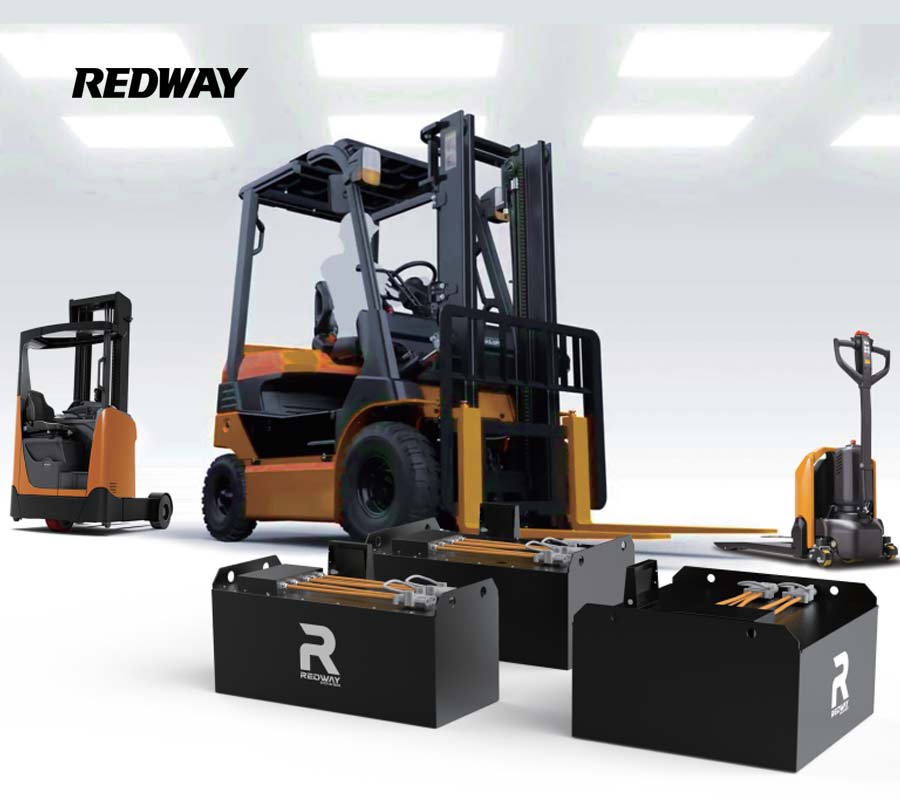
Forklift batteries fail prematurely due to five critical errors: deep discharging below 20% capacity, overcharging beyond BMS limits, improper watering (for lead-acid), exposing lithium packs to extreme temperatures, and mechanical stress from impacts. Lithium-ion variants degrade faster if stored at full charge—Redway’s smart BMS solutions mitigate these risks through voltage clamping and thermal regulation. Forklift Lithium Battery Category
How does deep discharging damage forklift batteries?
Discharging below 20% state-of-charge accelerates sulfation in lead-acid and causes lithium-ion anode lattice collapse. Lead plates sulfate irreversibly at ≤1.175V/cell, while lithium cells experience copper shunting below 2.5V. Full discharges cut LiFePO4 cycles from 4,000 to 800. Pro Tip: Set BMS low-voltage cutoff at 20% SOC for lead-acid and 15% for lithium to balance runtime and longevity. Imagine draining a car engine oil completely between changes—metal components grind unprotected. Forklifts requiring 48V shouldn’t discharge batteries below 42V (loaded).
Why is overcharging dangerous for battery health?
Overcharging induces electrolyte breakdown and thermal runaway. Lead-acid batteries gass excessively above 2.45V/cell (58.8V for 48V), drying cells. Lithium-ion suffers lithium plating beyond 4.2V/cell (50.4V for 12S). Redway’s BMS halts charging at ±1% voltage tolerance. For example, a 48V lead-acid battery charged to 60V loses 30% electrolyte monthly. Why risk vented hydrogen explosions? Use temperature-compensated chargers that reduce voltage when batteries exceed 35°C.
| Parameter | Lead-Acid | Lithium-ion |
|---|---|---|
| Max Charge Voltage | 2.45V/cell | 3.65V/cell |
| Overcharge Risk | Water loss, corrosion | Plating, thermal runaway |
| BMS Response | Float voltage cut | Disconnect charging FETs |
What physical impacts harm forklift batteries?
Case punctures and terminal deformation cause immediate risks—electrolyte leaks in lead-acid, internal shorts in lithium. Even 5mm case warping misaligns lithium cells, creating internal resistance hotspots. Forklift manufacturers specify ≤0.8G vibration limits; exceeding this during transport cracks terminal welds. Real-world example: A 1,500Ah battery dropped from 30cm suffered 12% capacity loss from separator microtears. Always use ISO-certified battery restraints and inspect monthly for compression damage.
How do temperature extremes degrade performance?
Operating outside −20°C to 50°C tanks efficiency. At −30°C, lithium-ion conductivity drops 70%, forcing voltage sag. Lead-acid capacity halves at 0°C. Conversely, 60°C ambient heat expands lithium electrolytes, accelerating SEI layer growth. Data shows lithium cycled at 45°C loses 40% capacity in 300 cycles vs. 1,200 cycles at 25°C. Pro Tip: Pre-heat batteries to 10°C before winter charging. Ever seen molasses flow in January? That’s your battery’s electrolyte in cold.
| Condition | Lead-Acid Capacity | Lithium-ion Capacity |
|---|---|---|
| −10°C | 55% | 75% |
| 25°C | 100% | 100% |
| 45°C | 105%* | 92% |
*Lead-acid temporarily gains capacity but loses 0.5% cycle life per 1°C above 25°C. 48V 300Ah Lithium Forklift Battery
Why does improper storage ruin batteries?
Storing lead-acid at 50% discharge prevents sulfation, while lithium-ion prefers 30-50% SOC for minimal SEI growth. A 2023 study found lithium stored at 100% SOC for 6 months lost 8% capacity vs. 2% at 50%. Temperature matters—12% annual loss occurs at 40°C vs. 3% at 20°C. Always disconnect batteries from equipment during storage—parasitic drains (even 50mA) can deep-discharge packs in weeks. Remember that warehouse mothballed during COVID? Its 48V batteries needed $15k replacements due to storage neglect.
Redway Battery Expert Insight
FAQs
No—swelling indicates internal gas buildup or separator failure. Immediately quarantine and replace damaged lithium packs to avoid thermal incidents.
How often should forklift battery connections be cleaned?
Every 250 cycles or quarterly. Corroded terminals increase resistance by 0.5mΩ/month, wasting 8% energy as heat.
This topic belongs to the wider Forklift Battery: Operation and Practical Guidance — Part 3, which brings the related decisions and practical checks together.
